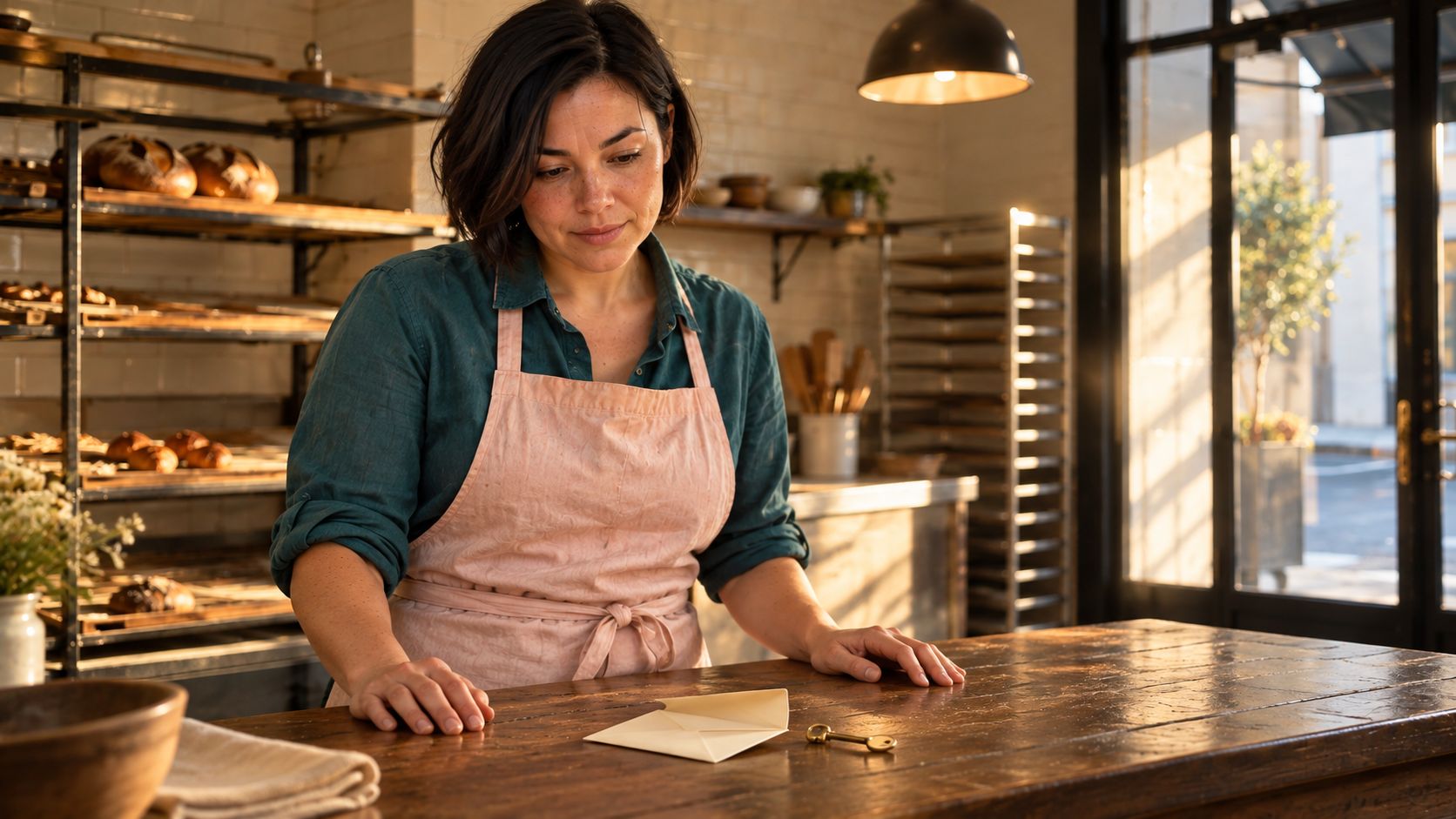
A cliffhanger works when the next episode answers it. This guide plans a miniature AI microdrama in Arcloop: three 12 second vertical episodes about a baker who thinks she has lost her shop. Each episode changes what the viewer knows, and the third resolves the small story.
These are compact scene studies, not a claim that every commercial microdrama episode should last 12 seconds. The references and scripts below are production inputs. No completed episode or audience retention result is presented.
How to Build Your First Three Episodes
Step 1. Write the ending before the first cliffhanger
Our original series is called The Returned Key. Rae is closing her bakery for the last time. Her mother has quietly bought it from the new owner and sends back the key. The audience learns the rescue in stages.
| Episode | Opening hook | New information | Ending |
|---|---|---|---|
| 1 | Rae finds the returned key in a plain envelope. | She believed she had given it away for good. | Someone knocks before she can leave. |
| 2 | Her mother speaks from outside the closed door. | Her mother says the bakery is hers. | Rae answers that she has already sold it. |
| 3 | Her mother explains who bought it back. | The key is an invitation to reopen together. | Rae chooses to open tomorrow. |
Episode 2 answers who knocked. Episode 3 resolves how Rae can keep the bakery. Do not postpone every answer until an imaginary future season.
Step 2. Lock a small series bible and prepare references
Keep Rae's dark bob, teal shirt, pale pink apron, and tired but practical manner. Reuse the bakery's pale tile, timber counter, glass entrance, and morning light. The plain envelope contains one unbranded brass key. Her mother remains outside the frame and speaks in a calm older female voice.
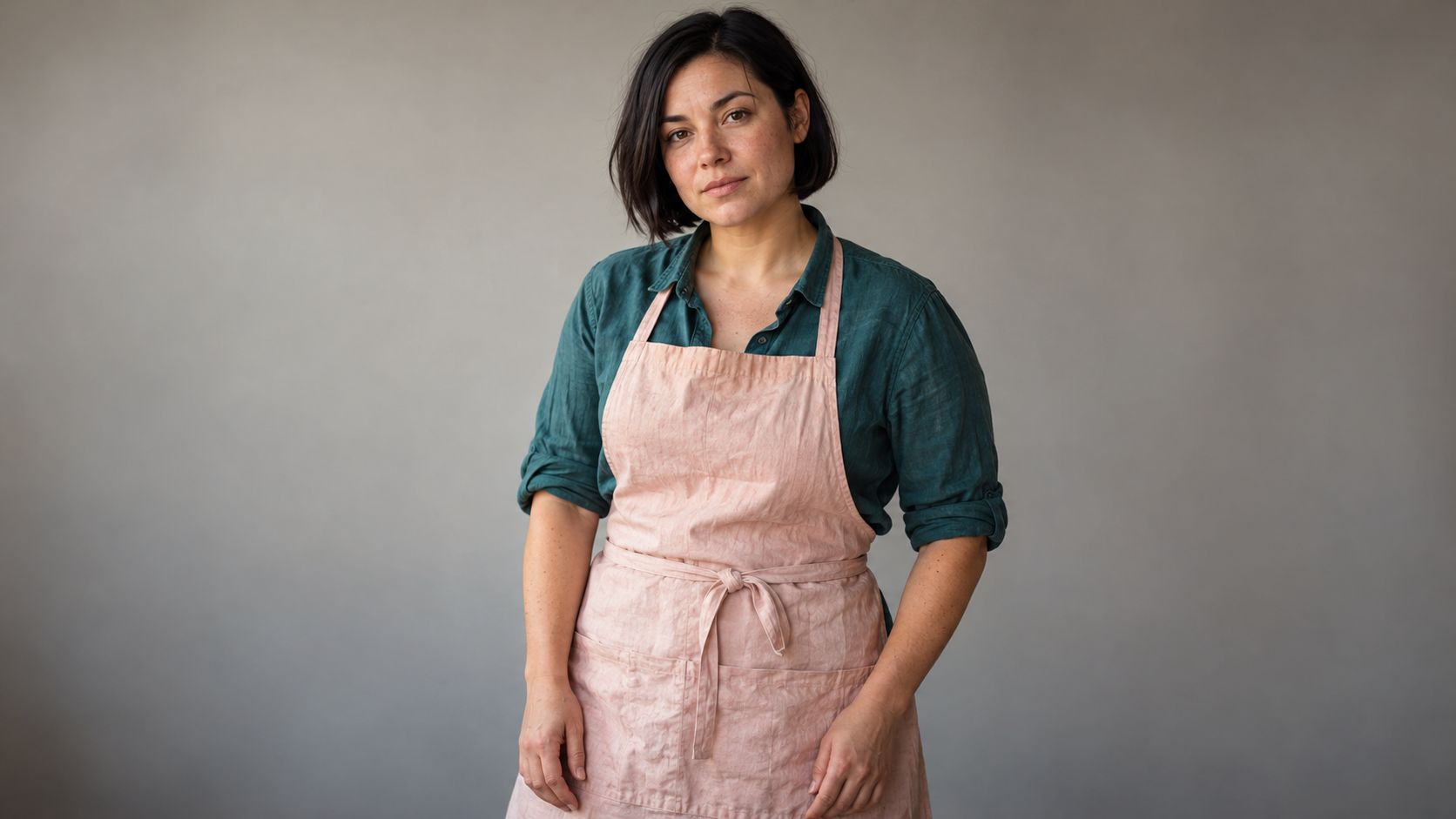
Character reference prompt
Use case: photorealistic-natural. Create one realistic casting photograph of an original adult baker named Rae, early thirties, chin length straight dark bob with a side part, warm brown eyes, round oval face, teal cotton shirt and a plain pale pink apron. Three quarter body portrait with both relaxed hands visible, thoughtful tired expression rather than a posed commercial smile. Soft neutral daylight on a warm gray background, natural skin texture and slightly worn apron fabric. Landscape 16:9 with crop-safe head and torso. One person, no baked goods, text, brand marks, illustration, animation, watermark, or plastic skin.
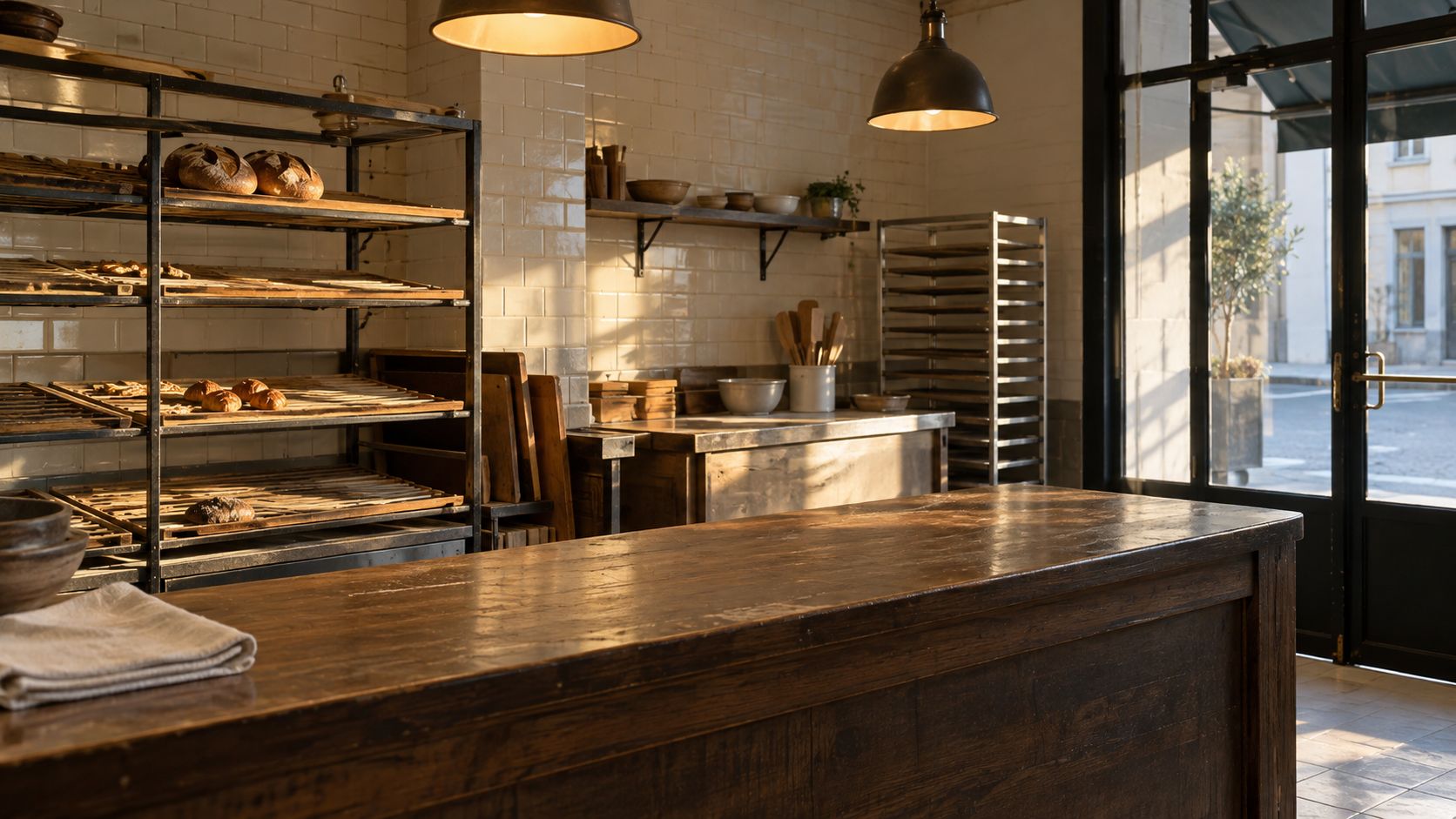
Bakery reference prompt
Use case: photorealistic-natural. Create one realistic 16:9 photographic location reference of a small neighborhood bakery at closing time in soft early morning light after an overnight shift. Pale cream tile walls, simple dark timber counter in the foreground, a glass street entrance on the right, mostly empty pastry shelves, practical warm pendant lamps, folded plain cloth. The entrance is closed and the central counter is clear, leaving space for an envelope and one key later. Quiet working shop rather than luxury retail, natural material wear, realistic architectural scale and coherent daylight. No people, keys, envelopes, readable signs, prices, lettering, logos, illustration, animation, or watermark.

Prop reference prompt
Create one photorealistic 16:9 close-up product reference photograph. On a dark timber bakery counter lies ONE small generic brass door key with an entirely smooth, featureless oval bow, one circular hole and a short notched blade. The bow is just plain continuous brushed brass; absolutely no stamped lettering, embossed numbers, lines of writing, logo, symbols, decorative engraving or manufacturing marks anywhere on the key. Beside the key is one plain cream paper envelope, flap open, completely blank, no address. No other object. Natural warm morning side light, real paper fibers, subtle brass wear, photographic material realism. Complete key visible. No hands, people, duplicate keys, keyring, text, labels, watermark, illustration or CGI. Prioritize a blank metal surface on the key bow.
These images were prepared with the built in image generation tool outside Arcloop. The portrait supplies identity, the bakery supplies the set, and the key image supplies the prop design. They are references, not generated episode frames.
Step 3. Turn the story into three separate video requests
Open Arcloop. For each request, attach the same three source images and identify their roles. Use Vidu Q4 Preview in reference to video, 12 seconds, 720p, 9:16, and generated audio enabled. Confirm that combination and the estimate in the current task summary.
The Q4 model guide supports image references, vertical output in this mode, and optional generated audio. It does not promise an automatic series memory. Reattach the approved assets and repeat the identity rules for every episode.
Replace the bracketed labels below with actual asset mentions. The timing is a performance target, not an exact control. Give Rae and her mother different voices, then listen for drift between clips before approving a sequence.
Episode 1 prompt
Create one 12 second photorealistic vertical 9:16 drama scene in an original neighborhood bakery. Use [RAE IMAGE] for Rae's face, chin length dark bob, teal shirt and pale pink apron. Use [BAKERY IMAGE] for the cream tiles, dark timber counter, right side glass entrance, warm lamps and morning light. Use [KEY IMAGE] for the single brass key and plain cream envelope on the counter. Preserve this cast, prop design and set; do not copy the reference images as a collage. Rae is the only visible person. Her mother, when speaking, is an unseen older adult woman outside the closed entrance to camera right, with a calm low warm voice. Rae has a clear natural adult female voice. No music, subtitles, signs, new props, extra people, illustration or animation. Dialogue in conversational English, each line once; requested time ranges are intended pacing. Keep the speaking face unobstructed and use restrained natural breathing and reactions. Episode 1. Begin in a medium view across the counter. 0 to 3 seconds: Rae notices the open cream envelope and the returned key on the counter. 3 to 6 seconds: she stops packing and leans slightly closer without picking up the key. 6 to 9 seconds: she looks at it and says: I gave this back. 9 to 12 seconds: three quiet knocks come from the entrance. Rae turns her eyes toward the door and holds, without opening it. Room tone and knocks only; no mother's dialogue yet. One gentle camera push, no cuts. End on the unanswered visitor, not a title card.
Episode 2 prompt
Create one 12 second photorealistic vertical 9:16 drama scene in an original neighborhood bakery. Use [RAE IMAGE] for Rae's face, chin length dark bob, teal shirt and pale pink apron. Use [BAKERY IMAGE] for the cream tiles, dark timber counter, right side glass entrance, warm lamps and morning light. Use [KEY IMAGE] for the single brass key and plain cream envelope on the counter. Preserve this cast, prop design and set; do not copy the reference images as a collage. Rae is the only visible person. Her mother, when speaking, is an unseen older adult woman outside the closed entrance to camera right, with a calm low warm voice. Rae has a clear natural adult female voice. No music, subtitles, signs, new props, extra people, illustration or animation. Dialogue in conversational English, each line once; requested time ranges are intended pacing. Keep the speaking face unobstructed and use restrained natural breathing and reactions. Episode 2. The same key remains beside the same open envelope. Begin with Rae already facing the closed right side entrance; no repeat of the previous key discovery or knocks. 0 to 3 seconds: she listens, still and uncertain. 3 to 6 seconds: her mother says from outside: The bakery is yours. 6 to 8 seconds: Rae takes a small breath and looks back toward the counter. 8 to 11 seconds: Rae says: I already sold it. 11 to 12 seconds: hold her puzzled expression. Medium close framing, stationary camera, quiet room tone. Do not show or open the door, and do not reveal who bought the shop.
Episode 3 prompt
Create one 12 second photorealistic vertical 9:16 drama scene in an original neighborhood bakery. Use [RAE IMAGE] for Rae's face, chin length dark bob, teal shirt and pale pink apron. Use [BAKERY IMAGE] for the cream tiles, dark timber counter, right side glass entrance, warm lamps and morning light. Use [KEY IMAGE] for the single brass key and plain cream envelope on the counter. Preserve this cast, prop design and set; do not copy the reference images as a collage. Rae is the only visible person. Her mother, when speaking, is an unseen older adult woman outside the closed entrance to camera right, with a calm low warm voice. Rae has a clear natural adult female voice. No music, subtitles, signs, new props, extra people, illustration or animation. Dialogue in conversational English, each line once; requested time ranges are intended pacing. Keep the speaking face unobstructed and use restrained natural breathing and reactions. Episode 3. Begin on Rae beside the counter, still looking toward the closed entrance, with the key and open envelope unchanged. 0 to 4 seconds: her mother says from outside: I know. I bought it. 4 to 7 seconds: Rae understands, releases her tense shoulders and gives a small relieved smile. 7 to 10 seconds: Rae says: Then let's open tomorrow. 10 to 12 seconds: she rests one hand flat beside the key, leaving it visible, and holds the smile. Gentle camera push, natural room tone. This resolves the bakery rescue. No extra knock, new mystery, door opening, visible mother or additional dialogue.
Generate and review Episode 1 before requesting the others. If the key changes shape or the first line is rushed, fix the reference or dialogue before repeating the problem across a series. Generating a new episode is a new request, not a free continuation of the previous clip.
Step 4. Check the story at the episode boundaries
Watch each clip without the next one queued. Can you name the question it leaves? Then play the following episode. Does it answer that question before introducing another?
Keep the key on the same part of the counter unless the action moves it. Check apron color, haircut, doorway position, and the direction of the mother's voice. Make sure she stays offscreen in all three clips. Review speech clarity and leave a short reaction after important lines.
If you need exact subtitles or episode numbers, add them in your editor and keep them away from faces and platform controls. This is separate from the generation prompt; readable text in every moving frame is not guaranteed.
Step 5. Package the episodes without changing the promise
Export the approved vertical files, label them Episode 1, 2, and 3 in your publishing workflow, and keep their order obvious. Arcloop creates the assets in this guide; hosting, series organization, and performance measurement happen on the destination platform.
Use the same series name and a consistent cover system. Do not title Episode 1 as a complete resolution if its ending is a knock at the door. Watch time and return visits must be measured after publication, not inferred from a dramatic script.
Frequently Asked Questions
Is this one 36 second generation?
No. It is three separate 12 second requests. Q4 Preview's documented maximum is 16 seconds per generation. Longer episodes require additional shots and assembly.
Does Arcloop remember the cast automatically?
Do not assume it does. Reuse the same source images and written series bible. Review faces, clothes, props, and voices across every generated clip.
Must every episode end with a shock?
No. A question can be emotional or practical. Here, a knock, an apparent contradiction, and a decision to reopen do different jobs. The final episode resolves the story rather than adding another unexplained threat.
How should I budget for the series?
Plan for at least three generation requests, reference preparation, and possible retries. Audio, length, resolution, and the selected model affect the estimate. Check current plan information inside Arcloop, and keep distribution or external editing costs separate.