"Cute anime voice" won't get you a real character moment
Anime character voice is not just sound. It is personality, timing, emotional pressure, and story context. A line like "I am fine" can mean confidence, denial, embarrassment, exhaustion, or quiet heartbreak depending on how it is performed. That is why AI character voice prompts need more than a pitch label. If you only write "cute anime girl voice," you may get a pleasant read, but you are unlikely to get a believable character moment.
When you build original characters, voice prompts are part of the same design system as costume, silhouette, color palette, and animation style. The voice should support the character's role in the story. A magical academy student, a cyberpunk mechanic, a shy idol, and a tired demon queen may all speak in anime-inspired styles, but their rhythm and emotional habits should feel different.
This guide explains how to write clear AI character voice prompts for anime scenes, short videos, drama snippets, trailers, and social clips. It includes practical principles, a step-by-step prompt structure, three complete copy-ready examples, common mistakes, and FAQ answers. For a reusable voice workflow, start with Character Voice Line Builder.
Rules for directing a voice performance
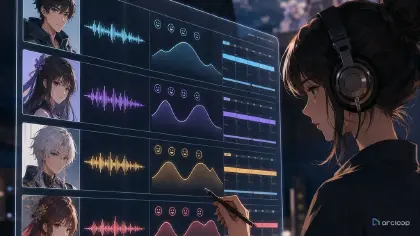
The first principle is to prompt the performance, not only the voice type. "Soft teenage female voice" is a voice type. "Soft but determined, trying not to cry while promising to return" is a performance. Performance notes tell the model what the line means.
The second principle is to define the character before the line. A voice belongs to someone. Give the model a short character profile: age range, archetype, confidence level, emotional habits, and relationship to the listener. Avoid long lore dumps. Two or three sentences are enough.
The third principle is to include scene context. Voice changes when the character is whispering in a library, shouting over battle noise, confessing under fireworks, or narrating a trailer. Context helps pacing and intensity.
The fourth principle is to control delivery with plain language. Useful terms include whispered, breathy, restrained, teasing, clipped, trembling, deadpan, bright, formal, sarcastic, exhausted, panicked, ceremonial, and intimate. Combine one emotional state with one delivery mode, not ten adjectives.
The fifth principle is to separate dialogue from direction. The model should know which words are spoken and which notes are instructions. Use labels such as "Voice direction:" and "Line:" so the prompt is easy to read and easy for a human editor to review.
The sixth principle is to avoid stereotypes and unsafe shortcuts. Do not define a voice by protected traits or caricatures. Define it by character role, personality, age range, genre, emotion, and delivery.
How to build a voice prompt: from character profile to final line
Start with the character profile. Example: "Mika is a 19-year-old apprentice mage who acts cheerful when nervous. She speaks quickly at first, then slows down when she becomes sincere." This is enough to guide performance.
Add the scene. Write who the character is speaking to and why the line matters. If the listener is a rival, friend, viewer, monster, or absent parent, the delivery changes.
Define the voice quality. Use practical descriptors: warm alto, bright youthful voice, low calm voice, airy whisper, crisp announcer tone, rough battle-worn voice. Keep it performable.
Define pacing and emotion. Do you want pauses? A nervous laugh? A breath before the final sentence? Rising energy? A softer ending? These details often matter more than pitch.
Write the exact dialogue. Keep it natural. Anime lines can be heightened, but they should still sound speakable. If a sentence is too long to say in one breath, split it.
Add boundaries. Mention no singing if you need spoken dialogue, no robotic tone, no exaggerated parody, no background music, no sound effects, or no overacting. If the line must sync with animation, mention target duration.
For recurring lines, keep the same profile stable in Character Voice Line Builder and change only the scene, listener, and emotional beat.
Where voice fits in the anime production pipeline
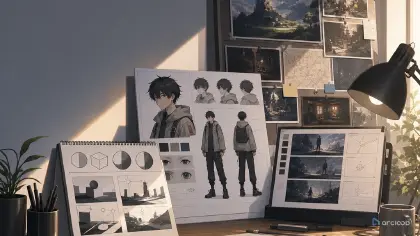
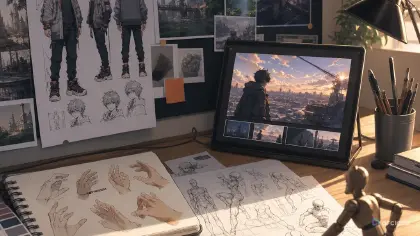
The strongest AI anime workflow is not one perfect prompt that somehow solves the whole character. It is a repeatable pipeline: character sheet → storyboard → shot prompt → video → voice direction. Voice becomes much easier to control when it is attached to those earlier decisions. A character sheet locks the visual identity and personality notes. A storyboard defines what the character is doing and why the moment exists. A shot prompt defines framing, action, and timing. The voice prompt then performs the exact emotional beat instead of inventing a new character from scratch.
This pipeline also protects your retry budget. If you generate polished voice or final video before the scene is clear, every failed take becomes expensive. A cheaper workflow is to draft the line first with plain delivery notes, test short reads, and only polish the best version after the storyboard and shot duration are stable. For video, the same rule applies: create low-cost rough clips before asking for higher fidelity, longer runtime, or upscale passes.
Character consistency is a reference problem, not just a sentence problem. For visuals, that means choosing the right reference type: a character sheet for identity, outfit references for clothing, pose references for body language, and storyboard panels for continuity. For voice, the matching move is to keep a stable character profile and reuse it across lines while changing only the scene context, emotional target, and timing. Do not rewrite the whole persona every time.
Action drift affects voice too. If the shot prompt says the character is turning away, whispering, or holding back tears, the voice direction should not ask for a huge triumphant delivery. Keep the primary action, facial acting, and spoken performance aligned. A small acting choice repeated across the storyboard often feels more convincing than a dramatic line that fights the animation.
Example 1: Gentle heroine confession
Voice direction: Create an anime character voice performance for a 17-year-old heroine named Aoi. She is usually cheerful and brave, but in this scene she is admitting fear to her childhood friend before a dangerous mission. Use a soft, youthful voice with clear pronunciation, gentle breath, and restrained emotion. She should sound vulnerable but not helpless. Start quietly, pause after the first sentence, then become warmer and more determined near the end. Natural anime drama style, not parody, not overly cute. Spoken dialogue only, no singing, no music, no sound effects. Target duration: 11 to 13 seconds.

Line: "I kept telling everyone I wasn't scared. But when you looked at me like that... I almost believed I could say it. I am scared. Still, I want to go. Because this time, I am choosing it myself."
This prompt gives the model a character, relationship, emotional shift, pacing, and a spoken line. It does not rely on "sad voice" alone.
Example 2: Comic rival entrance
Voice direction: Perform as a comedic anime rival, a 20-year-old genius inventor named Ren who is dramatic, smug, and secretly insecure. Use a bright tenor voice with theatrical confidence, quick pacing, and a playful upward lilt at the end of boasts. He is entering a workshop and pretending he has already won a contest. The performance should be funny and energetic, but still sound like a real character, not a meme voice. Add one tiny nervous hesitation before the final sentence. Spoken dialogue only, no background noise, no robotic tone, no shouting distortion. Target duration: 9 to 11 seconds.

Line: "Behold, the future has arrived three minutes ahead of schedule! Naturally, I built it myself. Mostly. Technically. Do not touch that switch unless you are prepared to witness greatness."
The hesitation note gives the rival a flaw. Small performance contradictions often make anime characters more memorable.
Example 3: Villain trailer monologue
Voice direction: Create a dark anime villain monologue for an ancient queen who has awakened after a thousand years. Use a low, elegant female voice with calm authority, slow pacing, and a faint smile in the delivery. She is not yelling; she is certain she has already won. Add a measured pause before the last sentence. The tone should be cinematic, ceremonial, and intimidating without becoming monstrous. Clean studio voice, no echo, no music, no sound effects, no whisper clipping. Target duration: 14 to 16 seconds.

Line: "So this is the kingdom that inherited my sky. How fragile it has become. You built towers, named them eternal, and forgot the hands buried beneath their stones. Kneel, little stars. Your night has returned."
This prompt avoids generic evil laughter. It defines confidence, status, pacing, and restraint, which usually produces a more useful villain voice.
The most common ways a voice prompt fails
The most common mistake is treating pitch as personality. High, low, young, and mature are not enough. Two characters can share a pitch range and still feel completely different because one is formal, one is impulsive, one hides pain through jokes, and one speaks like every word is a command.
Another mistake is writing dialogue that no actor could comfortably perform. Long sentences without pauses often sound rushed. Break emotional dialogue into breath groups and use punctuation to guide rhythm.
Creators also over-direct with conflicting emotions. "Happy, sad, angry, shy, confident, panicked" in one line gives no priority. Choose a starting emotion and an ending emotion if the line changes.
A fourth mistake is asking for an "anime voice" without genre context. A slice-of-life confession, battle shonen shout, magical girl transformation, and noir narration all use different performance conventions.
Finally, do not forget boundaries. If you need a dry voice line for editing, say no music and no sound effects. If you need a natural take, say no parody and no exaggerated performance.
FAQ
How much character backstory should I include?
Use only the backstory that affects the performance. A short role, personality trait, relationship, and emotional state are usually enough. Save world lore for scripts and scene notes.
Should I include pronunciation notes?
Yes, if a name, invented term, or phrase may be misread. Keep pronunciation notes short and place them before the dialogue. For example: "Aoi is pronounced AH-oh-ee."
How do I make repeated voice lines feel consistent?
Reuse the same character profile and voice quality, then change only the scene context and emotional direction. Consistency comes from stable identity notes plus specific performance intent for each line.
Can AI turn a story idea into animation with voice?
Yes, when it's planned as one flow inside a project. Write the story into a Story Outline, build the character as an asset with its own character voice, then break the episode into shots and use Generate Voiceover in Edit — the visual timing and the spoken performance sit in the same timeline instead of two separate tools.
Can you use AI to make anime with character voices?
Yes, but the most reliable path is a pipeline rather than a single prompt. Build the OC first, create a character sheet, plan a short storyboard, generate one shot at a time, then add voice lines that match the shot timing. This keeps the character, motion, and performance from drifting in different directions.