Core concept: reference-driven identity consistency. Treat the approved character image as an identity anchor, then change the scene, pose or framing one variable at a time.
A short episode may place the same actor in an office, a station and a night street. Individually strong images still fail when the face, haircut or costume changes between shots. Build a reusable character master first, then derive every shot from that clear starting point.
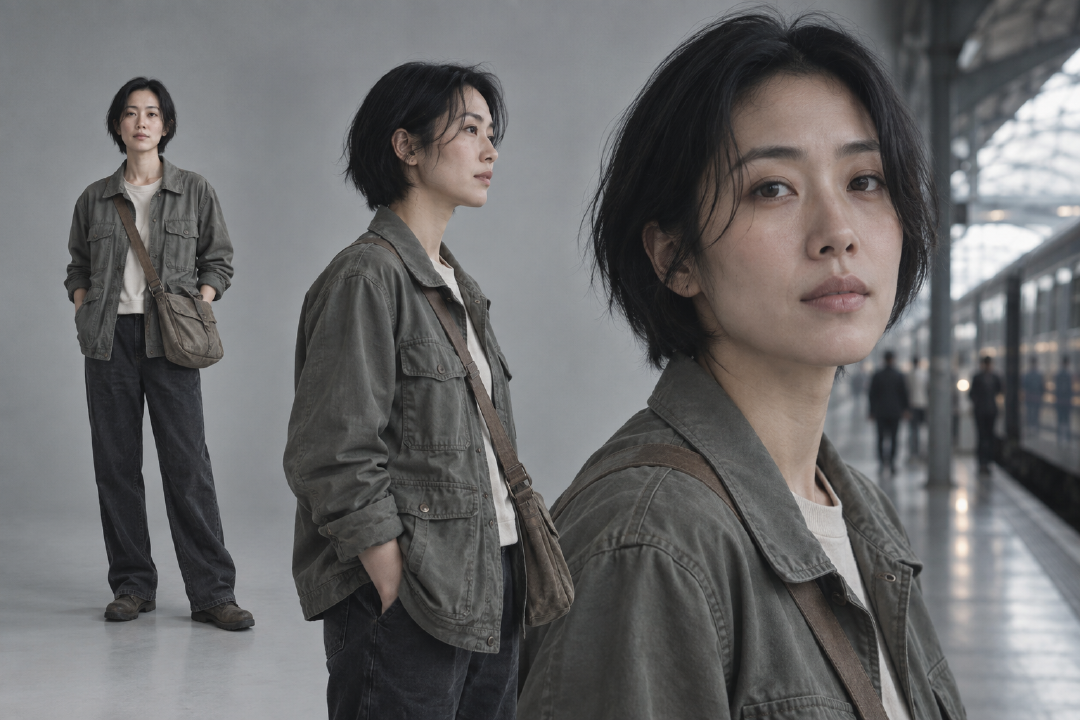
1. Define five traits that must not change
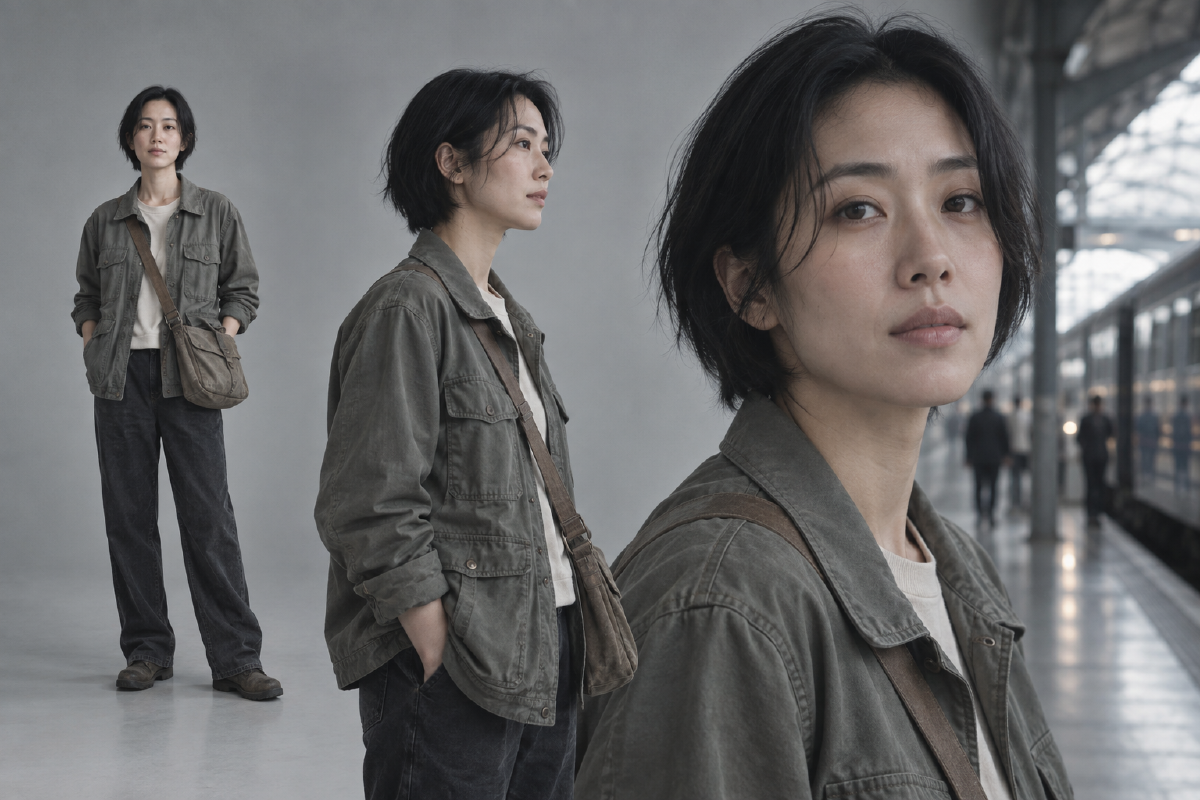
Write down age range, facial geometry, hair, one distinguishing feature and the base costume. For the original character Lin Yao, keep a slightly long face, short black hair, a subtly sparse right eyebrow tail, a gray-green jacket with two square chest pockets, and a worn canvas crossbody bag.
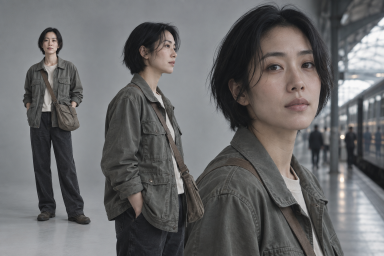
Create a wide reference sheet for the original adult character “Lin Yao”.
Character: 29-year-old East Asian woman, short black hair, slightly long face, subtly sparse right eyebrow tail.
Wardrobe: gray-green short jacket with two square chest pockets, cream crew-neck shirt, worn canvas crossbody bag.
Layout: full-body front view on the left, half-body profile in the center, facial close-up on the right.
All three views must show the same person and outfit. Neutral gray background, soft even light.
No scene, text or exaggerated expression. Leave clear space between views.
Inspect the face first, then the pockets and bag strap. If the profile already looks like another person, fix the master before producing more scenes.
2. Change the setting before changing the camera
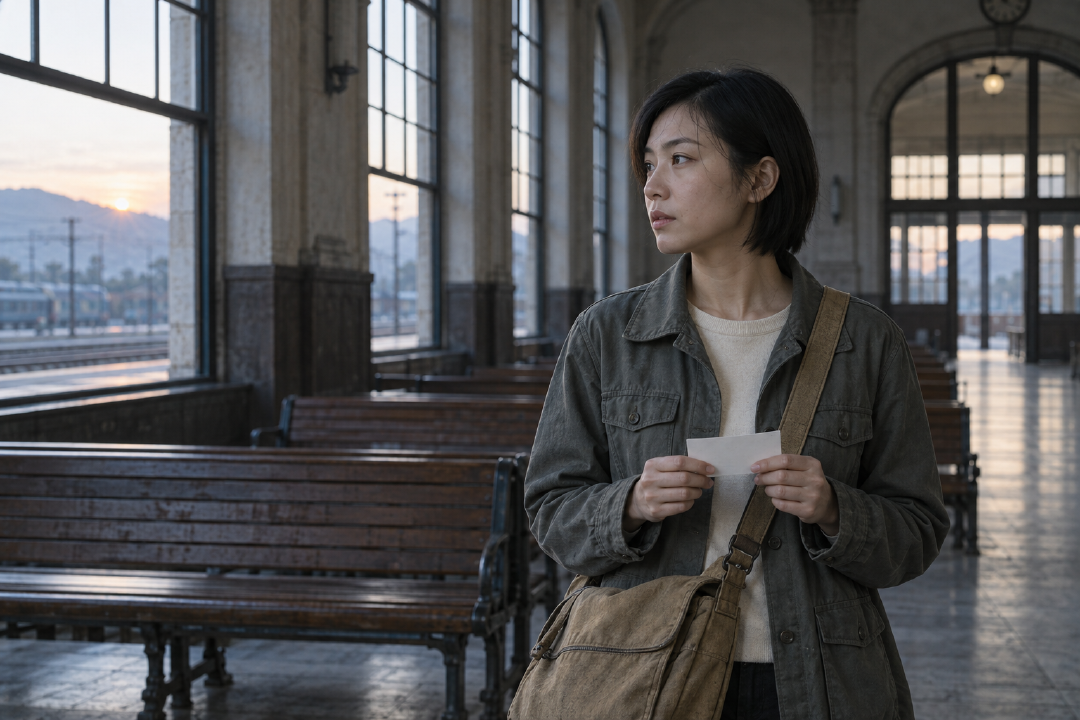
Save the approved master in Arcloop and cite it as the only identity reference. Begin with a medium, eye-level shot and change only the background.
Use the attached character master as the only identity reference.
Place Lin Yao in an old railway-station waiting hall at dawn, holding a blank ticket and looking toward frame left.
Keep her facial geometry, short black hair, gray-green jacket and canvas-bag structure.
Medium shot at eye level; place her on the right third and leave environment on the left.
Cool window light enters the hall while her face remains readable. Add no other protagonist or subtitle.
3. Split continuity into single changes
Move from the approved station shot to a close-up before changing gaze, costume or time of day.
Use the approved station medium shot to create a close-up at the same moment.
Lin Yao still looks toward frame left; change her expression from calm to alert.
Keep identity, hair, collar, light direction and station color palette.
Change only framing and expression. Add no accessory and do not change story time.
Review and delivery
Compare eye spacing, nose and mouth proportions, hairline, pocket geometry and the side of the bag strap. Environmental color shifts may be acceptable; a new face, age change or redrawn jacket is a failed continuity check. Deliver the character master, approved shots and a short identity checklist so every image can be traced back to the same source.