Core concept: targeted editing and semantic preservation. State one edit and name every subject, object, camera and lighting condition that must remain.
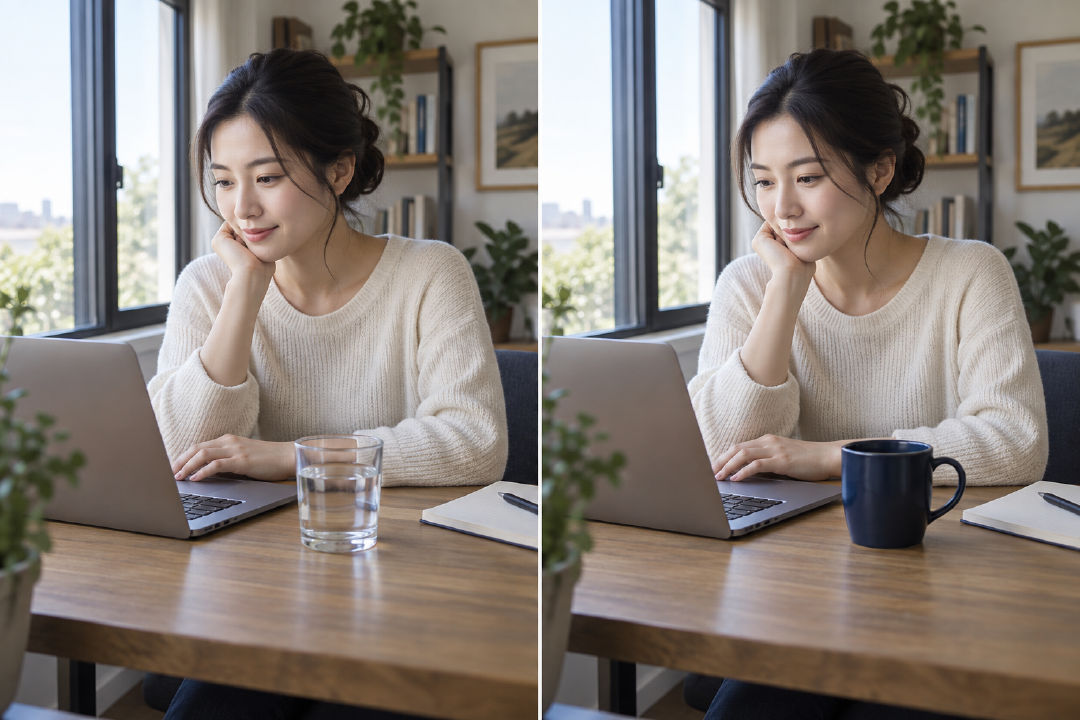
Write preservation rules as concrete nouns
Open the source in Arcloop and keep the original beside every result. “Everything else unchanged” is too vague; list the person, clothing, table, laptop, window, crop and light.
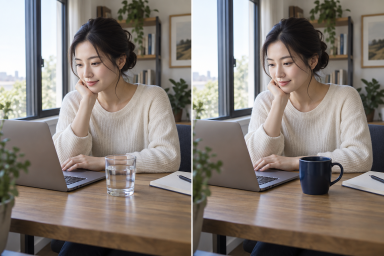
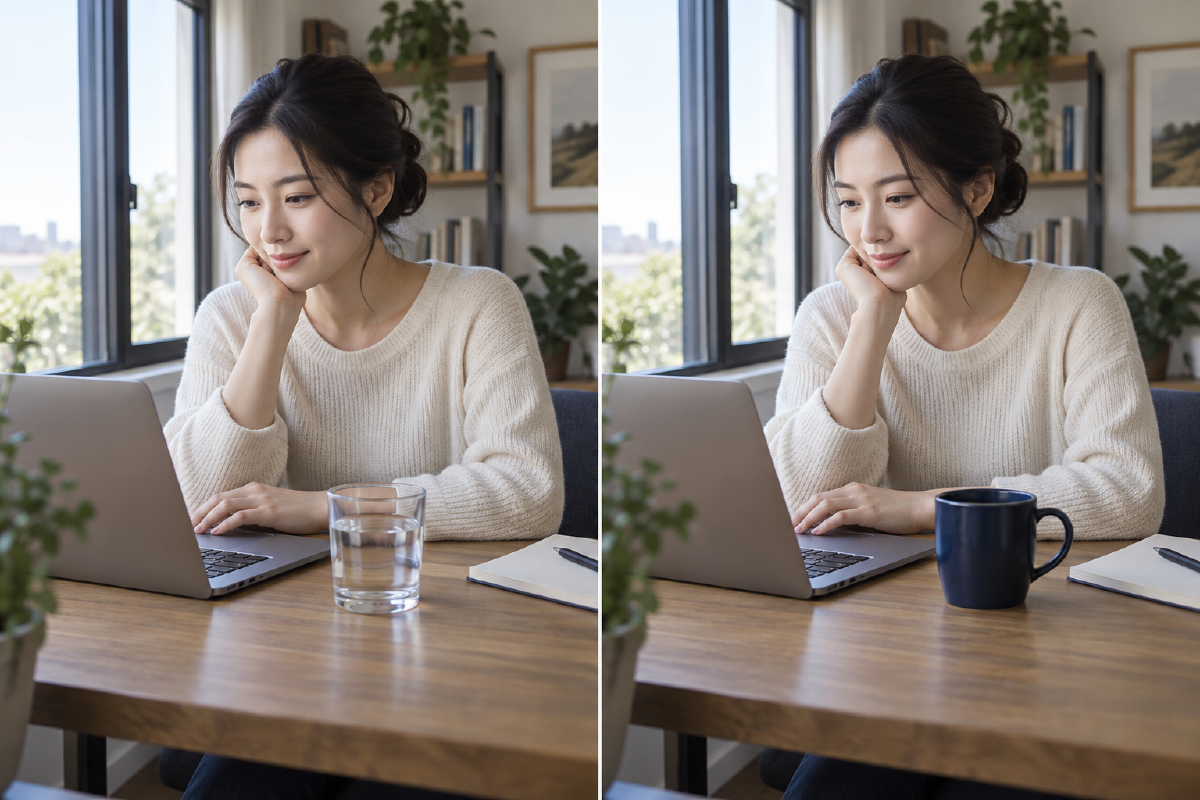
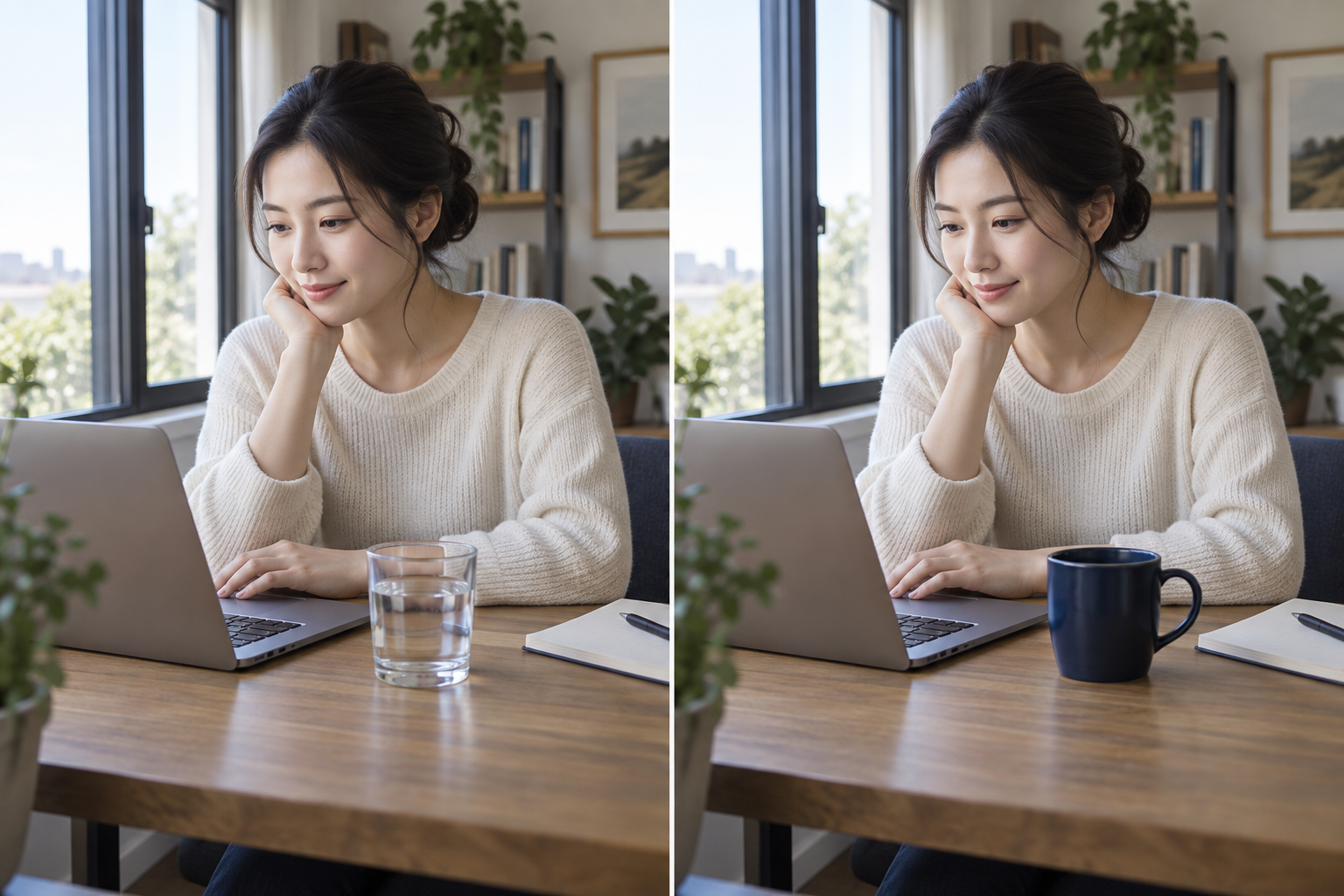
Use the attached image and replace only the clear glass on the table with a plain deep navy ceramic mug.
Keep the new mug in the original position and at roughly the same height; handle points right.
Preserve the person’s face, features, hair, top, seated pose, table grain, laptop position and window.
Keep camera angle, crop, window-light direction and shadow softness.
Add no text, change no other prop and do not redesign the room.

Work in versions and return to the last approved image
If V2 damages the person, return to V1. Do not let a failed result become the next reference.
Use the approved navy-mug version.
This round, change only the laptop shell to matte graphite; keep its size, perspective and position.
Preserve mug color and handle direction, person, clothing and room.
Add no brand mark, do not change screen content, camera or depth of field.
Inspect the supposedly unchanged areas
Compare at the same scale. Check face, hairline, desk edges, laptop perspective, mug handle and shadows. A completed object change still fails if the person or camera drifts.
Save the edit record
Deliver the original, key approved versions and a note saying what changed and what stayed fixed.