Introduction
Vertical micro-drama fails fast when the phone screen exposes every weak choice: each close-up can turn into a new face because the character was never built as an asset, subtitles cover the prop, the first three seconds don't show conflict, and each beat gets written as a loose one-off prompt instead of a shot description that references the same character asset and aspect ratio as the rest of the episode. A solid story can still feel unusable if the shots were never tied together this way.
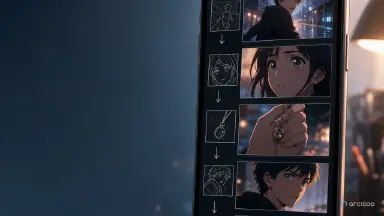
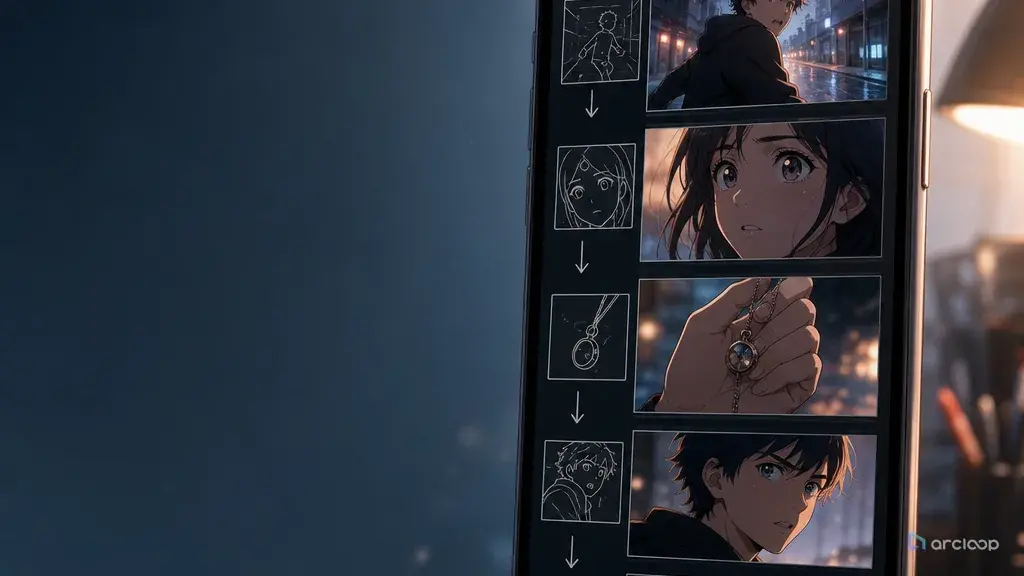
A vertical micro-drama generator should start from script beats and turn them into 9:16 shot cards. Use AI Short Drama guides for reusable vertical setups, lock recurring roles with Character Sheet References, and keep revision work in a creative world once the episode needs iteration.
The script-first layer decides what the viewer must see on a narrow screen: face readability, close-up rhythm, subtitle-safe zones, prop inserts, fast emotional turns, and the cliffhanger that earns the next tap.
What Vertical Changes
Vertical framing prioritizes faces. A micro-drama audience watches on a narrow screen, often with captions and interface overlays. Medium shots, reaction close-ups, and hand inserts usually read better than wide scenic compositions.
Vertical also changes blocking. Two characters standing side by side may feel cramped. Stagger them in depth, use over-the-shoulder framing, or split the scene into reaction shots. If a prop matters, give it a dedicated insert instead of hoping it remains visible in a crowded frame.
The first three seconds matter more. A vertical micro-drama needs a hook that is visible without context: a message on a phone, a shocking line, a forbidden object, a face caught in betrayal, a door opening at the wrong moment. The generator should identify the hook from the script and make it the first shot or first action.
Subtitles need space. If the composition puts the character's mouth, phone text, or prop reveal in the same area as captions, the scene becomes hard to read. Shot cards should mark subtitle-safe zones before render.
Continuity still matters. Vertical format does not excuse face drift. In fact, close-up-heavy drama makes drift more obvious. The character reference library has to be approved before final vertical renders.
A Script-First Vertical Workflow
Start with the episode beat. Write the conflict, reveal, and ending turn. A 45-second micro-drama should not try to cover an entire feature plot. It should make one emotional turn unavoidable.
Break the beat into scene cards. For a single-location episode, the "scene" may be one room. Still write location, active characters, prop continuity, emotional turn, and ending beat.
Create a vertical shot list. A practical structure is hook, context, insert, reaction, confrontation, cliffhanger. Each shot gets runtime, framing, action, camera, dialogue coverage, and safe-zone notes.
Assign voice lanes. Vertical micro-drama often moves quickly, so voice pace and pauses must be planned. A dramatic silence can be more powerful than another line.
Run rough drafts first. Check face consistency, prop readability, subtitle space, and hook clarity. Only final-render shots that pass. Use the Low-Cost Draft to Final Workflow when retry budget matters.
Plan for the Thumb Stop
Vertical micro-drama has to earn attention before the audience understands the full plot. That does not mean every opening needs shouting or shock. It means the first shot should make a question visible. Why is there a hotel key in the groom's pocket? Why did the CEO stop speaking? Why is the discharge form torn?
The script-first workflow should identify that question and protect it in the first shot. Keep the image simple, the face readable, and the key object unobstructed. If the opening requires three lines of explanation before the conflict appears, rewrite the beat or move the reveal earlier. The phone screen rewards clarity.
Example 1: Vertical Episode Spec
Create a vertical micro-drama production plan from this script beat.

Format: 9:16, 45 seconds, phone-first viewing.
Story beat: A bride finds a hotel key card in the groom's jacket ten minutes before the ceremony. The room number matches her sister's birthday.
Required output:
1. Hook shot for the first 3 seconds.
2. Character reference needs for bride, groom, and sister.
3. Per-scene vertical shot list with face-safe and subtitle-safe framing.
4. Prop continuity rules for key card, jacket, bouquet, and phone.
5. Voice lane notes for each character.
6. Approve-before-render checklist.
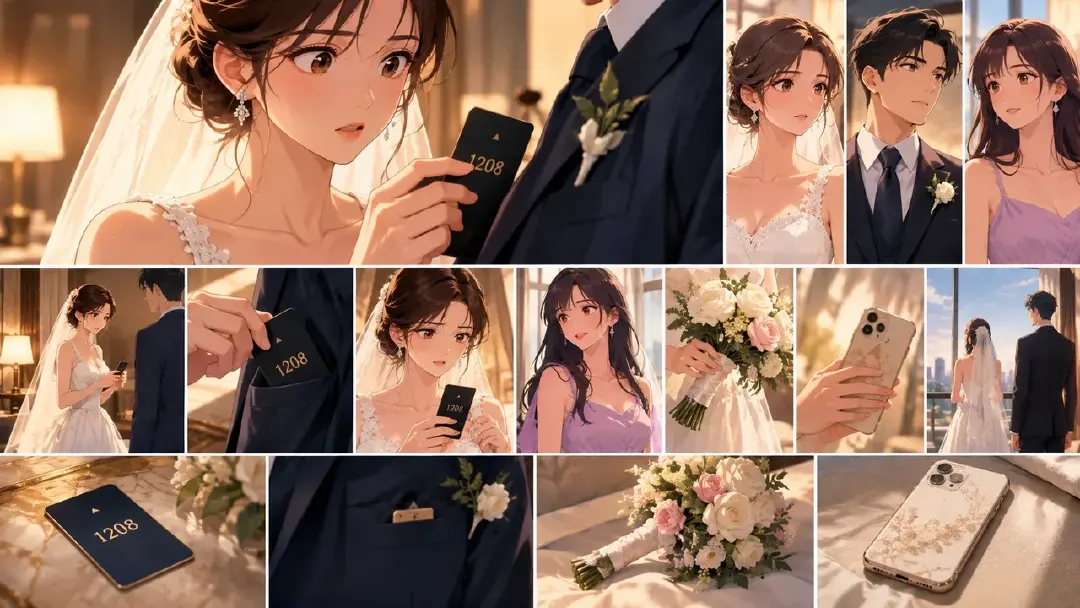
This prompt asks for production planning before visual polish.
Example 2: Vertical Shot List
Episode: Hotel key before the wedding
Aspect ratio: 9:16

SH01 hook, 3 sec:
Tight insert of hotel key card sliding from black tuxedo jacket pocket into the bride's hand. Keep card number readable in upper center, subtitle-safe lower third.

SH02 reaction, 5 sec:
Close-up on bride's face as she recognizes the room number. Preserve tearful restraint, no full crying yet.

SH03 context, 6 sec:
Mirror shot: bride in wedding dress foreground, groom reflected entering behind her. Keep both faces separated vertically.

SH04 confrontation, 8 sec:
Over-the-shoulder from bride to groom. Bride asks one line. Groom freezes before answering.

SH05 cliffhanger, 6 sec:
Phone buzzes with sister's name. Bride looks from key card to phone. Cut before she answers.
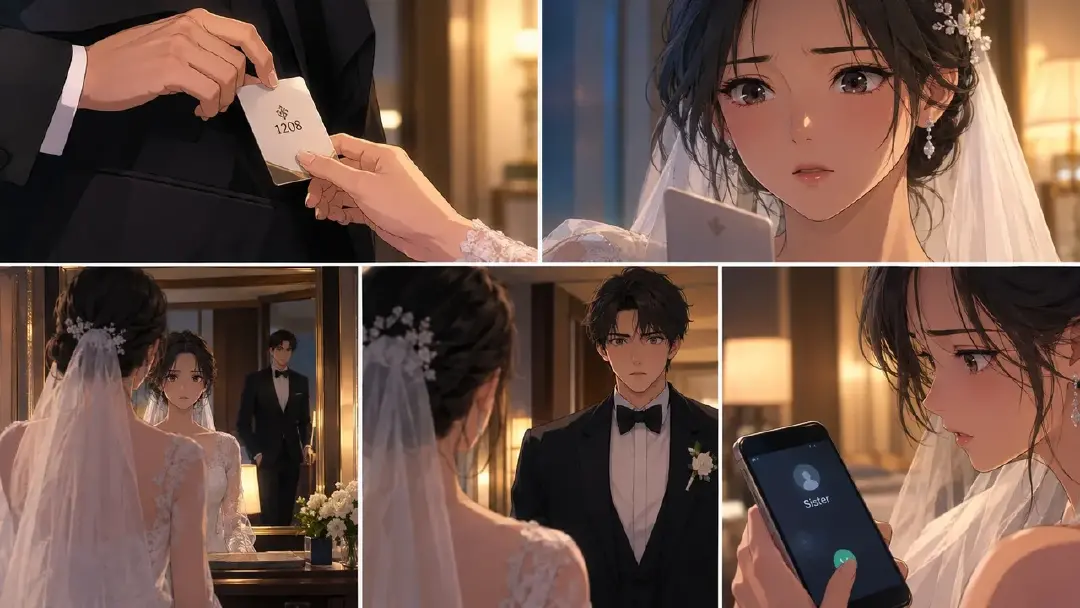
This shot list uses vertical space intentionally instead of adapting a horizontal plan.
Example 3: Vertical Render Prompt
Use the approved BRIDE_IDENTITY_V1 character reference and the hotel key prop reference.

Create a 6-second vertical 9:16 AI short drama shot. The bride stands in a dressing room mirror light, holding a white hotel key card between trembling fingers. Camera starts on the card in the upper center of frame, then tilts to her face as she realizes the room number matches her sister's birthday. Keep the lower third clean for subtitles. Preserve bride face shape, black low bun, pearl earrings, ivory dress neckline, and soft natural makeup. Lighting: warm mirror bulbs with slight shadow under the eyes. No extra characters, no cropped face, no unreadable card, no text except the card number.

The prompt protects vertical readability and identity at the same time.
Common Mistakes
The biggest mistake is using wide establishing shots as if the audience were watching on a cinema screen. Use wide shots sparingly and keep the story readable on a phone.
Another mistake is placing critical details under subtitles. Phone text, keys, rings, signatures, and facial reactions should have protected zones.
Creators also overload the opening. A hook should be one readable conflict signal, not a montage of everything.
Finally, do not let vertical close-ups hide continuity issues. Close-up-heavy drama makes inconsistent faces more visible, so approve the character library first.
FAQ
What makes a good vertical micro-drama hook?
A good hook shows conflict immediately: a suspicious message, a forbidden object, a shocking line, a hidden identity, or a reaction that demands context.
Should vertical micro-drama use fewer wide shots?
Usually yes. Wide shots can establish location, but close-ups, inserts, and over-the-shoulder shots carry phone-screen drama better.
How do I keep subtitles from covering the scene?
Mark subtitle-safe areas in every shot card. Keep faces, mouths, phone screens, and prop reveals out of the lower third when captions will appear there.