
Introduction
You need her to look unimpressed — not angry, not bored, the flat stare that says she has heard this before. You write "unimpressed expression," and the model gives you a frown. You write "deadpan," and you get a smile with the eyes closed. Every emotion word maps to the same five stock faces, and none of them is the one the scene needs.
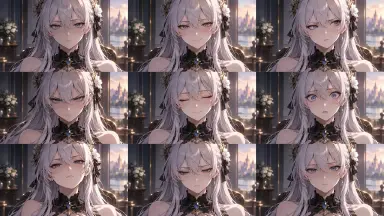
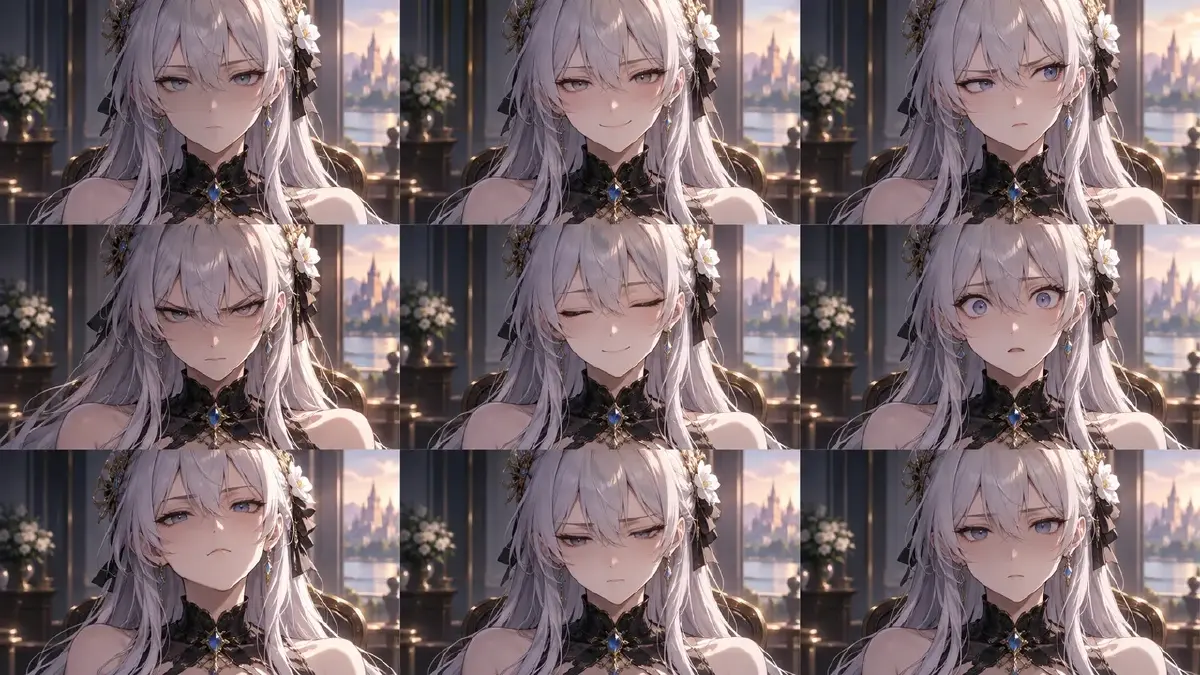
Expressions are not emotions. They are what the brows do, what the eyes do, what the mouth does, and where the head sits — and a prompt that says that gets the face. This guide is a facial expression prompt list for AI anime characters: 24 expressions written as face instructions, from deadpan to breakdown, plus the workflow for turning them into an expression set on a character asset in ArcLoop so a shot can call "Yuki, deadpan-02" instead of describing a face from scratch.
How to write one expression
Four parts, always in this order, because it is the order the model weights them:
- Brows — level, one raised, both drawn in, lifted at the inner corners.
- Eyes — open, half-lidded, narrowed, wide, looking where.
- Mouth — closed flat, corner pulled, parted, pressed.
- Head — level, tilted, chin down, turned slightly away.
Then, optionally, one line of what it means, for your own reference: "the flat stare that says she has heard this before." The model reads the four parts; you read the meaning.
For the subtle end of the range — the millimetre changes in reaction shots — the subtle expression guide goes deeper. This list is the full spread.
The list
Neutral and deadpan
- Neutral resting. Brows level; eyes open, soft focus at camera; mouth closed, relaxed; head level.
- Deadpan. Brows level and still; eyes half-lidded, fixed on the other person; mouth a flat line; head level, not a degree of tilt.
- Unimpressed. Brows level, one a hair lower; eyes half-lidded, slow blink; mouth flat with one corner very slightly down; chin lifted a little.
- Listening, withholding. Brows level; eyes on the speaker, steady; lips pressed together; head very slightly tilted.
Micro-reactions
- Caught off guard. Brows lift for a beat; eyes widen slightly; lips part; head pulls back a few millimetres.
- Suppressed smile. Brows level; eyes crease at the corners; mouth pressed shut with the corners pulling; chin dips.
- Quiet disappointment. Inner brows lift; eyes drop to the table; mouth closed, corners neutral; head lowers.
- Recognition. Brows lift and settle; eyes sharpen and hold; lips part then close; head turns a few degrees toward the thing.
- Doubt. One brow rises; eyes narrow on the other side; mouth closed, corner tucked; head tilts away.
- Relief. Brows release upward; eyes close for a beat, then open soft; breath out through parted lips; shoulders drop with the head.
Social masks
- Polite smile. Brows level; eyes do not crease; mouth smiles with the lips closed; head straight.
- Professional calm. Brows level; eyes steady, blink rate normal; mouth neutral; chin level.
- Faked enthusiasm. Brows high; eyes wide but not creased; mouth open in a smile that stops before the eyes; head nodding slightly.
- Pretending not to hear. Brows level; eyes fixed on something else; mouth flat; head angled away from the speaker.
Pressure and conflict
- Holding back anger. Brows drawn in and down; eyes narrowed, locked; jaw set, lips pressed white; chin down.
- Cold fury. Brows level and low; eyes wide open, unblinking; mouth flat; head perfectly still.
- Contempt. One brow slightly raised; eyes half-lidded; one mouth corner lifted; head tilted back a fraction.
- Fear, contained. Brows lifted at the inner corners; eyes wide, darting once; lips pressed; head pulled back and slightly down.
- Bracing for bad news. Brows drawn together; eyes on the speaker's mouth; lips pressed; breath held, chest still.
Extremes
- Breaking down. Brows lifted and pinched together; eyes squeezed, wet; mouth open and pulled down at the corners; head drops.
- Shock. Brows as high as they go; eyes wide, pupils small; mouth open; head frozen.
- Manic joy. Brows high; eyes wide and creased; wide open-mouth smile; head thrown back a little.
- Rage. Brows slammed down; eyes narrowed to slits; teeth bared; head thrust forward.
- Empty. Brows slack; eyes open, unfocused, not on anything; mouth slack; head tilted down and to one side.
How to build the expression set on the asset, step by step
- Pick the 8–12 expressions this character will actually use. A stoic lead needs deadpan, unimpressed, holding-back-anger, and breaking-down more than manic joy.
- Generate them as a set in one session with the character asset referenced by
@, same framing (head-and-shoulders, front three-quarter), same light. One expression per generation, the four-part description as the only new text. - Name each frame "yuki-deadpan," "yuki-suppressed-smile," and bind them to the character asset as Reference images. This is the expression set; the VTuber expression sheet guide covers the rigged-model version of the same idea.
- In a shot, call the expression by name: "@Yuki, expression as yuki-deadpan reference, she does not react." Do not paste the four-part text again; the reference carries it.
- For a change of expression inside a shot, name the start and end frames: "from yuki-polite-smile to yuki-recognition over two seconds."
- Review expression on the still before video. A wrong expression in the still is a wrong expression for the whole clip.
Example 1: One expression frame for the set
Head-and-shoulders, front three-quarter, soft studio light, plain background, same framing as the rest of @Yuki's expression set. Expression, deadpan: brows level and still; eyes half-lidded, fixed straight at camera; mouth a flat line, no tension; head level with no tilt. Nothing else changes from the asset's Main image — hair, outfit, and proportions from the reference. This is the frame that will be named yuki-deadpan.
Example 2: Calling the expression in a shot
Medium shot, camera at eye level, static, in @Harbor Café. @Yuki sits across from @Hana, who is mid-explanation. Yuki's expression as reference yuki-unimpressed: one brow a hair lower, half-lidded eyes, flat mouth with one corner down, chin lifted slightly. She holds it for the whole shot and slowly stirs her coffee. Hana keeps talking. Late morning light from the window on the right.
Example 3: An expression change inside one shot
Close-up, camera slightly below eye level, static, @Kaito on the shrine steps reading the letter. Expression moves from kaito-professional-calm to kaito-recognition to kaito-quiet-disappointment over six seconds: brows lift and settle on the first line, eyes sharpen, then the inner brows lift and the eyes drop to the paper. Mouth stays closed throughout; no head movement beyond the drop of the eyes. Dawn light from frame left, unchanged, and the camera holds.
The most common ways expression prompts fail
- Emotion word instead of face parts. "Sad" → stock frown. Write brows, eyes, mouth, head.
- Too many parts moving. Brows, eyes, mouth, and hands all doing something reads as a grimace. One or two parts carry it.
- Expression text pasted into every shot. Text competes with the face reference. Name the frame, reference it.
- Set generated with different framing. Expressions at different angles do not compare. Same framing, same light, one session.
- Extreme where a micro was needed. Shock for "caught off guard." Check the list's category before you pick.
FAQ
How many expressions does a character need? Eight to twelve for a lead, four to six for a supporting character. Generate what the script uses.
Can I reuse the list for a different art style? Yes; the four-part descriptions are style-neutral. The style comes from the character's Main image and the project's style reference.
What about mouth shapes for dialogue? Lip sync is a separate layer handled at video time. The expression set is about the face around the mouth; keep the mouth "closed" or "parted" in the set and let the line drive the rest.
Does deadpan work in a video shot, or only stills? It works especially in video: the stillness is the performance. State "no change of expression for the whole shot" so the model does not add a reaction.
Next step
Pick your lead, choose eight expressions from the list that the script actually uses, and generate them as one session in ArcLoop with @ reference and identical framing. Bind them to the asset by name, then rewrite one shot to call an expression by name instead of describing a face — and see how much of the shot text disappears.