When you adapt a novel into a short drama, a character can spend three paragraphs deciding whether to hide a letter: weighing consequences, replaying a conversation, and talking themselves out of guilt. The passage may work on the page, but a silent shot of someone holding paper will not necessarily communicate that reasoning.
This article shows how to turn that hidden reasoning into shots: isolate the causal beat in a block of prose, compare three adaptations, and build the chosen beats into ArcLoop shot cards. Keep narration when its perspective adds something the visible action cannot express.
Find the Causal Beat Hidden Inside the Thought
Take this paragraph from a fictional novel, The Inheritance Season:
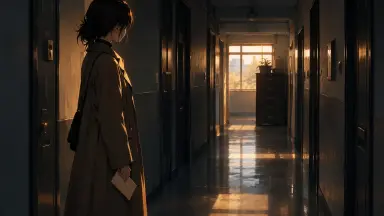
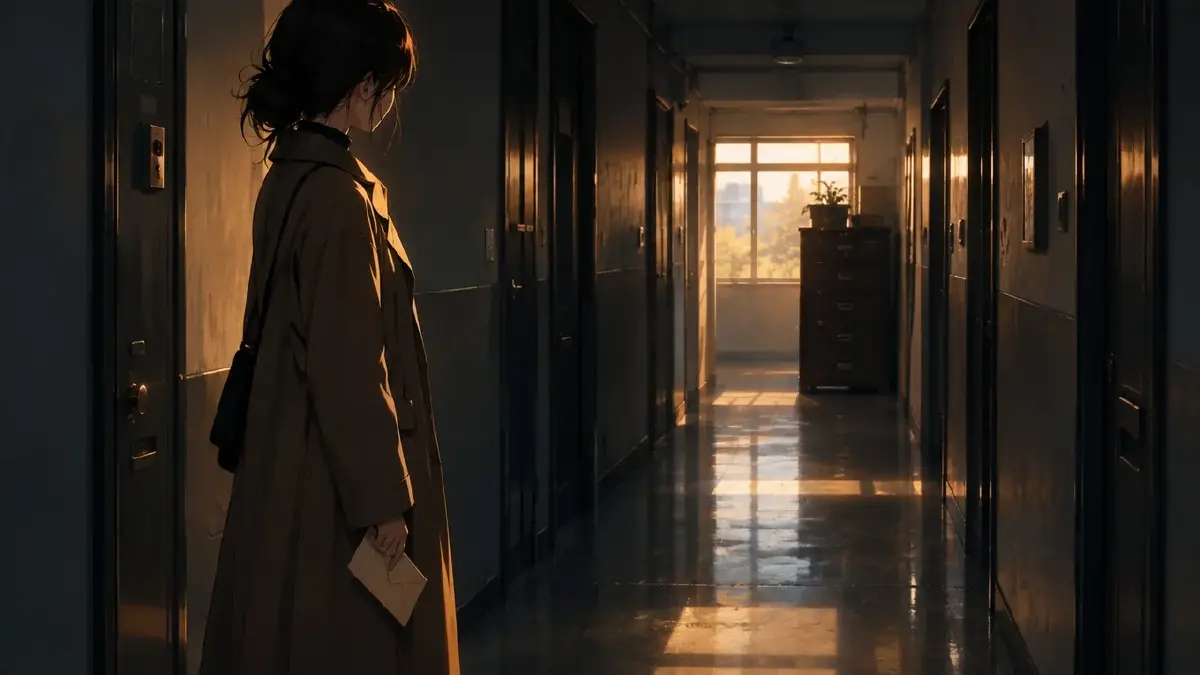
Lena stood in the hallway with the solicitor's letter in her hand. She had been standing there for four minutes. She knew exactly what she was going to do — she had always known, probably — but she needed to finish the thought first, to make it feel less like a decision she was running toward and more like one she had arrived at. She folded the letter and put it in her coat pocket instead of the cabinet where her father's papers lived.
In this original example, the passage presents Lena’s self-deception alongside the physical act of concealing the letter.
The filmable event is already in its final sentence: Lena pockets the letter instead of filing it. What the action alone does not establish is why the cabinet is the expected destination. That missing context determines whether viewers recognize concealment or just see someone putting paper away.
Before you write a single shot card, isolate the causal beat: Lena hides a letter in her coat instead of the filing cabinet. That is what the next scene will react to. The rest is staging.
Three Adaptations of the Same Internal Moment
Once you have the causal beat, you have three real choices for how to put it on screen. Each version preserves something and loses something.
Version 1 — Voiceover narration. Lena's voice reads a version of the paragraph while her hands do the action. The audience hears the self-deception explained.
Tradeoff: an explanatory voiceover can resolve ambiguity sooner than you intend. A self-justifying voiceover can also preserve the gap between Lena’s claim and her action. Choose which perspective you want, rather than assuming narration must repeat what the image already shows.
Version 2 — Physical avoidance. No narration. Establish the cabinet as the destination in one shot; in the next, Lena pockets the letter while that cabinet remains visible. Separate actions when a glance or departure also needs coverage. Do not compress a whole chain into an arbitrary duration.
What it loses: the audience knows she avoided the cabinet, but they do not yet know why it matters. This version only works if a prior shot has established what is in the cabinet and why it is the correct destination for the letter.
Version 3 — Visible consequence. Omit the concealment itself. A later shot shows her brother Marcus finding the expected correspondence folder empty. Earlier context must establish that Lena received the letter; the empty folder alone cannot prove who removed or withheld it.
What it loses: the moment of decision itself. This version can feel elliptical if the audience does not have enough to reconstruct Lena's intent.
For this example, combine Version 2 and Version 3: a visible concealment followed by its practical consequence. That choice emphasizes responsibility. A voiceover version could instead emphasize self-deception. Neither is universally better; compare what each version lets the audience understand.
Put the Surviving Beats into Story Outline and Assets
Once you have decided which beats to keep, open your ArcLoop project and write them into the Story Outline as observable events, not internal states.
Instead of: Lena struggles with the decision to hide the letter.
Write: Lena pockets the received letter instead of filing it. Later, Marcus finds its expected correspondence folder empty. Keep the earlier receipt and agreed filing destination in the outline so the later absence has a clear meaning.
These observable events give you concrete facts to check when reviewing the generated Storyboard.
Create the fictional assets used below before selecting them through @: character assets for Lena and Marcus; prop assets for the Letter, FilingCabinet and CorrespondenceFolder; scene assets for the Hallway and Kitchen. Upload useful reference images to Library, then Bind them as Main images or Reference images in My Assets. The folder needs a recognizable shape or color, not perfectly generated text labels.
Shot 1 — The avoidance beat
Locked medium view of @Lena in @Hallway, with @FilingCabinet clearly visible at the end of the passage. @Lena slips the folded @Letter into her coat pocket. Keep the cabinet and the pocket in the same composition so the unused destination remains visible. Her expression stays composed, and her other hand rests at her side. Warm late-afternoon light falls across the corridor. This is one pocketing action; no head turn, departure, second gesture, or camera move.
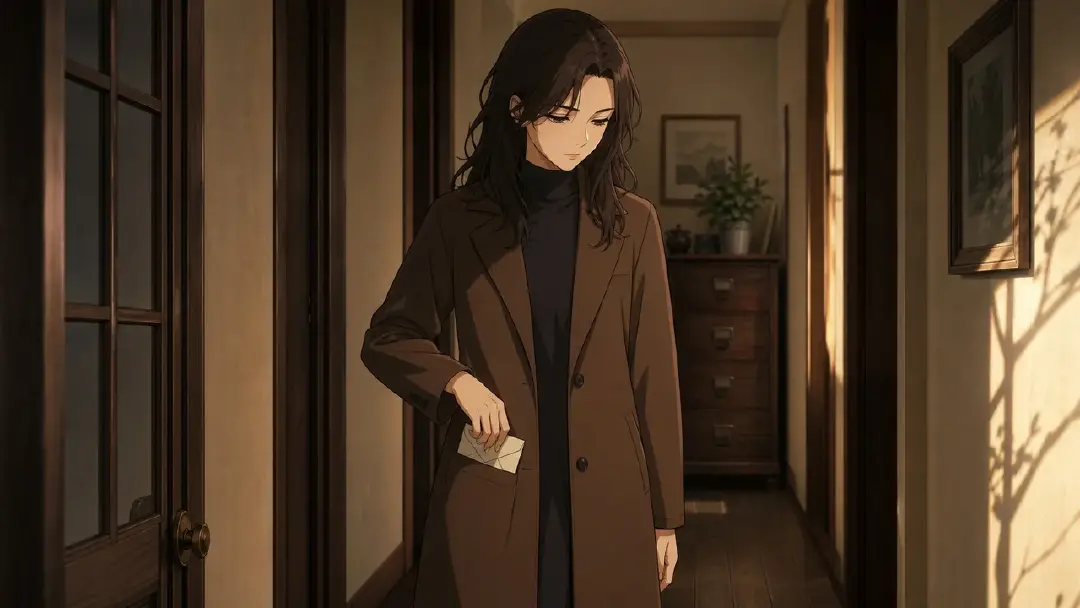
This shot makes the alternative visible: the cabinet stays in view while Lena pockets the letter. Her intention becomes readable only after the story establishes where the letter should go. Add that context rather than asking a complicated facial performance to communicate it alone.
Shot 2 — Confirming the prop's significance
Locked medium-close view of @Marcus beside the open @FilingCabinet in @Hallway. @Marcus lifts the already-open @CorrespondenceFolder from the drawer, keeping its empty interior visible toward the camera. His expression remains concentrated, without an added reach or a second search. Use the folder’s established shape and color for recognition; no readable label is required. Cool overhead light keeps the interior clear. One lifting action only, with no drawer closing, page flipping, camera movement, or cut.
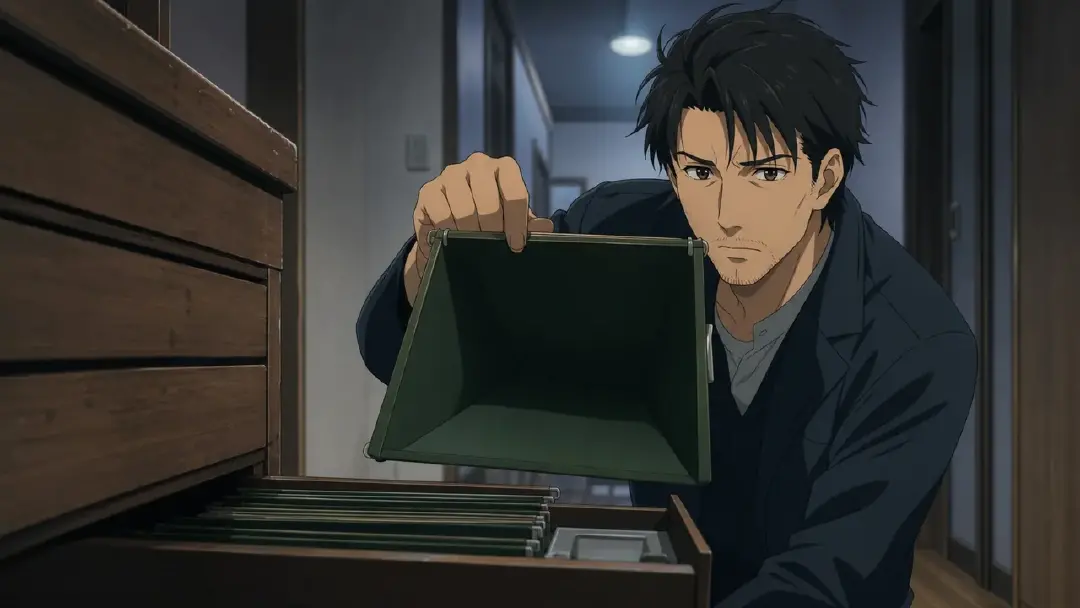
This supplies the consequence: Marcus does not have the correspondence he needs. Pair it with an established reason he needs the letter now. An empty folder is evidence of absence, not automatic proof of Lena’s motive or the size of the eventual cost.
Shot 3 — Planting the letter as a later reveal
Locked close view of @Lena’s hand at the table in @Kitchen. The folded @Letter is already face-down on the clear tabletop. @Lena slides it beneath the existing stack of unopened mail, leaving one recognizable corner visible. Keep the hand path unobstructed and the stack still. Soft window light from frame left separates the paper layers. One sliding action only; no placing the letter first, touching another object, head turn, camera move, or additional gesture.
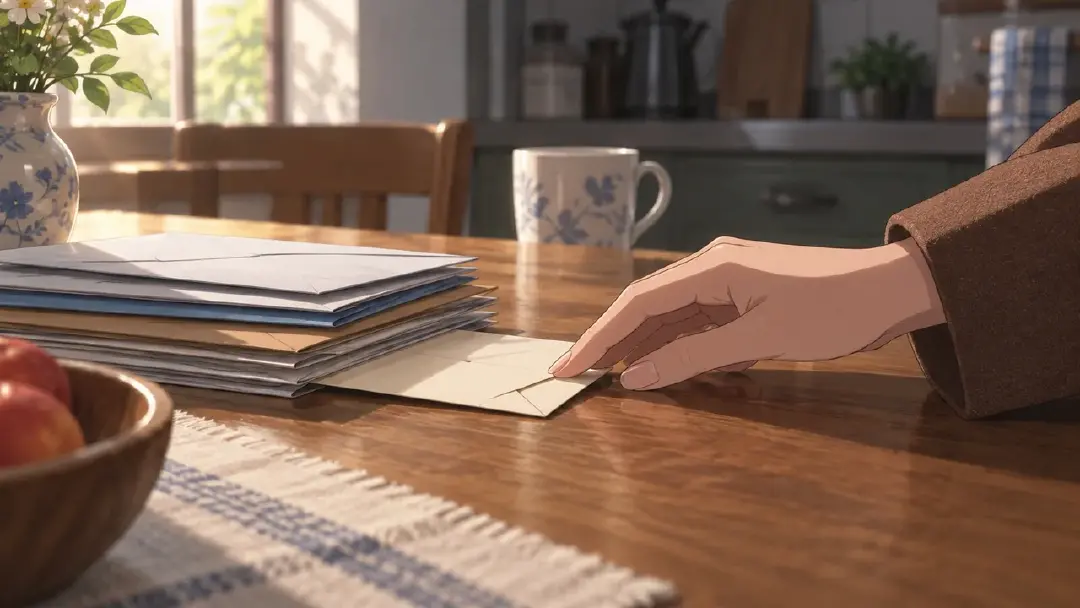
This shot belongs later in the episode or in the next one. It closes the loop on where the letter actually went — and it turns a moment that could have been voiceover into a prop story the camera can follow across multiple scenes.
How to Test the Cut Without Narration
Before you commit to any voiceover, generate the shots for the avoidance beat and the consequence beat, then watch the sequence without audio. Ask: does the audience know that a deliberate choice was made?
If yes, compare the narration’s contribution. Remove a line that merely repeats the visible event; retain a perspective, contradiction or important thought that changes its meaning.
If the sequence reads as ambiguous — if Lena pocketing the letter could be read as absent-mindedness rather than a choice — the problem is usually a missing prior shot, not a missing voiceover. Add a shot earlier in the episode that establishes the filing cabinet's purpose. That context does the work of narration without a narrator.
If the scene needs Lena’s private justification, try one specific voiceover line such as “I just need a few more days.” In Edit, use Generate Voiceover and compare the scene with and without that line. Judge the intended perspective, not just whether narration exists.
Open the Episode, click Generate Shots, and edit the relevant shot cards. Generate still images first to check the cabinet, letter and folder states. Once they read, use AI Chat Panel: Generate videos for Shots 1, 2, and 3. Review the motion and arrange the selected clips in Edit; revise any action whose cause remains unclear.
At outline level, ask what a camera would record. A facial reaction can be sufficient when the preceding context gives it meaning; it does not always need a prop gesture. If “realizes” or “decides” remains ambiguous, describe a specific visible response and the information that makes it interpretable.
Next Step
Open your project in ArcLoop, write the causal beats from your adapted novel passage into the Story Outline as observable events, and create your character and prop assets in My Assets. Generate the shots for the avoidance sequence first — watch the cut without audio before deciding whether any narration survives.
For more on structuring a complete novel-to-episode workflow, see the handbook article on going from logline to a shot-ready script.
FAQ
The internal monologue I want to adapt is the whole point of the chapter. What do I keep?
Identify what makes the monologue essential: a decision, an unreliable interpretation, a memory or a distinctive voice. Keep that function. Some thoughts deserve narration; others become clearer through action and context. Do not remove the character’s perspective merely to make the scene silent.
What if the character's self-deception is the story, not just a beat?
Use dialogue (what they tell another character) as the stated version of their thinking, and use props, physical choices, and avoidance as the real version. Let that gap run across multiple shots rather than resolving it in one.
Which assets should I prepare for the first test?
Prepare the character, scene and props referenced in that shot, with suitable images bound in My Assets. For the first example that means Lena, the Hallway, the Letter and the FilingCabinet. Add Marcus and the other references before testing their shots.
My voiceover version tested better with an early audience. Should I keep it?
Keep the version that serves the intended perspective and remains understandable. Ask viewers what they inferred about Lena rather than only which cut they preferred. If a missing setup confused the silent version, repair that setup before comparing the two again.