Alexander
Dominant · Magnetic · Deep

Turn text into natural, expressive character lines in 50+ languages and accents.
Try these popular voice presets crafted for short dramas and cartoons.
Dominant · Magnetic · Deep

Dramatic · Cold · Seductive

Energetic · Wild · Dynamic

Playful · Sweet · Whimsical
Create natural dialogue for an entire cast in multiple languages. Give every character a distinct voice, direct how each line sounds, and keep their voice consistent throughout the story.
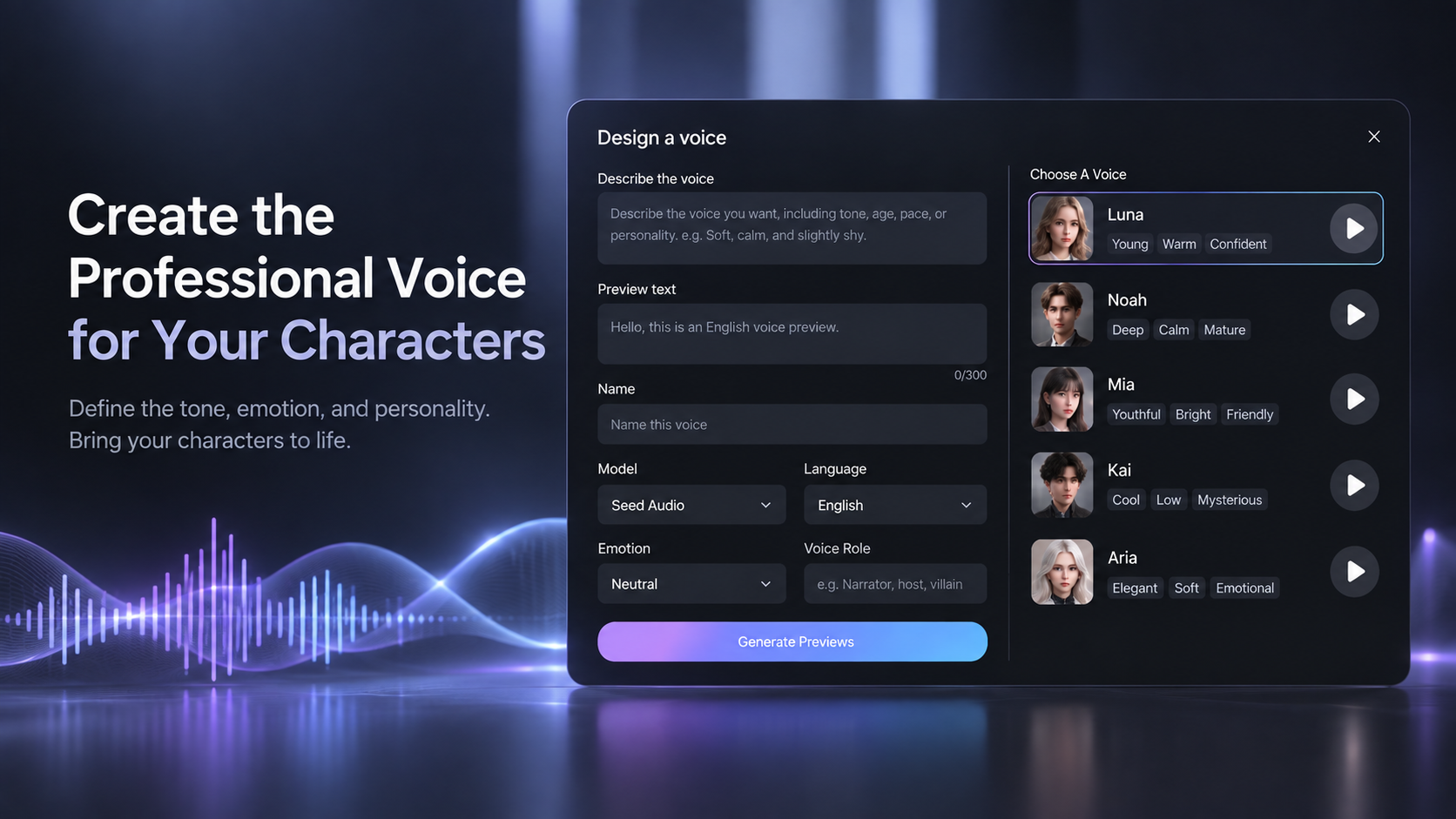
Create unique, natural, expressive AI character voices. Keep every character sounding natural and consistent throughout your videos.
Use natural language to adjust timbre, age, speaking speed, and personality, designing a unique voice that fits each character.
Save character voices as reusable voice assets for use across scenes, videos, and episodes, keeping each character’s voice consistent.

Deliver pronunciation and expression closer to native speech, making character voices sound more natural and authentic.
Choose from languages across 40+ countries and regions and a variety of accents to match characters from different backgrounds and locations.
Use the same voice assets to create multilingual video content, helping your videos, short dramas, and stories reach audiences around the world.
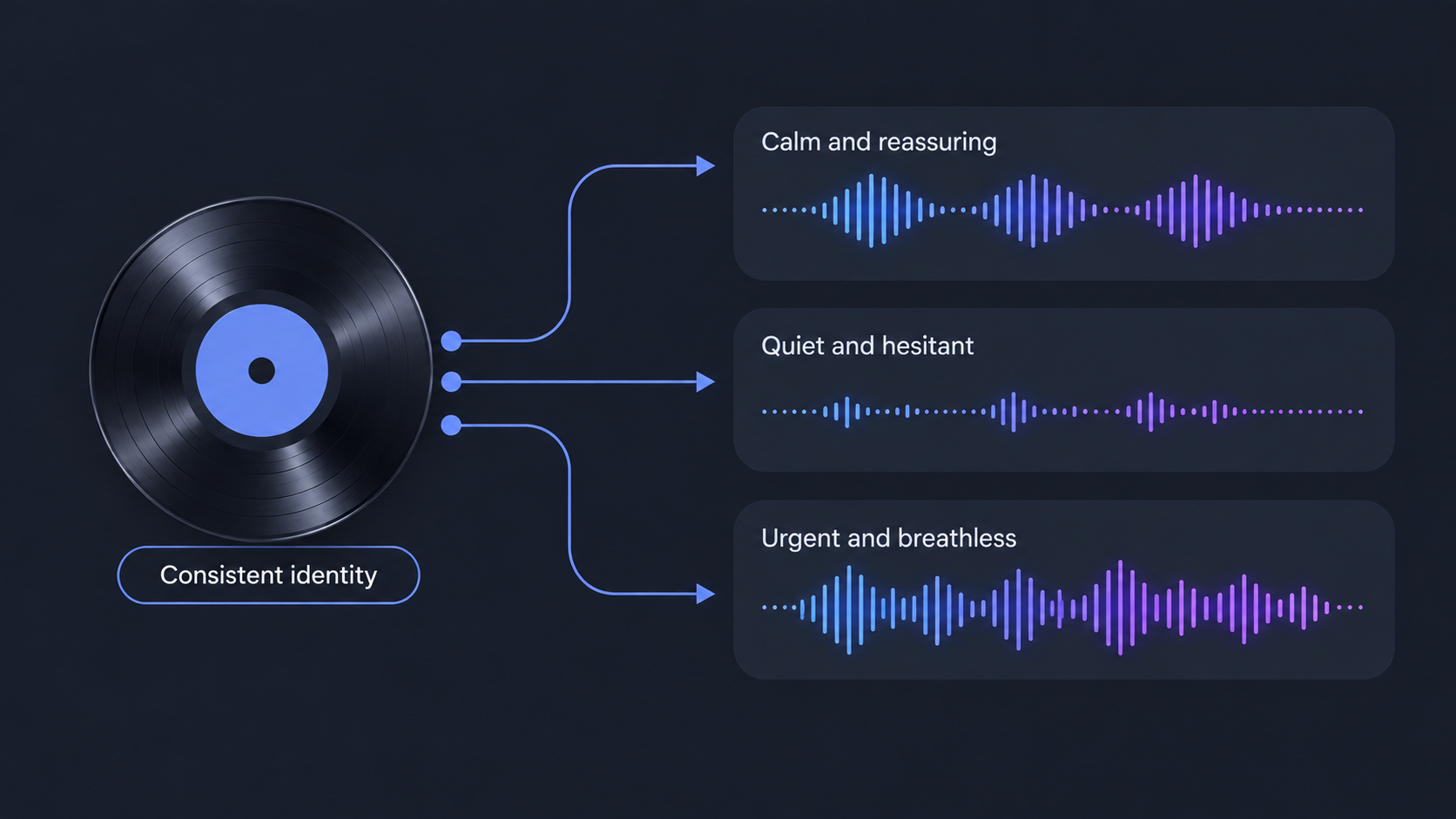
Create natural, varied emotional expression with different emotions and levels of intensity, letting character voices change naturally with the dialogue and story.
Use prompts to adjust tone, rhythm, pauses, and delivery, turning character dialogue into natural performances that go beyond simply reading aloud.
Shape vocal performances to fit each scene and character’s state, and pair them with ambient sound for more engaging, immersive dialogue.
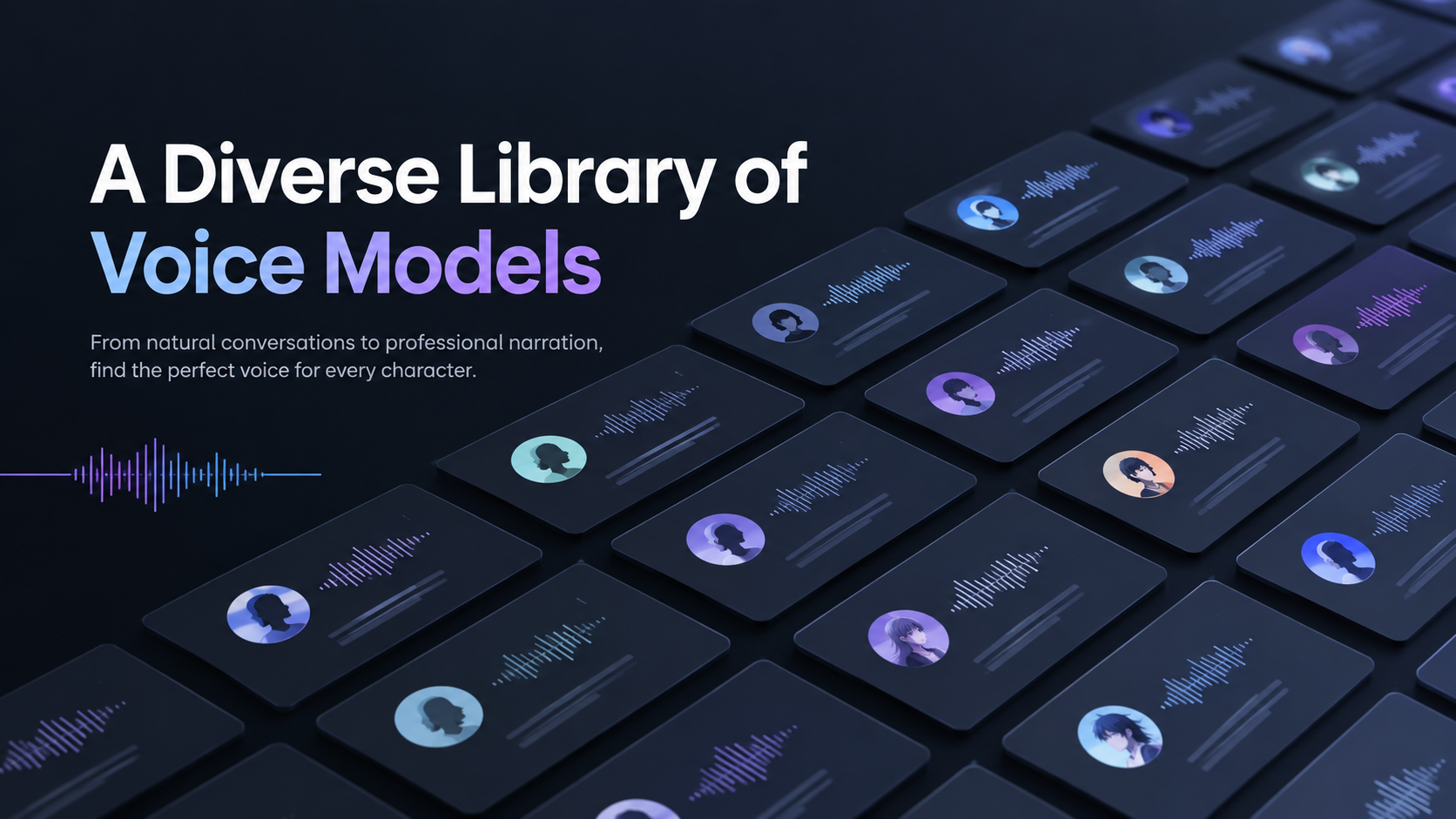
Choose from a variety of high-quality AI voice models to suit your content style, character profiles, and creative needs.
Explore voices across ages, timbres, languages, and character types to quickly find the right voice for any character.
Choose the voice model that best suits your character and enjoy competitive model pricing across the industry.
Go from a written line to story-ready audio in four simple steps.
Browse voices by language, accent, age, style, and mood. Preview a few options and choose the one that feels right for your character.
Paste a single line, a conversation, or part of your script. Divide longer scenes into shorter sections for more control over each performance.
Adjust the available emotion, pacing, tone, and pronunciation settings. Let a character whisper, hesitate, argue, or laugh while keeping the same recognizable voice.
Generate the voice, listen to the result, and make another take if needed. Download the audio or continue working with it inside your ArcLoop project.
From recurring drama casts to interactive characters, create voices that fit the way you tell stories.
Turn an idea or script into a structured short drama with characters, scenes, and story beats ready to develop.
Try AI Short Drama GeneratorChoose a voice model and preview the available voices. Select a voice for your character, add the dialogue, adjust the available performance settings, and generate the audio. No recording equipment or editing experience is required.
You can create dialogue and narration for short dramas, animation, games, roleplay, podcasts, videos, and other character-driven projects. Assign different voices to your cast or use one voice for narration.
Yes. Assign a distinct voice to each character and generate their dialogue separately. This helps every speaker remain easy to recognize throughout conversations, scenes, and episodes.
Save the voice assigned to the character and use the same selection whenever they appear. You can adjust the emotion and delivery for each scene while keeping the underlying voice consistent.
Use complete sentences and natural punctuation to guide pacing and emphasis. Commas create short pauses, while periods separate complete thoughts. For longer conversations, divide the text by character, scene, or emotional beat.
The current text limit appears inside the generator. If your script exceeds the limit, divide it into shorter scenes or generate each character’s dialogue separately. Shorter sections also provide more control over pacing and emotion.
Credit usage depends on the selected voice model and the amount of text generated. The required credits will be listed before generation. Creating another take or generating revised dialogue uses additional credits.