Introduction
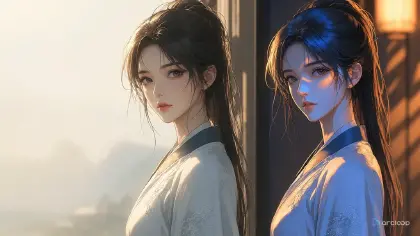
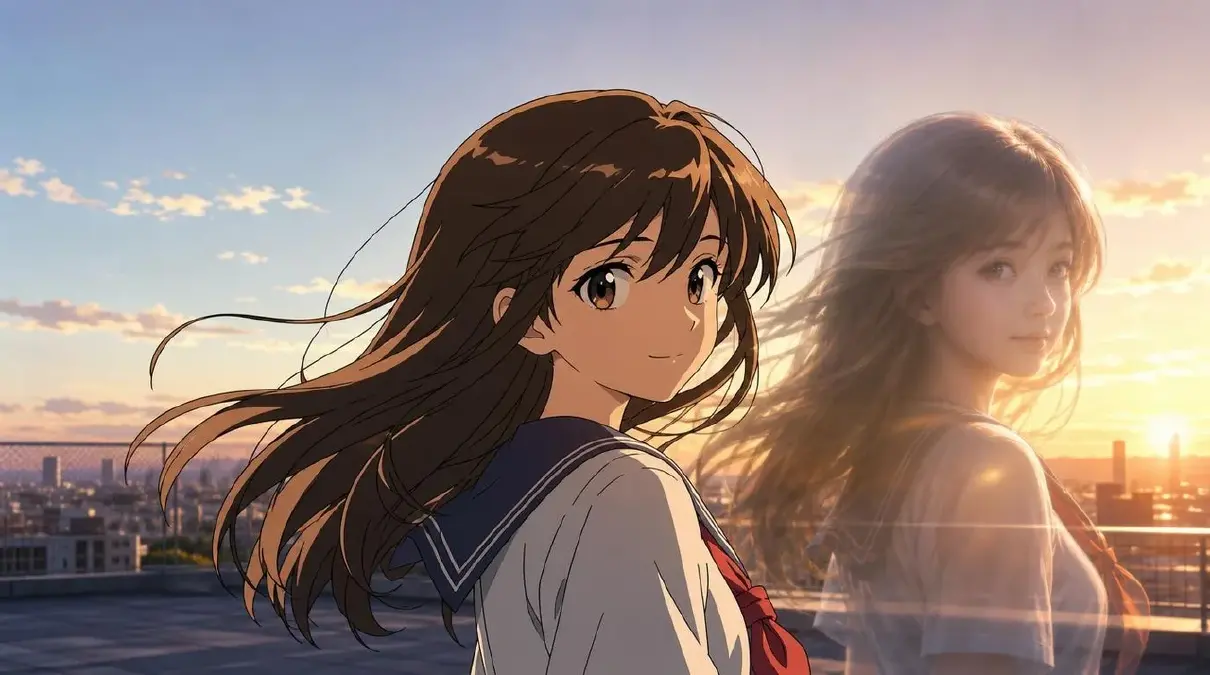
"MiniMax H3 anime" is one of the fastest-growing searches around the model, and the results people post split into two camps. One camp gets clean 2D work — flat cel shading, held line weight, anime timing on the motion. The other gets something closer to a 3D render with an anime filter: soft volumetric lighting, photographic depth of field, faces that drift a little more each clip.
The difference is almost never the model. It is how the prompt and the references were set up. H3 is an omni-modal model — it reads images, clips, and audio together with your text — so an anime result is something you anchor, not something you ask for with an adjective. This guide covers the anime-specific prompt structure, why references beat LoRAs for most creators, and the ArcLoop setup that keeps your character the same from the first clip to the last.
Why "anime style" alone won't lock the look
Written alone, "anime style" is a weak signal. The model has seen every flavor of anime and every 3D-anime hybrid, and a bare adjective lets it pick. Three things actually lock the look:
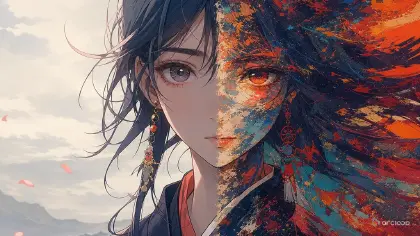
A reference image that already looks the way you want. H3 takes up to nine reference images per generation. One clean 2D character illustration in the exact style — line weight, shading approach, color palette — does more than any paragraph of style words. This is the single most important input.
A style vocabulary that names the rendering, not the genre. "Flat cel shading, two-tone shadows, clean dark linework, no photographic depth of field, limited animation timing" describes how it is drawn. "Anime style, high quality, beautiful" describes nothing the model can act on. The 2D animation prompt vocabulary applies to H3 unchanged.
A negative you actually mean. H3 responds well to a short list of what to avoid: photorealistic skin, 3D render lighting, lens blur. Keep it to the three or four things that ruined your last attempt.
Building an anime shot prompt
An H3 anime prompt that works is a shot brief, not a character description. The character lives in the references; the prompt describes one shot:
@Rin in the school rooftop scene, 2D anime, flat cel shading with two-tone
shadows and clean dark linework. Medium shot. She leans on the railing, wind
lifts her hair once, she turns her head toward the camera and smiles. Late
afternoon sun, long soft shadows, no lens blur. Sound: distant traffic, a
single gust, her small laugh at the end.
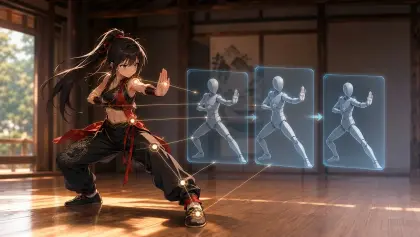
Notice what is not there: hair color, eye shape, uniform details. Those belong to the reference image, and re-describing them in every prompt is how identity drifts — the text and the image start competing. Notice also the single action: lean, wind, turn, smile. H3 handles one clear beat per clip far better than a list of things happening at once, and anime timing reads best on a single held action anyway.
For dialogue, describe the sound in the same prompt. H3 generates audio with the picture, so a lip-synced line plus room tone arrives in one pass:
@Rin, close-up, 2D anime, flat shading. She says quietly: "You came back."
Small pause, eyes drop, then meet the camera again. Sound: evening cicadas,
her line clear and close, no music.
References beat LoRAs for most creators
Because H3's base weights are open, "minimax h3 anime lora" is a real search — people are training style adapters on it. That path exists, and it makes sense for a studio that needs one house style across thousands of clips and has the hardware to serve a custom model.
For an individual creator or a small team, it is the slow road. A LoRA locks one style and costs a training run every time the style shifts; references lock the style per generation, cost nothing, and change when your art changes. Nine image slots plus three video references is enough to pin a character, an outfit, a palette, and a motion style in one request. Start there. If you find yourself feeding the same nine references into every prompt for a month, that is when a LoRA starts paying for itself — not before.
Keeping your character on-model in ArcLoop
Inside ArcLoop, MiniMax H3 is one of the generation models, and the anime workflow is mostly about putting the right things in the right places before you prompt anything:
- Set the Story Brief to Anime. The project's style setting shapes every generation downstream, so you are not fighting the default in each prompt.
- Build the character as an asset in My Assets. Bind your cleanest 2D illustration as the Main image. Add a turnaround and one or two expression shots as Reference images. This is what H3 reads when you reference the character — the identity anchor lives here, not in your prompt.
- Add a Visual reference for the style. One image that shows the exact rendering — shading, line, palette — separate from the character, so the look stays consistent even in shots where the character is small or off-screen.
- Generate Shots from the episode's Storyboard. Each shot card gets a description that references the character with
@and describes only that shot's action, camera, light, and sound. Using an asset reference is more reliable than describing the same character from scratch in every shot — that is the product's own guidance, and it is doubly true for anime, where a slightly different eye shape is immediately visible. - Generate the image first, then the video. Check the style on a still — flat shading holding, linework clean, face on-model — before spending a video generation. A still that reads as 3D will not turn 2D in motion.
- Batch once the look is locked. From the AI Chat Panel, "Generate videos for Shots 1, 2, and 3." keeps the same assets and style across the batch.
Common mistakes
- Re-describing the character every prompt. The text and the reference image argue, and the face changes clip to clip. Reference the asset; describe the shot.
- Style words without a style reference. "Anime style" alone lets the model pick a hybrid. Pin it with an image.
- Three actions in one clip. Anime timing needs a held beat. One action, one camera move, one emotional turn per generation.
- Cinematic lighting language on a 2D scene. "Volumetric god rays, shallow depth of field" pulls H3 toward its 3D register. Describe light as a 2D artist would: "warm side light, hard shadow edge."
- Judging style on the video instead of the still. The still is cheaper and shows the rendering clearly. Fix style there.
FAQ
Can MiniMax H3 do anime well?
Yes, when the style is anchored with a reference image and the prompt describes rendering rather than genre. Without a reference, results drift toward a 3D-anime hybrid.
Do I need a LoRA for anime on H3?
Not for most creators. References lock style per generation at no cost. A LoRA makes sense for a studio serving one house style at scale on its own hardware.
What resolution and length does H3 give me for anime clips?
Up to 2K on the hosted model and 4 to 15 seconds per clip; the limits guide covers every tier including H3 Max.
How do I keep the same character across many clips?
Bind the character's references to an asset and reference it with @ in every shot. The same discipline that keeps faces stable across shots applies directly to H3.
Anchor first, then prompt
H3 gives anime creators what they have asked for — native audio, mixed references, real 2K — but it only gives it to prompts that anchor the look and describe one shot. Set the Story Brief to Anime, bind your character, add a style reference, and write the shot. Open a project and lock the first still before you generate a single second of video.