The Problem
Right before an AI short drama goes live, two worries show up at once: viewers think a character looks like an existing IP or a real person, and the team itself can't say where that face, that voice, or that cover image actually came from. The fix starts earlier than launch day — build the character as a character asset in My Assets first: bind reference images, attach a character voice, and bind multiple reference images to the same asset to cover different looks, instead of rolling random generations for a new face every time. Once the asset exists, every later shot can reference the same identity with @, so the source is traceable. If material only sits loose in the Library and faces get pulled fresh each time, the character falls apart from shot to shot — and that risk gets bigger once partnerships, paid promotion, or paid content are involved.
In 2026 this stopped being an optional checklist. AI-generated series now make up over ninety percent of new micro-dramas on major Chinese platforms, and in early August Douyin’s short-drama creator center opened a pre-screening tool that lets rights holders and directors check material for infringement before launch. Platforms now inspect provenance up front — likeness problems get caught before viewers ever see them, so building the audit into production is far cheaper than answering a takedown notice.
Look-alikes rarely come from deliberate copying. More often they come from a character asset built too loosely, a turnaround that's too generic, or asset records that are too scattered. Before launch, use a character asset guide to strengthen originality, then run the shots through the AI short drama workflow and workspace for a pre-publish check. This article is creative-practice guidance, not legal advice, and it doesn't replace professional legal judgment.
Why AI Short Dramas End Up With Look-Alikes
First, generic descriptions push a character toward a common template. Writing only "cold male lead, black hair, white shirt, wealthy" or "sweet female lead, long hair, big eyes, school vibe" gives the system a huge range to pick from, not a single person. The better-looking the output, the more likely it lands on a familiar aesthetic template.
Second, the character asset is too thin. One good-looking look photo with no turnaround, no four-view, and no character reference sheet means every later shot re-interprets the character from scratch. One generation looks like A, the next looks like B, and cut together it feels like pulling from a pool of similar-looking people.
Third, the reference direction sits too close to an existing work. Even without naming anything specific, if the hairstyle, costume colors, signature prop, world symbols, and line delivery all point toward one known character, viewers will still make the connection. An original character isn't someone else's character with a new name — it needs its own visual logic and narrative function.
Fourth, commercial pressure raises the stakes. A test clip shown to a small audience may not draw much scrutiny; once it goes into a compilation, an ad, paid content, a character IP, or a brand deal, asset licensing, voice rights, and originality all get examined far more closely. Run a pre-launch check with the character asset guide, storyboard templates, and the AI short drama workflow.
How to Build Recognizability Into an Original Character
An original character starts with a clear character brief. That's not a long backstory — it's a short statement of who this person is, what conflict they carry in the story, and what viewers should remember. For example: "the lead in a contract-revenge arc, calm and controlled, remembered for a cream short blazer, a silver stud earring, a black thin belt, and a low, pointed voice." That's more workable than "attractive career-woman lead."
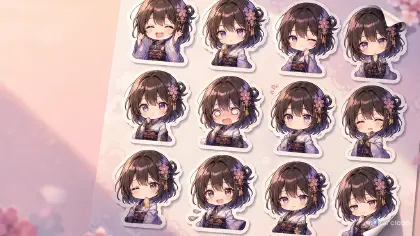
Second, build a turnaround — front, side, and back — or a four-view that adds a 3/4 angle. The four-view covers the turns, glances back, and side-on confrontations that short dramas use constantly. Don't let each angle look like an unrelated glamour shot; they should read like the same actor's ID photos and look book.
Third, put together a character reference sheet. It can lay the look photo, turnaround or four-view, expression set, outfit, props, color swatches, and no-change list on one page. Its job isn't to look nice — it's to let the team see at a glance whether the character stands on its own, whether it overlaps with another character, and whether it sits too close to a common template.
Fourth, build out the character asset. Think of it as building an identity record the system can check against: look, color palette, signature props, voice, blocking habits, and no-change rules are locked in ahead of time, and generation just calls on them. This isn't about making creation rigid — it's about giving the character a repeatable, identifiable identity. For more shot-level methods, connect the asset to the AI short drama guide and multi-character voiceover.
Don't rely on one exaggerated prop for recognizability. A combination of anchors holds up better: face shape, hair direction, garment cut, color ratio, a signature item, speech pattern, blocking habits, and narrative function. A character that's still recognizable with the name removed and the setting swapped is genuinely holding up.
Where Fan-Made Content Draws the Line
Fan-made work especially needs a clear goal up front. Private practice, internal testing, public release, commercial use, and brand partnerships all carry different levels of risk. The closer you get to public distribution and commercial revenue, the higher the bar for originality and licensing checks should be.
Don't treat "I didn't write the name" as safe. Viewers recognize a character from the whole combination — hairstyle, costume, color palette, weapon, tone of voice, relationships, world symbols, and iconic scenes. If those elements point heavily toward one existing work, changing the name may not be enough to avoid being seen as borrowing that character's identity.
If fan-made content is going public, avoid at least three things: don't repackage an existing character as an original one; don't use a title, cover, or copy that could be mistaken for an official or licensed collaboration; and don't combine another work's key visual symbols, voice, lines, and story beats into commercial material.
A steadier approach is to turn fan inspiration into an original mechanism. If you like a "stoic guardian" archetype, change the profession, the relationship pressure, the silhouette, and the prop system. If you like a "magic contract" premise, change the rules, the cost, and the visual symbols. Borrow the genre, not the identifiers. ArcLoop's storyboard templates are built for turning genre conflict into your own shot language, not for recreating someone else's iconic scene.
Pre-Launch Checklist
Check one: is the character original? Put the lead, the antagonist, and frequent supporting characters on one page and check whether face shape, hairstyle, costume, color palette, props, and voice tell them apart. If two characters are distinguishable only by name, go back to the character brief and character reference sheet.
Check two: look-alike risk. Don't judge from a single frame — look across consecutive shots. Check front, profile, back, three-quarter, expressions, and the cover image. If any angle reads as an existing character or a real person, fix the hairstyle silhouette, garment cut, color ratio, and signature prop first — don't just swap a minor accessory.
Check three: title and cover. The title shouldn't imply an official tie-in, a license, a real identity, or a connection to an existing work. The cover shouldn't use a look, logo, font, or layout that could mislead. A short drama cover can chase conflict, but it shouldn't get clicks by letting viewers mistake it for a known character.
Check four: asset licensing. Character art, scene art, reference images, textures, fonts, music, sound effects, intro/outro, and subtitle styling should all have a clear, traceable source and usage scope. If a piece of material's licensing status can't be confirmed, keep it out of the commercial version.
Check five: voice rights. Multi-character voiceover needs a check on whether each voice is cleared for this use, especially voice cloning, real-person voice reference, narration samples, and re-edited audio. A voice profile should record how the voice was obtained, its scope of use, restricted uses, and a fallback option. Voice is part of the character asset, the same as the face.
Check six: storyboard and story. Avoid recreating an existing work's iconic scenes, signature moves, and line structure. Genre beats can be similar, but the specific execution needs its own character goals, scene conditions, and conflict progression.
Check seven: commercial use. Internal testing, account updates, paid compilations, ad spend, and client delivery all call for different standards. The more commercial the use, the more conservative you should be about unclear-licensing material and similar-looking characters.
Licensing Practices for Assets and Voice
Asset compliance isn't about writing a polished disclaimer — it's about keeping a traceable record. Every look photo, turnaround, four-view, character reference sheet, scene image, and cover candidate that goes into the character asset should have a known source: who generated it, when, based on what internal spec, and whether it drew on outside reference.
Voice needs the same handling. Multi-character voiceover shouldn't just keep the final audio — keep the voice profile, generation record, scope of use, and a fallback voice too. If a character depends on a voice with unclear licensing status, swapping it later disrupts continuity across the whole show and drives up the cost of re-recording.
Before publishing, run a "no outside platform names, no outside pointers, no real-person implication" pass: no external names in copy or materials, nothing implying an exclusive platform tie-in, no character written as a stand-in for a real person, no title or cover designed to cause mistaken identity. This isn't about toning down the work — it's about making the project fit for long-term operation.
Finally, keep the launch version on file. Before publishing, archive the character asset, shot list, voiceover spec, cover, title, and final cut together. If the creative process ever needs explaining, you can at minimum show it was built from an original character brief, a character asset, and a storyboard process — not assembled from random generations on the fly.
Prompt / Spec Examples You Can Copy
Example 1: Look-Alike Risk Check
Review this AI short drama's lead character for look-alike risk. Inputs include the character brief, turnaround, four-view, character reference sheet, cover candidates, and 12 finished shots. Check: face shape, hairstyle, costume color, signature props, blocking habits, voice, and whether the title/cover sit too close to a common template or an existing character's identity. Output low risk, medium risk, or high risk, with minimal fix suggestions for each. Note: this is a creative-practice self-check, not a legal conclusion.
Example 2: Strengthening Original Character Recognizability
Turn this AI short drama character from a loose concept into an original character asset. Output: a one-line character brief, 3 visual anchors, 2 voice anchors, 1 blocking habit, turnaround requirements, four-view angle additions, character reference sheet fields, and a no-change / can-change list for the character asset. The goal is to reduce look-alikes, avoid a generic look, and support turning the script into video at volume.
Example 3: Pre-Launch Compliance Checklist
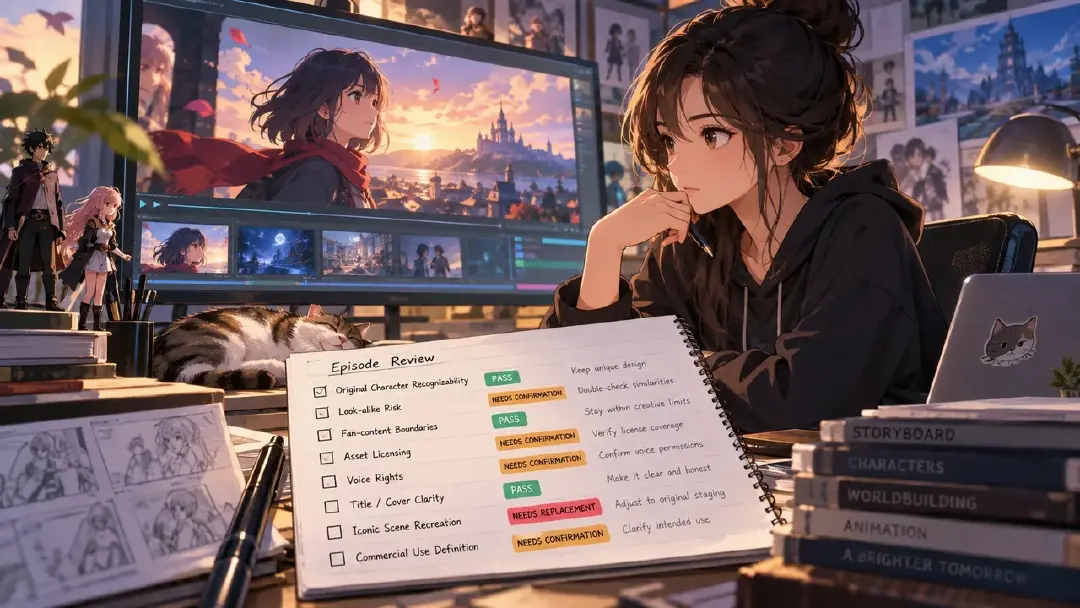
Review one episode of an AI short drama against a pre-launch checklist. Check items: original character recognizability, look-alike risk, fan-content boundaries, asset licensing, voice rights, whether the title/cover could mislead, whether the storyboard recreates an existing iconic scene, and whether commercial use is clearly defined. For each item output pass, needs confirmation, or needs replacement, with a minimal fix action. Don't make legal claims — give creative-practice guidance only.
Common Failure Modes and Fixes
The first failure mode is mistaking a common aesthetic for an original one. The fix is adding combination anchors to the character, not just changing the name.
The second failure mode is packing in too many fan-derived elements. The fix is keeping the genre feel while changing the recognizable look, props, lines, and scene combinations.
The third failure mode is unclear voice rights. The fix is a voice profile for every character, recording scope of use and a fallback option.
The fourth failure mode is a cover that causes mistaken identity. The fix is a cover that shows this show's conflict, not one that borrows another character's identity.
The fifth failure mode is sorting out materials only after publishing. The fix is archiving the character asset, storyboard, voiceover, and cover versions before launch.
FAQ
Does a look-alike always mean an AI short drama can't launch?
Not necessarily. It depends on the degree of similarity, the use case, asset licensing, and the commercial context. In practice, when a clear look-alike shows up, fix the character anchors and cover first, and consult professional advice if needed.
Can fan-made content be commercialized?
That depends on the specific rights, licensing, and usage involved. This article doesn't offer a legal conclusion. As creative practice, raise the originality bar before any public commercial use, and confirm the boundaries for materials, voice, and character use.
What's the fastest useful check to run?
Put the character brief, turnaround, character reference sheet, cover, and finished shots side by side. If the character can only be told apart by name, or clearly evokes an existing character, go back to the character asset and rebuild the anchors.