

Your detective receives troubling information, but the scene needs her to look composed. One generated version looks blank; another shows the sadness openly. A useful deadpan performance needs the audience to understand why restraint matters, rather than relying on stronger emotional adjectives.
For this exercise, keep the face restrained and let one interrupted action reveal the feeling. This guide shows how to build that gap in ArcLoop: establish normal behavior, introduce a stopped hand, and show another character noticing without understanding the cause.
Neutral face versus a face that is hiding something
A neutral-looking face can mean calm, uncertainty, concealment or nothing in particular. The surrounding scene determines which interpretation is available. To depict deliberate concealment, establish what the character knows and why they would not want to reveal a response.
In this original fictional case, the suspect mentions a locked greenhouse. Viewers already know detective Seo Hyeon has been searching for her sister there; the suspect does not know that connection. Her hand stops before she lifts the case file. The known connection gives that small interruption meaning.
In your shot description, separate the internal state from what the character allows the viewer to see. "Seo Hyeon just received news that changes everything, but her expression does not change" is a different instruction than "Seo Hyeon is shocked." The first gives you a more specific contrast to review. Neither wording guarantees the generated performance.
For this version, make the hand the main tell and keep the brow and mouth close to their established baseline. Concealment can also be performed with subtle facial changes, but stacking a brow twitch, held breath and stopped hand would make it harder to judge which choice carries this particular scene.
How to choose one tell and make it land
Pick one action the emotion interrupts. The tell should be physical, specific, and unfinished.
Physical means an observable interruption. Here it is a hand near a folder; another scene might use a facial response or an interrupted line. Choose one main signal for the version you are testing.
Specific means not "tense" but "her thumb stops moving on the edge of the folder." Naming the body part, object and stopping point gives you a concrete target to inspect.
Unfinished means a previously expected action does not complete. Establish the detective’s ordinary habit of lifting the file before making its interruption important. Without that expectation, a hand near a folder may look like an arbitrary pose.
Good tells for a deadpan concealment:
- A hand that stops mid-reach and does not complete the motion
- An object gripped a little tighter than necessary
- A reply that takes one beat longer than every previous reply
- Eyes that settle on a neutral point instead of continuing to track the speaker
In the shot description, name the tell once, then stop. Let the asset reference carry the face. Adding more description to fill space tends to introduce face movement the model reads as permission to show emotion.
How to build the three-shot scene step by step
In this scene, viewers know why the information matters before the suspect does. The three shots make that unequal knowledge visible without adding a spoken explanation of the detective’s feelings.
Shot 1 — Establish the baseline. Show the character in a normal exchange using the deadpan face and a relaxed body position. The viewer learns what "normal" looks like for this character. No concealment here; this is the reference point the audience will measure against.
Shot 2 — The tell. The information arrives — a line of dialogue, a document, a sound — and the face holds. One thing changes: the specific physical tell you chose. Nothing else moves.
Shot 3 — The listener reads the room. The other character notices the tell without naming it. They pause, or their next question becomes more careful, or their eyes move briefly to the stopped hand. They do not know what happened, but they know something did. This reaction shows that the mask is imperfect: the suspect notices a change but does not yet know its cause. Keep that distinction clear.
This sequence does not require the concealing character's face to change at all across the three shots. The drama is in the body and the listener.
Create character assets for Seo Hyeon and Suspect, a scene asset for InterviewRoom, and a prop asset for CaseFile in My Assets. Upload useful references to Library and Bind them to those assets before selecting them through @. The examples are scene-design proposals, and their images are illustrations rather than evidence of a tested performance.
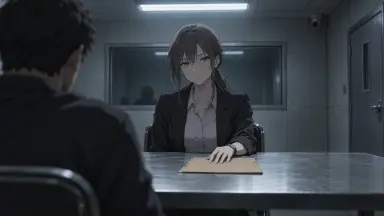
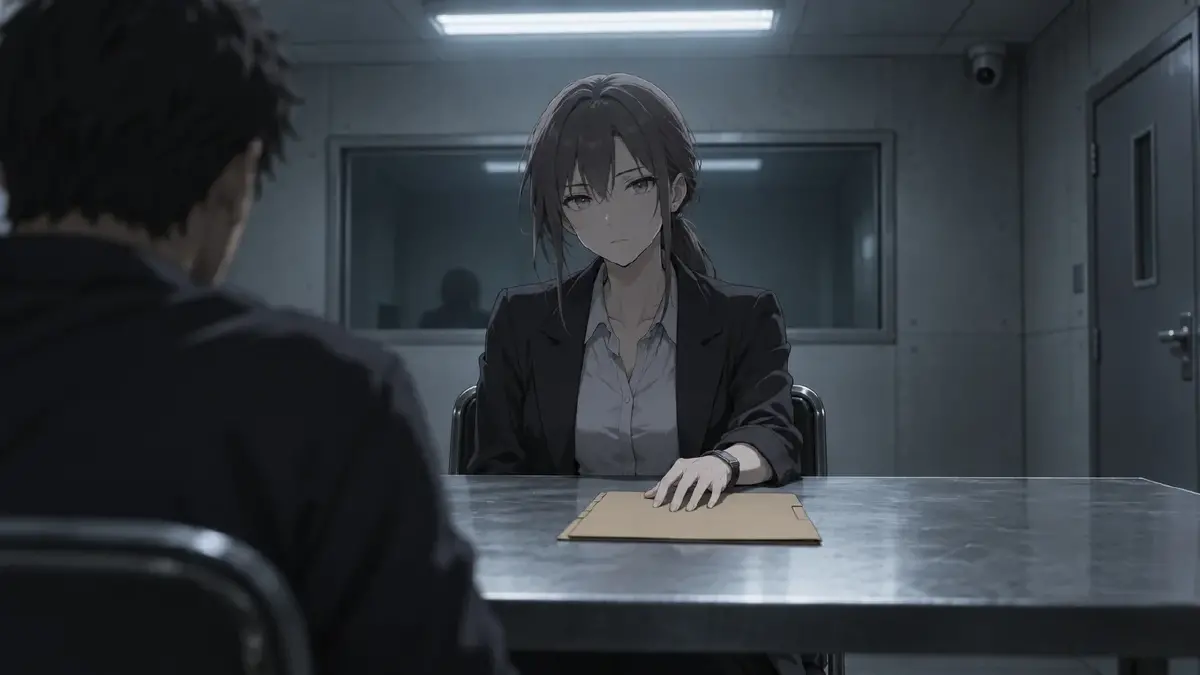
Example 1 establishes the baseline performance for Shot 1.
Medium locked view of @Seo Hyeon seated at the table in @InterviewRoom. She leans back slightly while her open hand remains relaxed on @CaseFile. Keep her gaze directed at @Suspect across the table, with a restrained mouth and brow. Flat overhead light makes both her face and the resting hand readable. This is the ordinary posture before the troubling information arrives. One slight leaning action only, with no hand movement, camera move, or additional reaction.

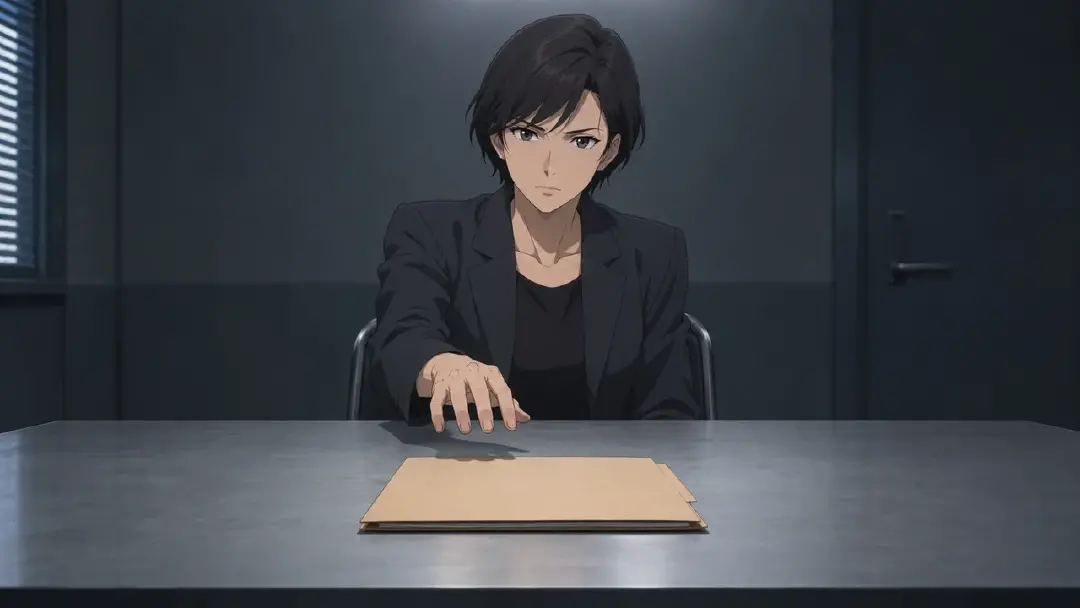
Example 2 captures the single-tell moment for Shot 2.
Medium locked view of @Seo Hyeon at the table in @InterviewRoom. Her reaching hand stops just above the near edge of @CaseFile, without lifting or touching the folder. Keep her mouth and brow close to the established restrained baseline and her gaze on @Suspect. The unchanged overhead light leaves the small gap beneath her fingers visible. Hold the interrupted reach long enough to inspect it. One stopping action only; no withdrawal, new gesture, camera move, or cut.
Example 3 shows the listener reaction for Shot 3.
Locked medium-close view of @Suspect seated across the table in @InterviewRoom. @Suspect glances down toward @Seo Hyeon’s stopped hand beside @CaseFile and keeps that gaze there. Their posture remains still and their mouth relaxed, with no recoil or exaggerated alarm. Keep the detective’s hand visible near the lower frame edge so the glance has a readable target. Cool overhead light stays even. One downward glance only, with no return glance, seat shift, dialogue, or camera movement.

Review what to check before generating video
Generate the still for each shot first. Review these four things in order before moving to video.
Face. Compare the detective in Shots 1 and 2; Shot 3 shows a different person. Look for a new frown, smile or open-mouthed reaction that competes with the hand. Preserve identity and the intended restraint without requiring every pixel of the face to remain frozen.
Hand position. A still can show the intended stop position but cannot prove an interruption in time. Check that the hand is visibly separate from the folder, then inspect the video for an actual reach that stops rather than lifts or withdraws.
Eyes. In this version, the detective keeps her attention on the suspect. If an exaggerated eye change becomes a second tell, revise it toward the baseline. A natural blink need not invalidate the performance; judge whether it changes what the audience reads.
Timing in video. Give viewers enough time to notice the interrupted reach, then compare holds in Edit. If the needed pause never exists in the clip, revise Shot 2’s description and use AI Chat Panel to generate that shot again. Do not turn an unexplained pose into a long empty hold.
Reject outputs that change the intended action or make the emotional reaction much more overt than planned. If the detective’s appearance drifts, review the bound character references. For performance errors, revise the specific shot description instead of rebuilding the character. The asset helps with identity; it does not automatically solve acting.
For building and naming the expression references themselves, the facial expression prompt list covers how to generate a deadpan reference frame and bind it to a character asset. For the moment just before the deadpan breaks — when concealment is close to failing — the subtle expression prompt guide covers how to prompt and review that transition.
FAQ
What if the model keeps showing emotion on the face even with the asset reference? Describe what is not there: "face unchanged from Shot 1, no brow movement, no change at the mouth." Naming the absence is often more precise than adding more adjectives.
Can the tell be a pause in dialogue rather than a physical action? Yes. You need the surrounding lines and their timing to judge it; a still cannot show a delayed reply. Use Edit to compare the pause against the exchange, and generate another shot if the footage lacks the necessary hold.
Do I need a separate named expression reference for the deadpan, or is the main image enough? Start with the existing character references. If they do not provide the restrained expression you need, Bind an appropriate Reference image to the same character asset. The suspect in Shot 3 needs their own identity reference, not the detective’s expression image.
What if the suspect's reaction in Shot 3 looks too dramatic? Specify one restrained action, such as a glance toward the stopped hand, without an added recoil or alarmed expression. Keep an emotion word if it clarifies the direction; remove conflicting instructions rather than assuming all emotional language causes overacting.
Open your ArcLoop project, prepare the referenced assets, and build the three shots. Review stills for identity and composition, then compare the hand’s timing and the suspect’s response in the assembled scene.