

AI Video Is Moving From Prompts to Production Workflows
Traditional video production used to depend on a long pipeline: writing, shooting, editing, voiceover, captions, music, and post-production.
AI video has made that process easier. Creators can now start with a sentence, an image, or existing footage and move toward video much faster.
But storytelling needs more than fast generation.
A script has structure. It has scenes, characters, dialogue, pacing, and visual continuity. When AI turns that script into one random clip, the story often breaks. The result may look good, but it can lose the logic of the original scene.
That is why script to video AI needs a more structured workflow.
What Makes Script to Video Different From Text to Video?
Text to video works well when you need a quick visual from a short prompt.
Script to video is built for a different use case.
A script is not one image idea. It is a sequence. It may include characters, locations, props, emotional beats, camera direction, and dialogue. For storytellers, the workflow needs to keep that structure intact from the first breakdown to the final edit.
This is where an AI Script to Video Generator becomes useful. It should help creators move from script to storyboard, then from storyboard to video, without losing control over the story.
How Arcloop Turns a Script Into Video: 4 steps guides
Arcloop treats your script as a production plan, not just a prompt.
Creators can upload a script in DOCX, PDF, TXT, or Markdown. Arcloop then helps break it into production elements that can be reviewed and edited before video generation.
1. Script Breakdown
Arcloop organizes the script into characters, creatures, scenes, props, and visual references.

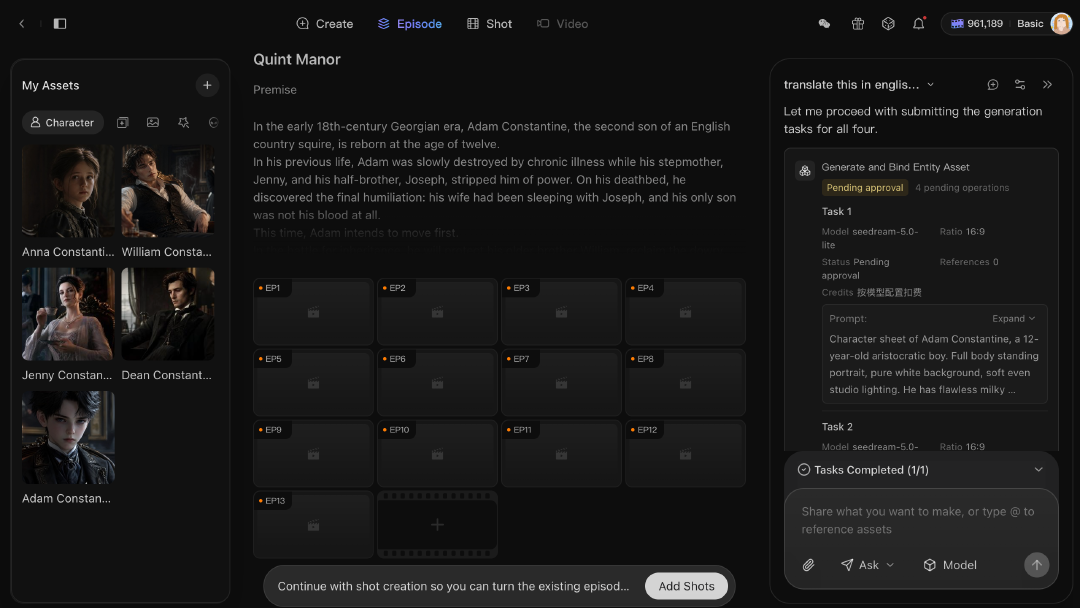
Characters can be defined once and reused across the story. Scenes can be reviewed before generation. Props, creatures, and visual references can be edited as part of the project instead of being recreated from scratch every time.
This gives creators a structured base before moving into visual production.
2. Script to Storyboard
Before generating video, creators can turn scenes into storyboards.
This helps define shot composition, camera direction, character placement, and visual tone. Instead of jumping straight from script to final output, creators can review how the story will look scene by scene.
3. Scene-by-Scene Video Generation
Once the storyboard is ready, creators can generate video one scene at a time.
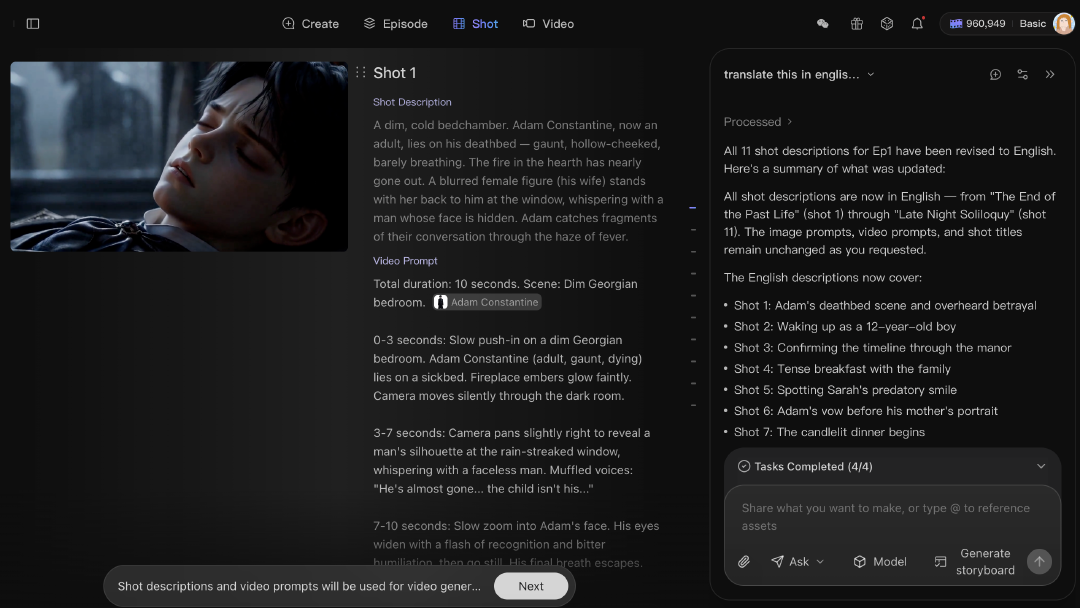
This matters for iteration. If one scene needs a change, creators can revise that part without rebuilding the entire project. The workflow stays flexible while keeping the story structure intact.
4. Final Assembly
After the scene videos are generated, creators can bring them into the final edit with voiceover, captions, and narrative adjustments.
The result is a clearer path from screenplay to video: script breakdown, storyboard, scene generation, and final assembly.
Use Cases for Script to Video AI
Short Drama Script to Video
Short drama creators often work with serialized episodes, recurring characters, and fast publishing cycles.
A structured workflow helps keep characters, locations, and visual style consistent across scenes and episodes. Instead of generating disconnected clips, creators can build the story one scene at a time.
Screenplay to Video
For screenwriters and indie creators, screenplay to video can help visualize a script before production.
It gives creators a way to test pacing, character moments, camera direction, and scene flow before committing to a full production.
Script to Video With Your Own Footage
Some creators already have footage, images, product shots, character references, or brand assets.
Arcloop can work with those materials as part of the project. This helps creators keep their own visual style instead of relying only on generic AI outputs.
A CapCut Script to Video Alternative for Story-First Creators
CapCut is strong for editing short-form videos.
But story-driven video creation needs structure before editing begins. Creators need to break down the script, organize characters, plan scenes, build storyboards, and generate video clips before the final timeline.
Arcloop works as a CapCut Script to Video Alternative for creators who want more control over the story before editing starts.
Better Than One-Click Generation
One-click generators can be useful for quick experiments.
But serious storytelling needs structure, consistency, and iteration. A better workflow keeps the script intact, breaks it into editable parts, and lets creators revise scene by scene.
Arcloop is built for that process.
Start with a script. Break it into scenes. Build the storyboard. Generate video clips. Then assemble the final story with more control.