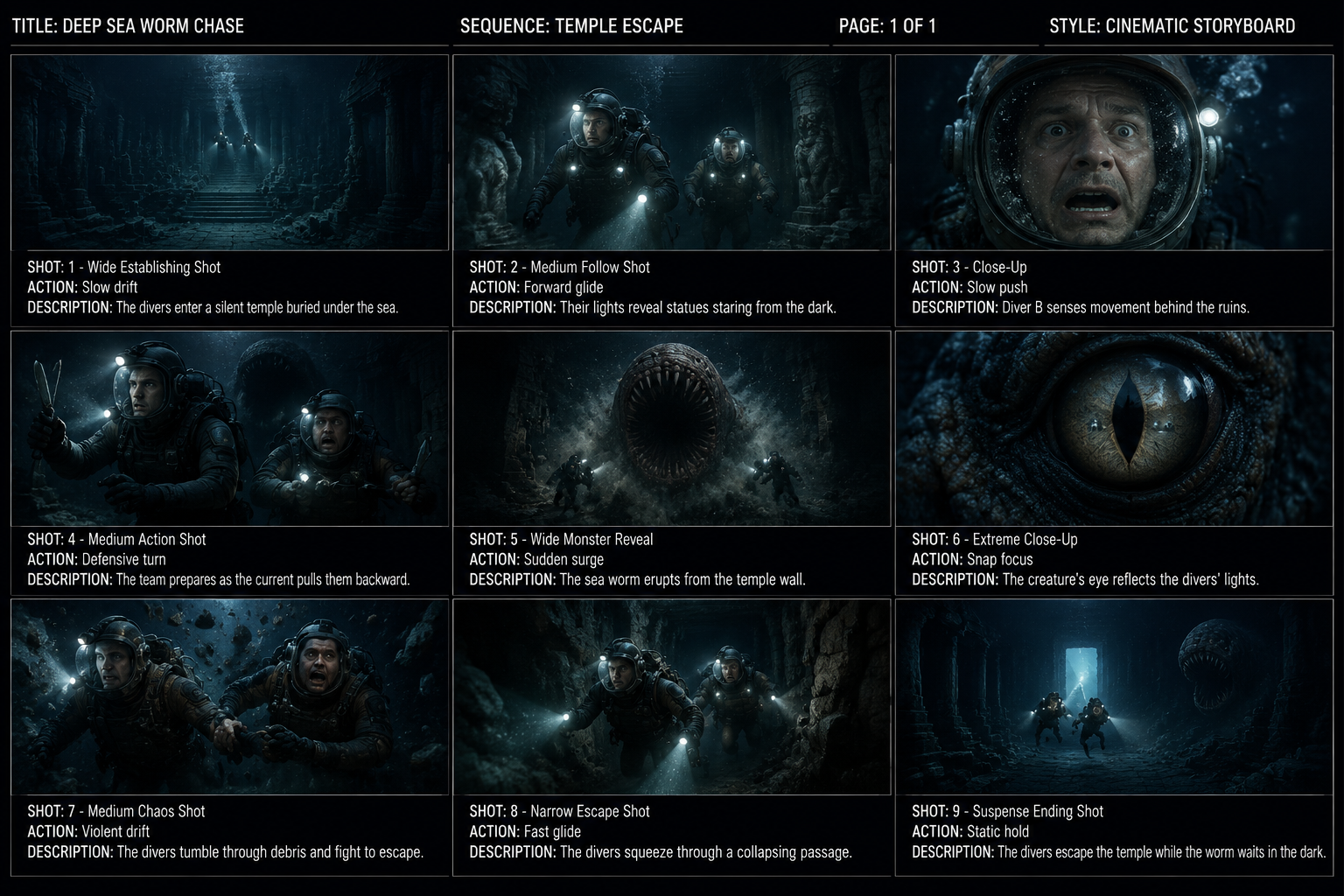
You show a character putting a letter aside, then replay the moment from across the room. The second version is meant to explain the gesture, but the letter is now open, the table has moved, and afternoon has become night. Viewers are busy reconciling objects instead of reconsidering the character.
Two viewpoints need a common event and different access to it. Changing a camera angle is useful only when it changes what the audience can understand. Here is how to retell one event from two characters’ viewpoints while preserving the action, timing, and physical facts that make the reveal fair.
How to Separate Shared Facts from Partial Knowledge
Start in the project’s Story Outline. Describe the event without assigning a motive: Min-jun puts a sealed invitation on a dry wooden box. Hyun-a watches from the doorway. A cup has already tipped over on the far side of the table. Record the time, positions, object states, and order. Both versions must be compatible with those facts.
Then describe each person’s access. Hyun-a can see his hand lowering the envelope but not the wet tabletop behind the foreground counter. Min-jun can see the spill from beside the table. Her view is incomplete, not false. The later angle can reveal the existing water without changing when it appeared.
Separate observation from interpretation. Earlier dialogue established that Hyun-a wanted him to deliver the invitation and that he was reluctant. She interprets putting it aside as another delay. Seeing the spill gives the audience another explanation for this immediate gesture. It does not prove he will deliver the letter or settle their larger disagreement.
Prepare References for the Event, Then Specify Its State
Create the recurring characters, kitchen, and objects in My Assets. Upload reference images to Library and Bind them to the appropriate assets. The scene reference helps establish geography; prop references help keep the invitation and box recognizable. Neither freezes object positions automatically. The current position and state still belong in each shot description and in your visual review.
For the fictional example below, create SeoHyuna, Minjun, Kitchen, SealedInvitation, WoodenBox, and Cup. The invitation remains sealed throughout. The tipped cup and nearby water belong to the same event in every view, even when the framing conceals them. Bind a suitable reference for the cup’s sideways state rather than asking each shot to invent a new vessel.
Use the same @ references across the accounts. Do not make one invitation asset for the first observer and an unrelated one for the second. Reference reuse supports continuity; it cannot decide what an observer knows or correct conflicting directions in the descriptions. Those are story decisions you must make.
Write the First Account Around Its Blind Spot
This original example is a planning exercise, not a reported generation test. Both accounts happen on the same overcast afternoon. A foreground counter blocks the far tabletop from the doorway, while a raised wooden box is visible beyond it. Min-jun’s right hand holds the sealed invitation just above that box when the shared action begins.
Keep both accounts within one Episode for this exercise. Use Generate Shots, then edit the shot cards to separate the first account from its later replay. State in their descriptions that they show the same instant. The product does not infer a synchronized timeline merely because you repeat an asset.
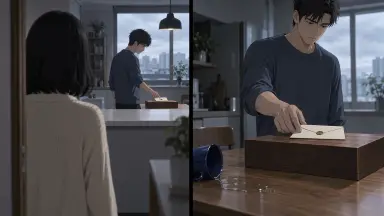
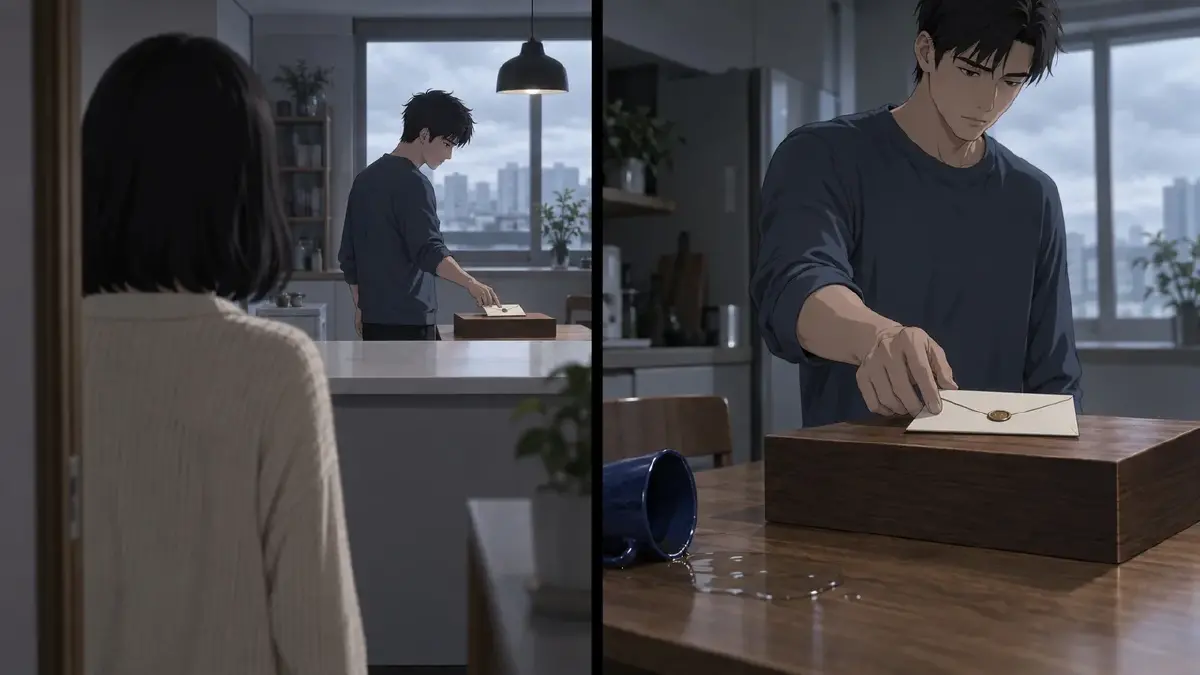
Example 1: Hyun-a’s view of the lowering gesture.
Over-the-shoulder medium shot from behind @SeoHyuna at the doorway of @Kitchen. @Minjun already holds @SealedInvitation horizontally just above @WoodenBox. His only action is lowering it onto the box with his right hand. The foreground counter conceals the far tabletop from this angle. Hyun-a remains still in the doorway. Keep the envelope sealed and the box fixed. Use the established cool daylight from the far kitchen window, with a locked camera and no dialogue.
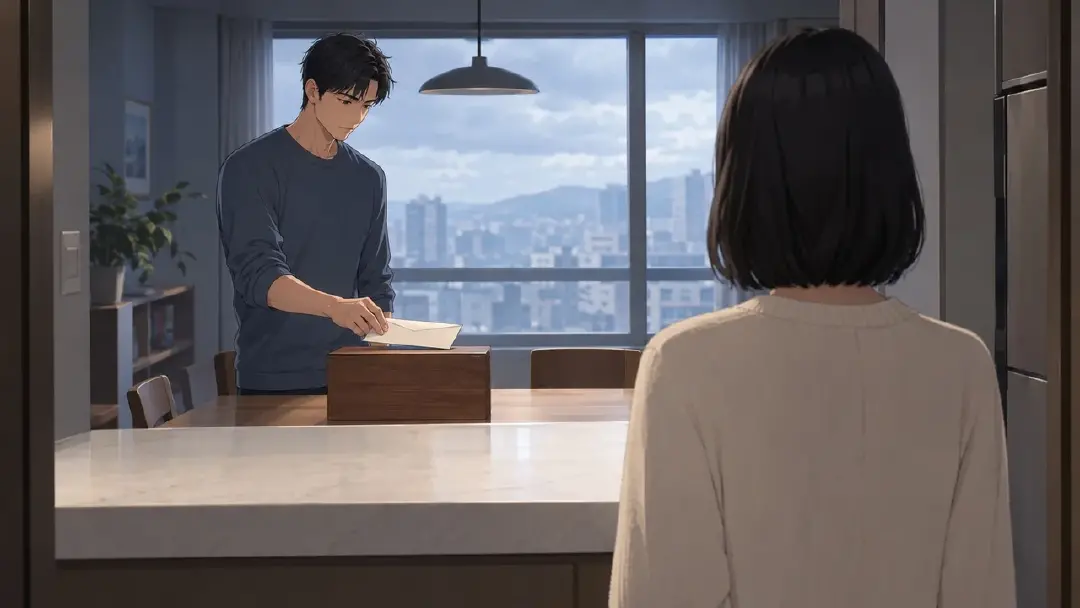
The blind spot is physical. Do not write that the water vanishes in this version, and do not add a disgusted head turn to make his motive look certain. The angle withholds context; the preceding disagreement gives Hyun-a a reason to interpret what she sees.
Replay the Same Action with New Access
The second account begins at the same point in the lowering motion. It uses a viewpoint from beside Min-jun, where the cup and wet surface are visible. Camera position changes; the envelope’s state, hand, box, and light do not.
Example 2: Min-jun’s view includes the existing spill.
Over-the-shoulder medium close view from beside @Minjun in @Kitchen. @SealedInvitation starts horizontally just above @WoodenBox in his right hand. His only action is lowering it onto the dry box. The far tabletop is now visible: @Cup lies on its side beside a small pool of water below the box’s raised top. Keep the envelope sealed, the cup still, and the camera locked. Preserve the same cool daylight from the far window; no dialogue.
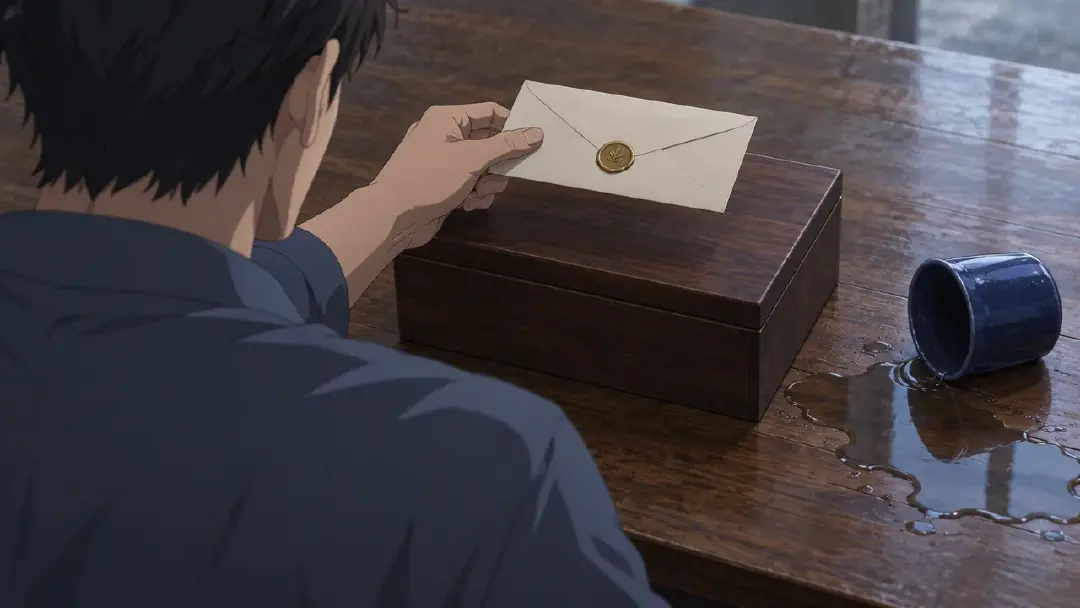
This account adds a condition that already existed. It does not show him opening the letter, introducing a new name, or moving the box. The action can now be read as protecting the invitation from the wet surface. If his eventual intention matters, show that later through a choice or dialogue rather than claiming this angle reveals everything he thinks.
The viewpoint also needs a credible sightline. A camera high above the room might reveal information neither character possesses. That can work as an audience-only reveal, but it is a different narrative choice. For this version, keep the second framing near Min-jun’s visible working space.
Use a Shared Moment to Locate the Replay
A repeated entrance can tell viewers where the two accounts overlap. Hyun-a opening the kitchen door happens immediately before the envelope-lowering action in both. Present it before the first account, then use the recognizable entrance again when introducing the replay. Do not play the examples below as three successive actions in chronological order: Examples 1 and 2 are alternative coverage of one instant.
Example 3: A shared entrance anchors both accounts.
Medium hallway view of @SeoHyuna outside @Kitchen. Her only action is opening the kitchen door inward with her left hand; her feet remain on the hallway side of the threshold. Beyond the door, @Minjun stands still with @SealedInvitation in his right hand just above @WoodenBox. The foreground counter obscures the far tabletop. Keep the door’s swing clear of him, preserve the established cool window light, and hold the camera fixed. No dialogue.
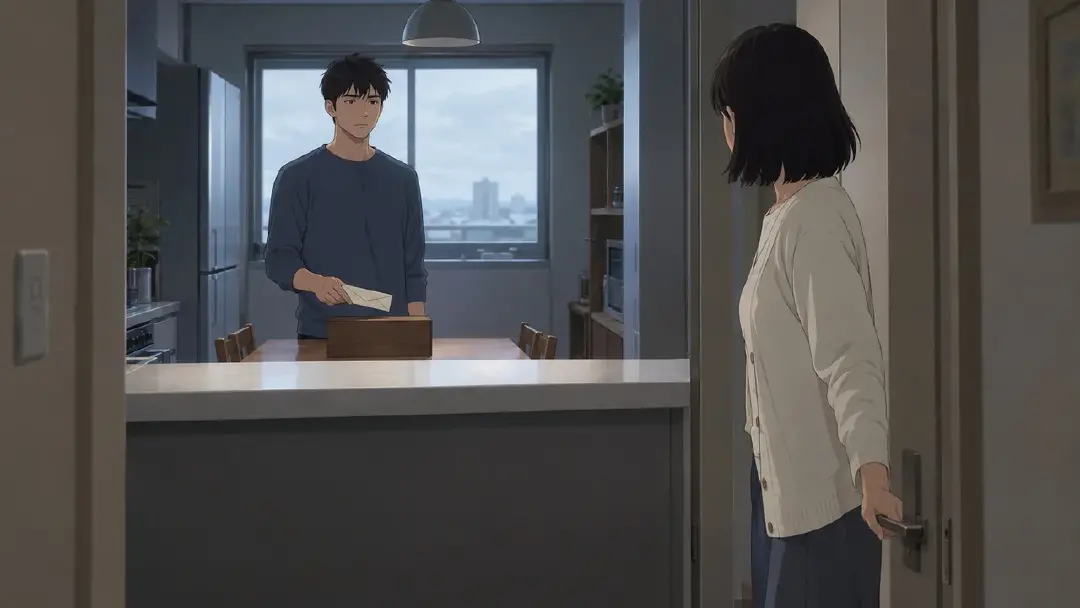
The opening door is a time anchor, not a requirement for every perspective story. Another scene might repeat a spoken phrase or a distinct action. Choose a marker already belonging to the event. These illustrations show intended framings; only a sequence of generated clips can demonstrate whether the repeated moment is recognizable in motion.
Compare Images, Then Check the Repeated Motion
Generate images before video. Check both versions against the shared facts in Story Outline: sealed envelope, right hand, same raised box, cup already tipped, same daylight. Confirm the counter genuinely blocks the spill in the first angle while leaving the box visible. If the image accidentally shows the water, the planned reveal has already happened.
Compare the relevant shot images directly. Canvas can support visual comparison and branching with creative nodes, but this workflow does not depend on a special view that opens two Episode storyboards side by side. The storyboard continuity guide covers object and costume continuity across neighboring shots; here the additional task is to keep two versions of the same moment compatible.
Generate the shot videos once the frames agree. In Edit, check that both lowering motions begin from the same height and end on the same part of the box. Trim away an invented envelope-opening movement or replace a clip that changes the cup’s state. Reusing the asset does not excuse accepting a conflicting result.
Then watch the narrative order: first entrance, first account, intervening story, replay anchor, second account. Does the viewer recognize the repeated event before noticing the new information? If not, strengthen the shared marker or reduce unrelated changes. If the new angle adds nothing, revisit the perception gap instead of making the camera move more dramatically.
Next Step
Open your world in ArcLoop and describe one event in neutral physical terms. Give each observer a credible sightline, then choose the single missing condition that the second account reveals. Build the two framings with shared references and inspect their images before video. For withholding information within a scene, the art of omission offers a related approach; here the reveal depends specifically on replaying the same event.
FAQ
Does the second account have to start earlier? No. It can replay exactly the same interval, begin earlier, or continue later. Specify the overlap before writing shots. New information must fit the shared timeline rather than silently change it.
Can the accounts genuinely contradict each other? Yes, if the story is about unreliable testimony or memory. Decide whether the discrepancy is intentional and how viewers should recognize it. This guide’s example uses partial views of compatible facts, not competing versions of what physically happened.
Should both angles use the same character asset? Yes. Change the camera direction in the shot description while reusing the character reference. Inspect the result for identity drift; the angle alone does not call for inventing a duplicate character.
How can a prop change state fairly? Show or establish the intervening event and its timing. An envelope opened after the first account may be open in a later scene. Two simultaneous views of that envelope must agree about whether it is sealed.