Where It Usually Breaks Down
Most AI short dramas fail not because the visuals aren't polished, but because they weren't shot for how people actually watch on a phone: characters standing too far back to read their faces, no hook in the first three seconds, captions covering hand movements, group blocking that jumps around, characters drifting into a different face shot to shot. Most of the time, that's because a recurring character only ever lived inside a prompt that got retyped every time, instead of being built into an asset. Build recurring characters into character assets in My Assets, bind reference images to them, and reference them with @ in the shot description — that's what keeps the face and costume from changing shot to shot. Set the aspect ratio to 9:16 in the Story Brief and leave the bottom third clear for captions; composition problems need to get locked down at the shot-description stage. When you're not sure about the opening hook, drop a few draft versions into Canvas to compare before deciding.
By 2026, vertical micro-drama is the main battlefield for AI content: AI series account for over ninety percent of new micro-dramas, and platform quality control has tightened accordingly. That means two things. Vertical composition is no longer a “crop the landscape cut” afterthought — it is the default canvas. And the room for sloppy output is shrinking, which makes the vertical rules below worth walking through one by one.
Vertical micro-drama has to be rewritten around phone viewing: characters closer to camera, actions more legible, conflict arriving sooner, editing more decisive. Test shots with the AI short drama guide, keep close-range identity consistent with the character asset library guide, then review completion rate, cover image, series continuity, and conversion goals together in your ArcLoop workspace.
How This Actually Works
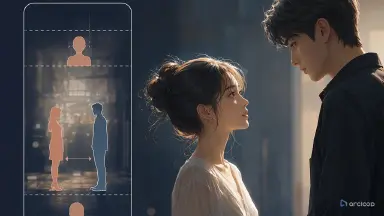
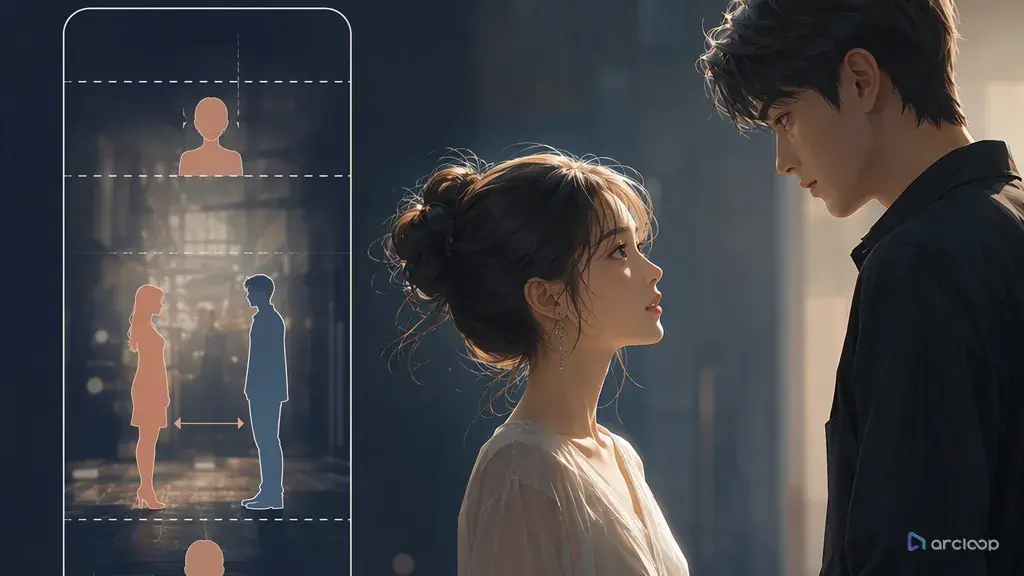
A vertical frame naturally splits into three zones: the top reads faces and expressions, the middle reads hand movement and props, the bottom holds captions and key objects. If an AI short drama doesn't spell out these three zones, the system arranges the composition on its own — and the result is heads getting cropped, props getting blocked, and blocking that doesn't hold together.
Another principle: pacing beats camera flourish. Vertical micro-drama isn't about giving viewers a long take to admire — it's about letting viewers know fast who's in trouble, who's holding the secret, and what happens next. So every shot in a script-to-video pipeline needs an information job to do.
Character consistency also has to be rebuilt for vertical framing. The key visual needs a straight-on facial close-up, the character turnaround needs to specify body proportions, and the character asset library needs to spell out costume silhouette and prop placement — otherwise faces are more likely to drift shot to shot at close range. In terms used here: the character asset sets the identity anchor first, the character turnaround covers front/side/back, the extended turnaround adds a half-side angle, the character reference sheet lays face, costume, props, and color out on one review page, and the character asset library then keeps all of that alongside voice and blocking for the long term. Test shots first with the AI short drama guide, then move working shots into the storyboard workflow.
Step-by-Step
Step 1: Write the vertical-format concept. The concept needs both a conflict and a visual hook — for example, "the lead discovers the contract has been swapped within three seconds." If the concept can't translate into one vertical-frame action, it turns into narration later.
Step 2: Compress the script into short scenes. Each scene should stay within one emotional turn: suspicion, pressure, discovery, retaliation. Vertical micro-drama doesn't have room for long setup — the first three seconds need to deliver evidence, an expression, or an action. Chinese-language vertical content in particular needs to avoid the 15-second rule: comprehension has to land within 15 seconds, and a second twist or pressure point has to land within 30. Episodes longer than 30 seconds should be stitched from 15-second beats, each ending on a visual anchor and carrying the same character asset and props into the next beat.
Step 3: Build character assets for vertical framing. The key visual needs a facial close-up, the character turnaround needs a readable costume silhouette, and the character asset library needs "anchors that read on a phone screen" — a hair clip, earrings, a collar, a tie, a badge.
Step 4: Write blocking into the storyboard. For a single-character shot, put the face in the top third of the frame and hand action in the middle. For a two-character shot, write the front-back relationship instead of standing them side by side and evenly spaced. For a power imbalance, let the dominant character take the foreground and push the other character back.
Step 5: Generate video shot by shot. Keep most shots at 3 to 7 seconds. Each clip should carry exactly one action — don't have a character walk, turn, cry, and hand something over all in the same shot. Too much action makes the AI more likely to break down, and drags production back into rerolling and hoping for the best.
Step 6: Record voiceover to vertical pacing. Keep lines short, with weight at the end of the sentence. Multi-character voiceover needs a voice profile so a character doesn't suddenly sound different in the next episode.
Step 7: Run a monetization check while editing. Check whether the title matches the opening hook, whether the cover shows the conflict, whether the ending pulls viewers into the next episode, and whether assets can be reused. If they can be reused, the project is ready for batch production.
Step 8: Keep a set of reusable vertical templates. Stable beats — opening a door, handing over evidence, turning around, confronting someone, a silent reaction, a phone notification, a contract close-up — can all be organized into shot templates. The next episode doesn't need the composition redesigned from scratch, just the lines, props, and emotion swapped in. Paired with the AI short drama guide, this turns each episode from "starting over" into "swapping variables."
How to Build a Vertical Episode in ArcLoop, Screen by Screen
Everything above about zones, anchors, and 3-to-7-second shots has a place in the product. Here is the vertical run, screen by screen.
1. Set the ratio to 9:16 in Story Settings first. Open ArcLoop, start the project from your one-line vertical concept, then open Story Settings from the model chips under the chat box: set the ratio to 9:16, and choose the video model, the image model, and their resolutions. Setting the ratio here is what makes every generated frame a phone frame; do not try to crop a 16:9 shot later.
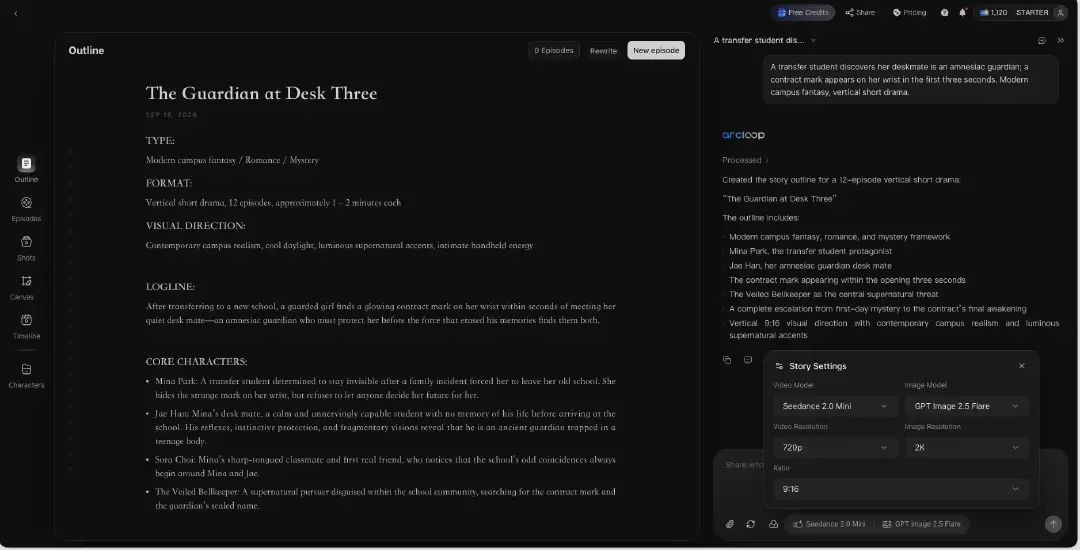
2. Compress the Story Outline into short scenes. Read the outline the Agent drafts and cut it to one emotional turn per scene. Double-click a block to edit it directly, or ask the Agent to move the evidence reveal into the first three seconds. The 15-second and 30-second thresholds are easiest to enforce here, before any shot exists.
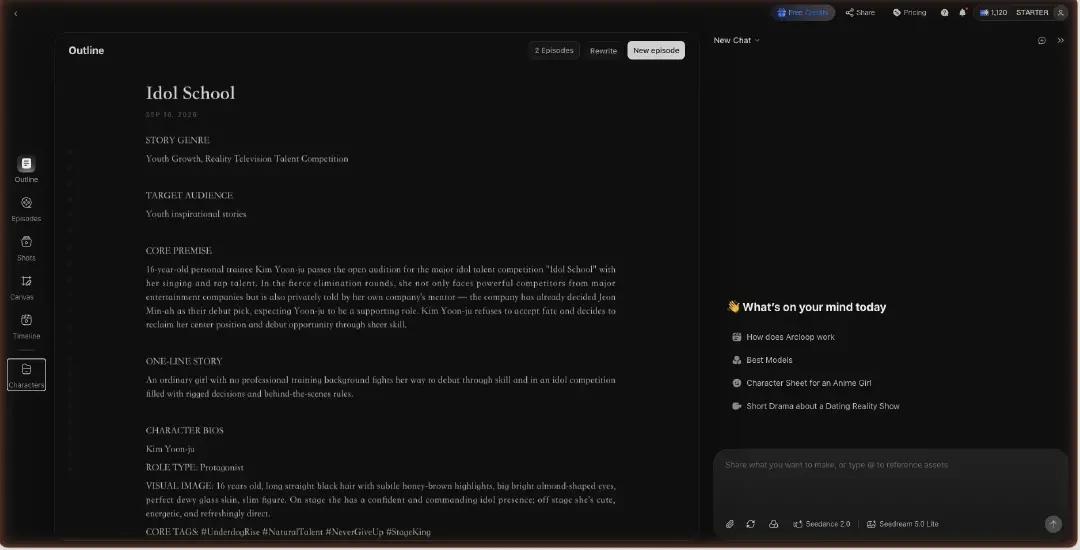
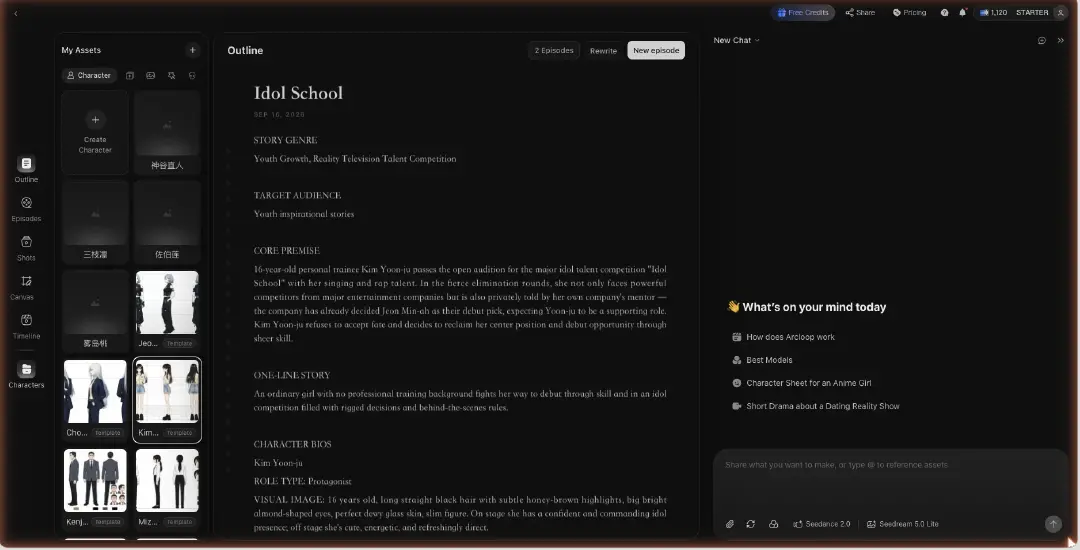
3. Build the character asset with phone-readable anchors. In My Assets, open the character and bind the facial close-up as the Main image and the turnaround as a Reference image. The hair clip, the collar, the badge — the anchors that survive a small screen — live on the asset, not in shot text.
4. Generate Shots and write the zones into each card. Open the Episode, click Generate Shots, and edit each shot card: face in the top third, hand action in the middle, one action per shot, @ for the character. For a two-character shot, write the front-back relationship in the description.
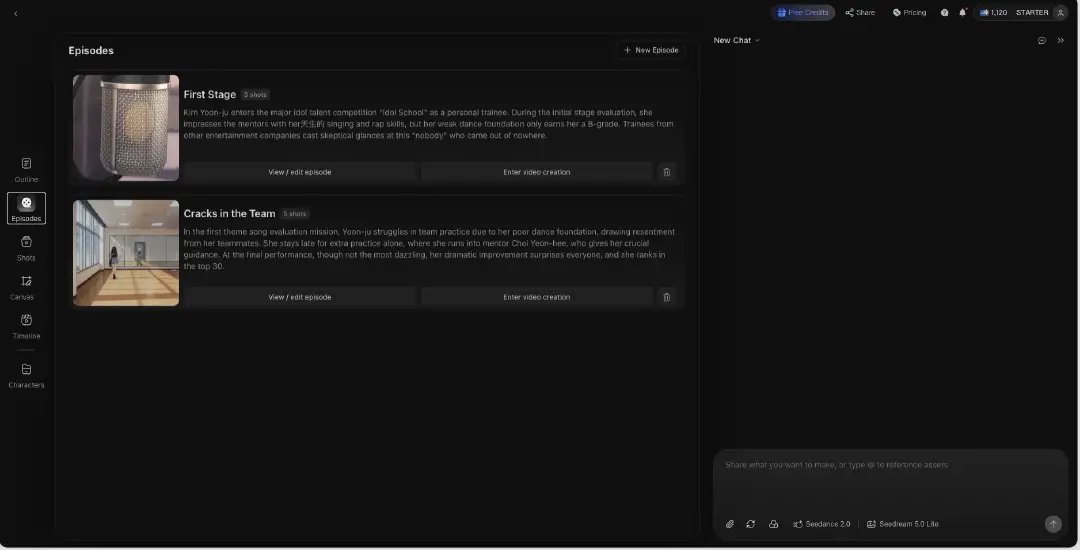
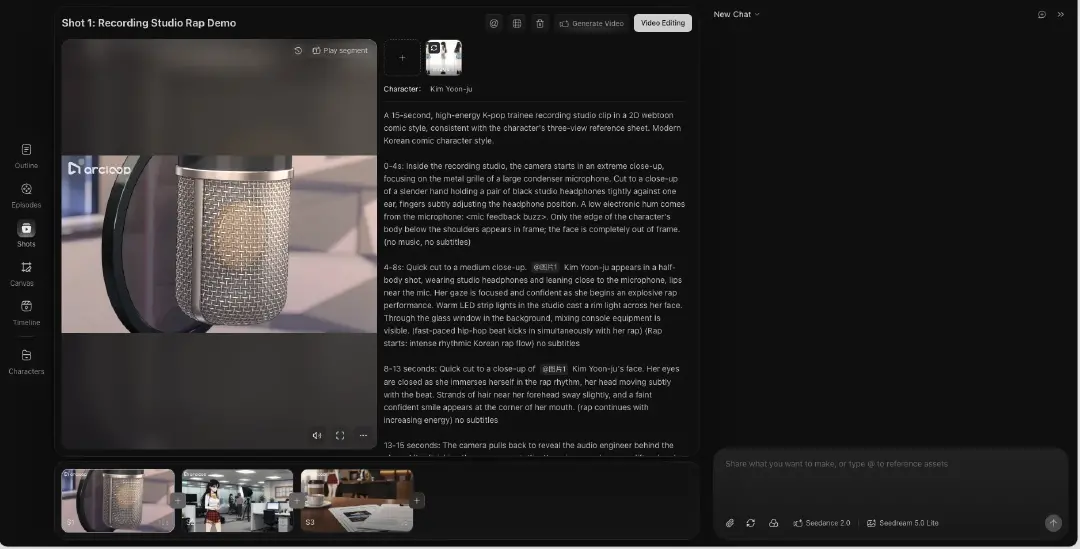
5. Generate the still, check the zones, then the video. A wrong zone in the still is a wrong zone in the clip. Fix the card, regenerate the still, and only then spend credits on motion. Batch the approved cards through the AI Chat Panel: "Generate videos for Shots 1, 2, and 3."
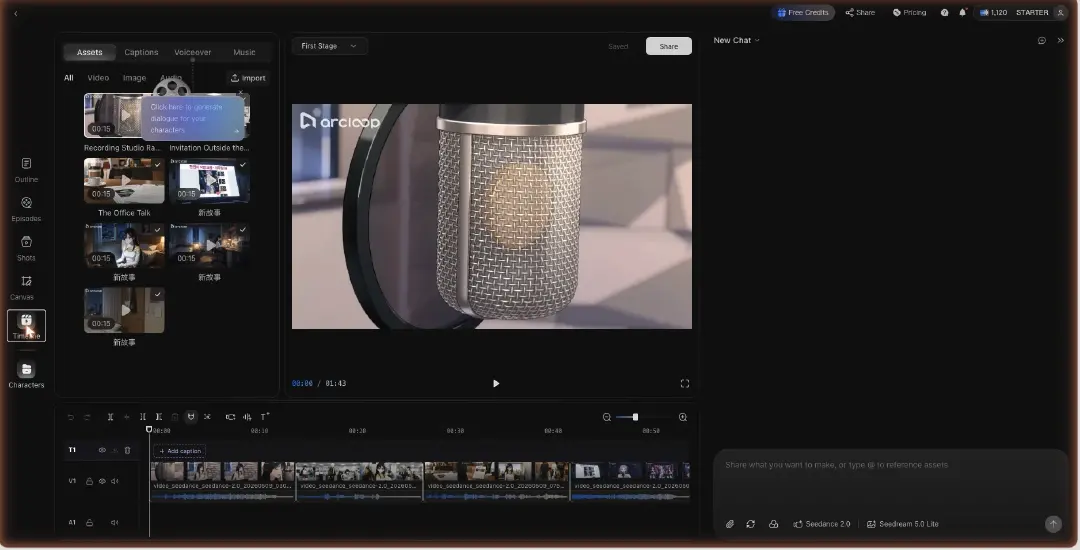
6. Cut to the 15-second beats in Edit. Arrange the clips, trim each to its single action, run Generate Voiceover with short, end-weighted lines, add BGM, and export. Reusable beats — door, evidence, turn, reaction — are just shot cards you copy into the next episode and change the lines on.
Copy-Paste Prompts and Specs
Example 1: Vertical Composition Spec
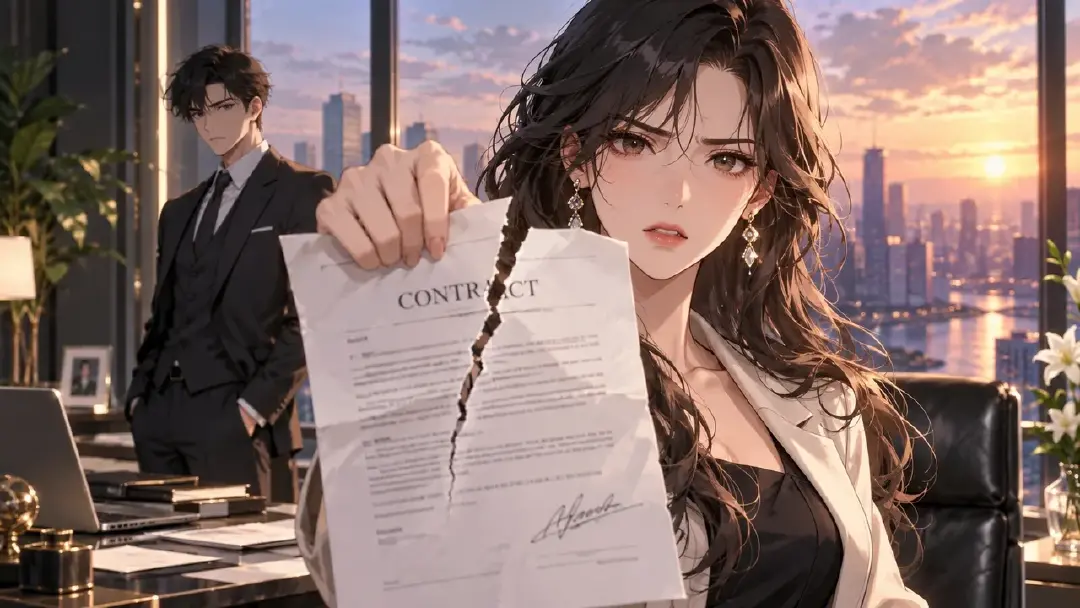
Generate a vertical shot spec for an AI short drama. Aspect ratio 9:16. Keep the character's face and expression in the top zone, hand movement and key props in the middle zone, and leave caption space in the bottom zone. Use the character's key visual and character turnaround, keeping face shape, hairstyle, and costume silhouette consistent. Shot job: reveal the conflict evidence within the first 3 seconds. Blocking: the lead in the right foreground, the supporting male character in the left background, the lead holding the contract up toward camera. Do not crop the head, do not let captions cover hands, do not let the character drift across shots, do not change who plays the character frame to frame.
Example 2: Vertical Script to Video
Turn this short drama script into a vertical AI short drama video execution sheet. For each shot, output: duration, screen zone, character blocking, action, line, emotion, voiceover requirement, cut point, and monetization use. Must be organized as concept → script → storyboard → video → voiceover → editing. The first 3 seconds must have a hook, and the ending must leave a reason to watch the next episode. All characters should reference the same character asset library, avoiding characters drifting across shots.

Example 3: Vertical Episode Review
Review a 60-second vertical AI short drama. Give feedback in this order: does the conflict start within the first 3 seconds; is the character's face consistent; is the blocking clear; do the lines sound like real speech; does the voice sound like it's reading off a page instead of talking; does the edit drag; is there a clear cover candidate; is it suited to series continuity; is it ready for batch production. For each item, give a verdict of pass, fixable in editing, or needs a redo, with the minimum fix.

Common Mistakes and Fixes
The first mistake is cropping a horizontal shot straight down to vertical. The fix is rewriting the screen zones so the face, hands, and captions each have a place.
The second mistake is keeping characters too far from camera. Vertical short drama needs expression and dialogue, so medium-close shots outperform wide shots unless it's an action scene.
The third mistake is standing two characters side by side and evenly spaced. The fix is arranging blocking around the dramatic relationship. Who's pressing, who's backing off, who holds the evidence — all of it should be visible in the frame.
The fourth mistake is a setup that runs too long at the start. The fix is cutting the first line of exposition and replacing it with visual evidence or a conflict action. Let viewers see the problem before they hear the explanation.
The fifth mistake is judging monetization by views alone. The fix is watching completion rate, series continuity, asset reuse, and per-episode cost together. Whether vertical micro-drama can sustain itself comes down to whether the production line can run reliably.
FAQ
Does vertical AI short drama have to be 9:16?
If the goal is phone viewing, 9:16 is the safest default. Other ratios work for supplementary material, but the main cut should be designed vertical from the start.
Is closer always better for vertical shots?
No. Close-ups suit emotion and evidence, medium shots suit confrontation, wide shots suit establishing space. What matters is that every shot has a clear job.
Why does vertical production need to think about monetization too?
Vertical micro-drama is naturally tied to updates, series continuity, and conversion. Monetization shapes the concept, hook, cover, episode count, and cost — it shouldn't be something you add after editing is done.