
What Is Seedance 2.5 Flash?
Seedance 2.5 Flash is the speed-oriented video model in ByteDance's Seedance 2.5 series. In this evaluation, we test its motion performance, character acting, fine-grained interaction, spatial understanding, and multi-reference shot consistency to see how well it handles common creative tasks. Based on this batch of test samples, Seedance 2.5 Flash strikes a practical balance between turnaround speed and usage cost, making it well-suited as a primary workhorse model for iterating on concepts and selecting shots in daily production.
In the two side-by-side comparisons in this round, Seedance 2.5 Flash delivered results faster than the standard version while maintaining usable visual quality. However, in high-motion shots—such as a motorcycle leaning into a corner, characters taking hits, leg sweeps, or falls—it still trails the standard Seedance 2.5 model slightly in motion completeness, physical impact, and execution of complex action prompts.
Parameter Differences Between Flash and the Other Two Models
The table below is compiled from official documentation verified on November 16, 2026, and lists the maximum capability limits for each model. In this round, the first five Flash tests and the two standard comparison videos were all set to 8 seconds, while the multi-reference case was set to 10 seconds, all at a uniform resolution of 720p. These reflect the specific parameters used for this test rather than the only output specifications the models support.
| Parameter | Seedance 2.5 Flash | Seedance 2.5 | Seedance 2.0 |
|---|---|---|---|
| Output Resolution | 480p, 720p | 480p, 720p, 1080p | 480p, 720p, 1080p, 4K |
| Single Generation Duration | 4–30s | 4–30s | 4–15s |
| Multimodal Reference Image Limit | 10 images | 30 images | 9 images |
| Multimodal Reference Video Limit | 5 clips | 10 clips | 3 clips |
| Multimodal Reference Audio Limit | 5 clips | 10 clips | 3 clips |
| Draft Mode | Not supported | Supported | Not supported |
Flash supports up to 720p output, with 480p available as a lower option. Compared with Seedance 2.5, its reference image limit is reduced from 30 to 10, and its reference video and audio limits drop from 10 clips to 5 each. If a project requires feeding in a large volume of reference assets or delivering native 1080p footage directly, these specification differences will directly factor into which model you choose.
The reference limits in the table apply to multimodal reference tasks, not to the number of uploads for first-frame image-to-video tasks. A first-frame task takes only one input image, while a first-and-last-frame task takes one start frame and one end frame. All limits above come from official documentation; our multi-reference test case used seven reference images and did not test the 10-image input cap or other resolution tiers.
Official Video Generation Pricing Comparison
The prices below are based on the online inference rates from Volcengine Ark's official Chinese pricing sheet, verified on November 16, 2026, assuming 720p, 16:9 output without video input. None of the tests in this round—text-to-video, first-frame image-to-video, or multi-reference image-to-video—used reference video inputs.
| Model | Official Unit Price | Estimated Cost per Second (Official Example) | Estimated Budget (8s Video) | Estimated Budget (10s Video) |
|---|---|---|---|---|
| Seedance 2.5 Flash | 46 CNY / 1M tokens | ~0.99 CNY | ~7.9 CNY | ~9.9 CNY |
| Seedance 2.5 | 70 CNY / 1M tokens | ~1.51 CNY | ~12.1 CNY | ~15.1 CNY |
| Seedance 2.0 | 46 CNY / 1M tokens | ~0.99 CNY | ~7.9 CNY | ~9.9 CNY |
Under identical conditions, Flash's official per-token price is roughly 34% lower than Seedance 2.5 and matches Seedance 2.0. Seedance 2.0 is included here solely as a parameter and pricing baseline; no test samples were generated for it in this round. The 8-second and 10-second budgets in the table are rough estimates calculated from the per-second rate in the official pricing examples for easy comparison. Actual charges depend on the token unit price and real token consumption as billed on the official statement; the figures listed here do not represent the actual expenditure for this batch of samples.
Hands-On Performance Across Capabilities
This evaluation examines five generation capabilities across six scenarios, comprising six Flash samples and two standard Seedance 2.5 comparison samples. Motorcycle cornering and continuous combat fall under motion performance and are tested side by side across both versions; the remaining four categories test Flash only. The first seven videos are 8 seconds long, while the multi-reference case is 10 seconds long and spans three shots.
| Capability Category | Test Scenario | Duration | Flash Key Performance | Seedance 2.5 Comparison |
|---|---|---|---|---|
| Motion & Camera Control | Motorcycle cornering and tracking | 8s | Conveys speed well, but tight framing crops out the full cornering action | More complete progression from leaning in and hitting the apex to straightening up |
| Motion & Camera Control | Continuous combat | 8s | Generates continuous offense and defense, though some transitions and impact feel slightly floaty | More natural torso rotation, physical reactions, and depth movement |
| Character Acting & Dialogue | Reading a letter, looking up, and English line | 8s | Captures the transition from reading to smiling; spoken line and lip-sync not yet independently verified | Not tested |
| Fine-Grained Interaction | Two people handing over a key | 8s | Key transfer relationship is clear, but character gender deviates from the prompt and finger contact requires close inspection | Not tested |
| Spatial Understanding | Rotating a mug on a desk | 8s | Overall layout preserved, rotation angle unconfirmed, slight camera push-in despite locked-shot prompt | Not tested |
| Multi-Reference & Shot Consistency | 7-image reference generating a 3-shot handoff | 10s | Characters, vehicles, and helmet ownership remain largely consistent across all three shots | Not tested |
Below, we present the raw videos and prompts category by category. Exact wait times for each video are compiled in the generation speed table at the end of the article.
Motion & Camera Control
This section uses two scenarios—motorcycle cornering and a two-person fight—to examine action transitions, weight shifts, movement trajectories, and whether the camera clearly communicates the physical progression of the action. Both models were given the exact same English prompts and generation settings.
Motorcycle Cornering and Tracking
Both versions share the exact same prompt requirements: a rider takes a red motorcycle through a sweeping bend while a low front-three-quarter camera tracks alongside; after passing the apex, the bike gradually straightens up, keeping the entire motorcycle and both wheels visible in the frame throughout.
Seedance 2.5 Flash
8s · 720p · Native audio · Submission to observed completion: 82.7s
Seedance 2.5
8s · 720p · Native audio · Submission to observed completion: 200.8s
Flash Feels More Like a Tight Racing Close-Up
In the footage generated by Flash, the red front fairing, wet asphalt, light reflections, and water spray kicked up by the rear wheel are all fairly crisp. The rapidly receding background and tight front-end tracking also convey a strong sense of speed. However, the framing is too tight: the rider's head, upper body, and parts of the bike are cropped out of the frame, failing to keep both wheels fully visible as requested by the prompt. While you can tell the bike is leaning, the tight framing makes it hard for viewers to see how the rider and motorcycle work together through the corner.
If an edit happens to call for a tight close-up detail shot of a race bike, this clip is usable. But if the storyboard requires showing the full cornering mechanics or cutting smoothly from a wide shot establishing the racing line, a framing that crops out parts of the rider and bike falls short.
The Standard Version Captures the Full Cornering Progression
The standard version keeps the full silhouette of both the rider and the motorcycle inside the frame. Following the timeline, the bike leans into the turn, hugs the apex, and then gradually reduces its lean angle to straighten up; judging by the bike's position relative to the inside curbing, its line through the corner is also clear.
This smooth progression comes from how well the bike's posture, the rider's center of gravity, the cornering line, and the camera distance work together. Compared with Flash's tight close-up, the standard version shows the transition from leaning in to straightening up much more clearly, giving it better motion performance in this scenario.
That said, the front-three-quarter tracking angle and framing size in the standard version still shift somewhat during the shot. Based on sampled frames alone, we cannot confirm that tire-to-ground contact and bike geometry remain completely accurate at every moment. This comparison shows that the standard version presents the action progression and trajectory more completely, though it does not guarantee every physical detail is flawless.
Full English Prompt Used for the Motorcycle Test
One continuous 8-second cinematic live-action shot on a closed motorcycle racing circuit just after rain, at blue hour. A single adult professional racer in black protective leathers and a full-face helmet rides one unbranded red sport motorcycle through a sweeping right-hand bend. A low front three-quarter tracking camera follows alongside at matching speed, keeping the whole motorcycle and both wheels visible. The racer leans naturally into the corner, reaches the apex, then gradually brings the bike upright toward the exit. Both tires remain on the wet asphalt. Track barriers and floodlights move past in the background, with a fine spray of water trailing the rear tire. Physically plausible rider anatomy and motorcycle geometry, consistent red bodywork, realistic film texture. Sound: one motorcycle engine rising smoothly and wet tire hiss. No dialogue, no music, no cuts, no text, no subtitles, no logos.
Two-Person Continuous Combat
This fight scenario requires both models to start mid-exchange from the opening frame: a rapid punch combination, slipping and blocking, a heavy counter body kick, closing the distance to pursue, a low leg sweep, and finally a stunt fall and roll. To keep the fighters distinguishable during fast exchanges, the prompt specifies one wearing a light grey jacket with black trousers and the other wearing a dark navy jacket with tan trousers.
Seedance 2.5 Flash
8s · 720p · Native audio · Submission to observed completion: 82.4s
Seedance 2.5
8s · 720p · Native audio · Submission to observed completion: 197.7s
Flash Packs in the Moves, but Impact Feels Light
Flash manages to generate all the requested beats: rapid punches, blocks, kicks, a low leg sweep, and a ground roll. On closer inspection, however, several exchanges feel more like choreography being stepped through in sequence, and the hit reactions and transitions into the next move feel somewhat floaty. The two fighters mostly move laterally across the frame, with little change in depth between the characters and the camera.
In addition, letterboxing bars were automatically added to the top and bottom of the frame, and the fighters' feet are cropped out during the first half of the clip. If you need to evaluate planted feet, footwork, and how force is generated from the ground up during a fight, losing the feet makes that harder to judge.
The Standard Version Shows More Natural Force and Movement in Depth
In the standard version, punches visibly engage the shoulders, back, and torso rotation, while slips, counter-kicks, and step-backs carry through the whole body. After creating space, the fighters close the distance again and flow naturally into the lower-body takedown and roll. The camera adjusts alongside the exchange, and the fighters' relative depth and orientation shift continuously, staging the fight in a three-dimensional space where foreground-background relationships are much clearer.
This sample connects the progression from generating force and absorbing hits to pressing the attack much more cohesively. Compared with Flash, the standard version's strikes carry more weight and its combinations link together more tightly, giving it stronger motion performance in this scenario.
Even so, the standard version also fails to keep both fighters' feet in frame the entire time. Whether every strike contact makes physical sense, whether the fighter throws the exact three-punch combo specified in the prompt, and whether every weight transfer holds up still require close frame-by-frame viewing. A more cinematic look does not automatically mean flawless choreography, nor does it mean every action instruction in the prompt was strictly followed.
Full English Prompt Used for the Fight Test
An explosive 8-second live-action martial-arts fight scene, fast real-time Hong Kong action-film choreography, one continuous shot. Two adult fighters in a gritty concrete parking garage: one in a light grey jacket and black trousers, the other in a dark navy jacket and tan trousers. They are already fighting in the opening frame. The grey fighter surges forward with a rapid three-punch combination; the navy fighter slips the first punch, blocks the next and drives back with a forceful body kick. The grey fighter staggers two steps, immediately closes the distance, ducks a swinging counterpunch and sweeps the navy fighter's leg. The navy fighter hits the floor in a controlled stunt fall and rolls away as the grey fighter pursues. Relentless attack-and-counterattack momentum throughout, short transitions, sharp acceleration, convincing physical impact reactions, forceful torso rotation, realistic weight and balance, clear changes of position across the floor. The camera tracks rapidly beside them at waist height in a medium-wide action framing, keeping both whole bodies and the floor under their feet visible, with subtle handheld vibration at impacts. Crisp readable action, restrained motion blur, hard overhead light, cinematic contrast, realistic anatomy and clothing, distinct stable identities. Audio: rapid footfalls, forceful punch and kick impacts, clothing snaps, heavy breathing and a solid floor impact. No slow motion, no standing around, no pauses to reset, no dialogue, no music, no text, no subtitles, no cuts, no blood, no gore, no weapons.
Character Acting & Dialogue
This scenario asks a character to look down while reading a letter, lift her eyes, say “You kept the letter.” in English, and then hold a gentle smile. The prompt specifies that the line should be spoken between the 4- and 6-second marks while keeping the camera locked.
Judging from the sampled frames, the character transitions smoothly from looking down at the letter to looking up with a smile, and her face, jacket, and the letter in her hand remain recognizable throughout. Subtle acting shots like this are free of heavy motion blur, making them well-suited for directly observing facial expressions and emotional transitions.
When evaluating dialogue-driven acting shots, visuals and audio need to be checked separately. The presence of an audio track does not guarantee that pronunciation and lip movements line up accurately. When reviewing the video, you still need to verify whether the English line is pronounced clearly, whether any stray voices bleed in, whether she speaks within the requested 4-to-6-second window, and whether her mouth movements match the words. Based on still frames alone, we have not independently verified verbatim line accuracy or strict lip-sync in this round.
English Prompt Used for the Character Acting Test
One continuous 8-second medium close-up in a quiet train carriage, naturalistic live-action cinematography. An adult woman in a plain navy jacket holds one opened letter below her face. 0-2 seconds: she reads it silently, with a thoughtful expression. 2-4 seconds: she takes a small breath and lifts her eyes toward a person just beside the camera. 4-6 seconds: with a restrained, tender smile she says clearly in English, 'You kept the letter.' 6-8 seconds: she holds the eye contact and the quiet smile. Keep her mouth fully visible and her face, clothing and letter consistent. The camera stays still. Audio: her single spoken line over soft carriage rumble. No other voices, no music, no captions, no readable writing, no subtitles, no cuts.
Fine-Grained Interaction
This scenario requires one person to place a small brass key into another person's open palm, release their fingers, and withdraw an empty hand. Passing a small rigid prop like this is a good test of hand generation quality: when two hands come close and overlap, the action of pinching and releasing the key needs to read clearly.
In the sampled handoff frames, the hand holding the key reaches toward the open palm, sets the key down, and pulls back, after which the receiver closes his fingers around it. Below is a cropped contact sheet zooming in on the transfer moment to make it easier to inspect how the fingertips interact with the key.
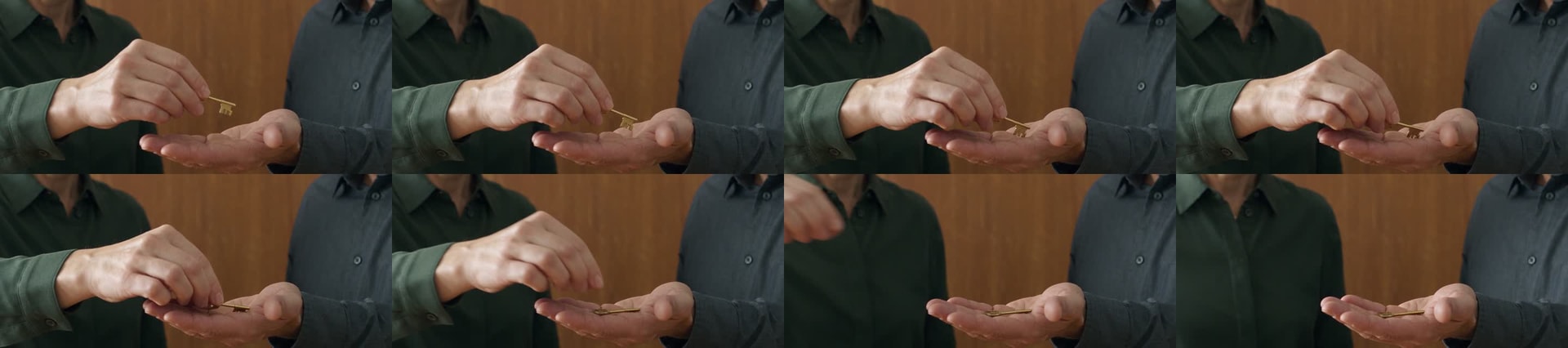
Inspecting close-up interactions like this usually comes down to checking a few specific details: whether the fingers pinching the key open naturally upon release, whether the fingertips blur or fuse into the key or the other palm, whether the thumb and finger joints maintain normal anatomy, and whether the key remains a single object throughout the transfer. These details require stepping through the video frame by frame—normal hand anatomy in the opening frame does not guarantee things won't break down when the two hands overlap.
Additionally, this clip shows a clear deviation in character setup. The prompt explicitly states that the person on the left handing over the key is a woman, but the generated giver appears as a man. So while this clip is useful for observing the mechanics of a hand-to-hand transfer, it fails to follow the character specification. Successfully passing the prop does not mean every prompt instruction was followed, nor do a few sampled frames prove that finger contact anatomy stayed flawless throughout.
English Prompt Used for the Key Handoff Test
One continuous 8-second live-action shot, a fixed waist-up two-shot of two adults at a wooden counter, with both people's hands clearly visible throughout. The woman on the left wears a dark green shirt. The man on the right wears a charcoal shirt. 0-2 seconds: the woman holds exactly one small brass key between the fingers of her right hand; the man presents his empty open left palm. 2-5 seconds: she moves that key into his left palm and releases it. 5-8 seconds: she withdraws her visibly empty right hand, and he closes his fingers around the received key. Maintain one key, two people and continuous natural hand movements. Show the actual contact and release clearly, with realistic anatomy and steady framing. Soft side lighting, believable skin and wood textures. Audio: quiet room tone and a small metallic click during the transfer. No speech, no music, no text, no subtitles, no cuts.
Spatial Understanding
This test uses an original, text-free static image as the input first frame. The character, blue mug, closed notebook, desk, and room background are all established in that starting image. The prompt asks for a very small action: the woman glances down, reaches out to rotate the mug a quarter turn on the desktop (without lifting the base off the desk), lets go, and looks back toward the window.
Beyond checking whether the character's appearance stays consistent, this shot primarily tests the model's grasp of spatial relationships on the desktop: whether the hand reaches toward the mug handle along a natural path, whether the base of the mug stays flush against the desk as it turns, whether the relative positions of the notebook, mug, and desk stay anchored, and whether foreground-background occlusion remains accurate without clipping as the hand grasps and releases the handle.
Judging from the sampled frames, the overall desk layout stays stable, the hand clearly reaches for the mug and pulls back, and the notebook stays anchored in its original spot on the right. However, while the orientation of the mug handle shifts during the motion, by the second half of the clip it looks close to its starting angle again; from these sampled frames alone, it is hard to confirm whether the mug actually completed a full quarter turn and stayed at the new angle. Also, although the prompt asks for a locked camera, the generated shot shows a slight push-in.
When evaluating first-frame image-to-video tasks like this, alongside character consistency, the key is whether existing objects hold their positions and occlusion relationships when a hand interacts with rigid items on a surface. When checking finger contact, occlusion, and object drift, we recommend comparing the original first frame side by side with the generated video.
English Prompt Used for the Mug Rotation Test
Continue the supplied first frame as one steady 8-second live-action shot. Preserve this exact adult woman's appearance, navy shirt, desk, single blue mug, closed tan notebook, background and window lighting. 0-2 seconds: she briefly glances down toward the blue mug. 2-5 seconds: she gently takes the mug handle with her right hand and rotates the mug a quarter turn on the tabletop without lifting it. 5-8 seconds: she releases the mug, rests her right hand beside it, and looks back toward the window. The mug stays on the desk and remains one rigid ceramic object, and the closed notebook remains fixed throughout. Keep the camera locked with no cut or zoom. Audio: quiet indoor ambience and a soft ceramic scrape during the turn. No speech, no music, no text, no subtitles.
Multi-Reference & Shot Consistency
This test extends the duration to 10 seconds and uses seven reference images to generate a three-shot sequence. The cast consists of a Korean female racer, a European-American male racer, and a middle-aged European-American mechanic, each defined by a three-view character sheet; we also supplied two distinctly styled motorcycles alongside one red-and-black helmet and one white helmet.
The reference images define character appearances, outfits, and object designs only. No environment plates or storyboard sketches were fed in; the garage setting, lighting, and shot cuts were controlled entirely via text: an overcast afternoon with soft natural daylight entering through the garage door and a dry matte floor to minimize harsh specular highlights on skin and leather.
Reference Images Used in This Test
| Reference Item | Image | Role & Assignment |
|---|---|---|
| 1 · Female Racer Three-View | 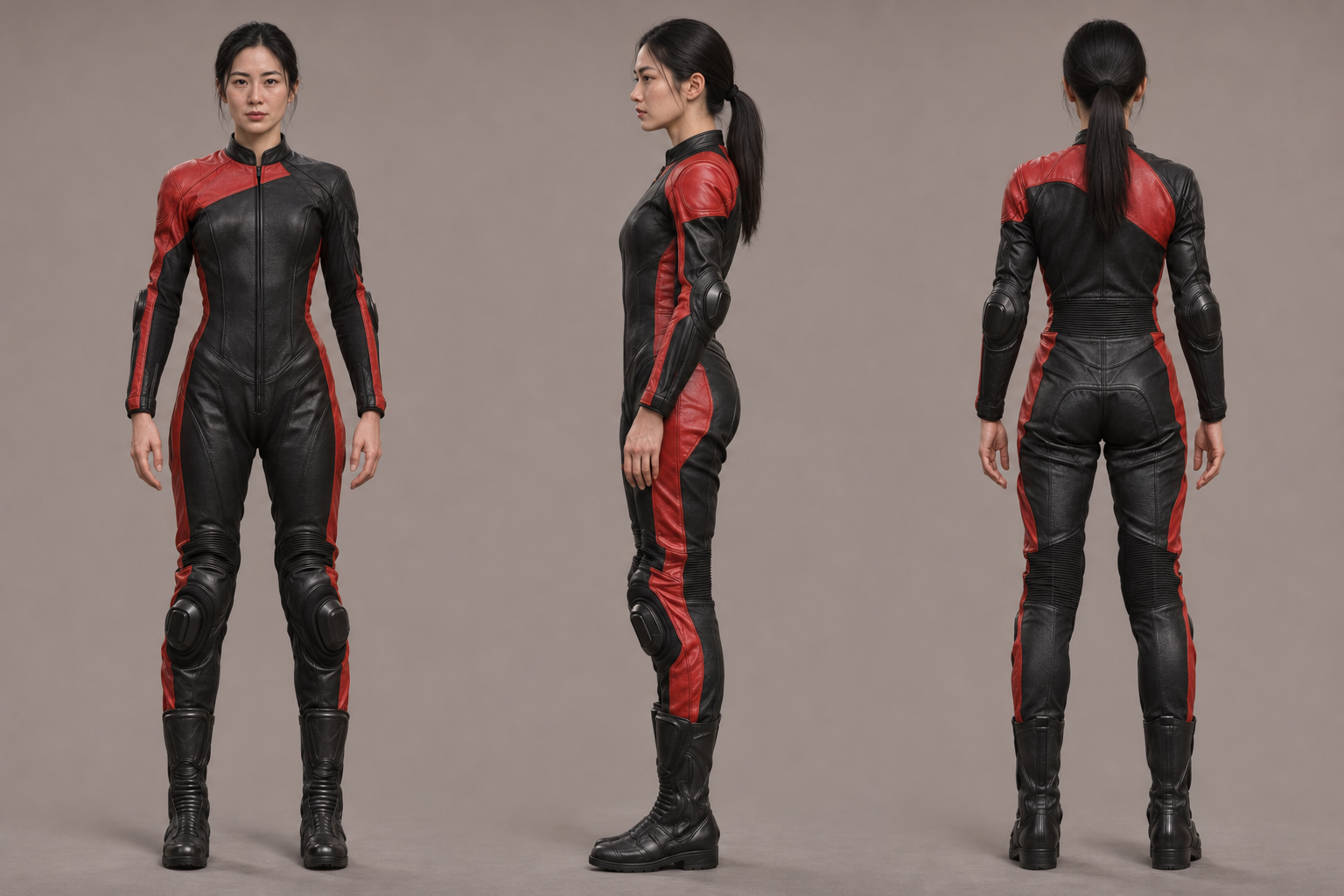 | Red-and-black racing suit; receives the red-and-black helmet |
| 2 · Male Racer Three-View |  | Yellow-and-black racing suit; holds the white helmet throughout |
| 3 · Mechanic Three-View | 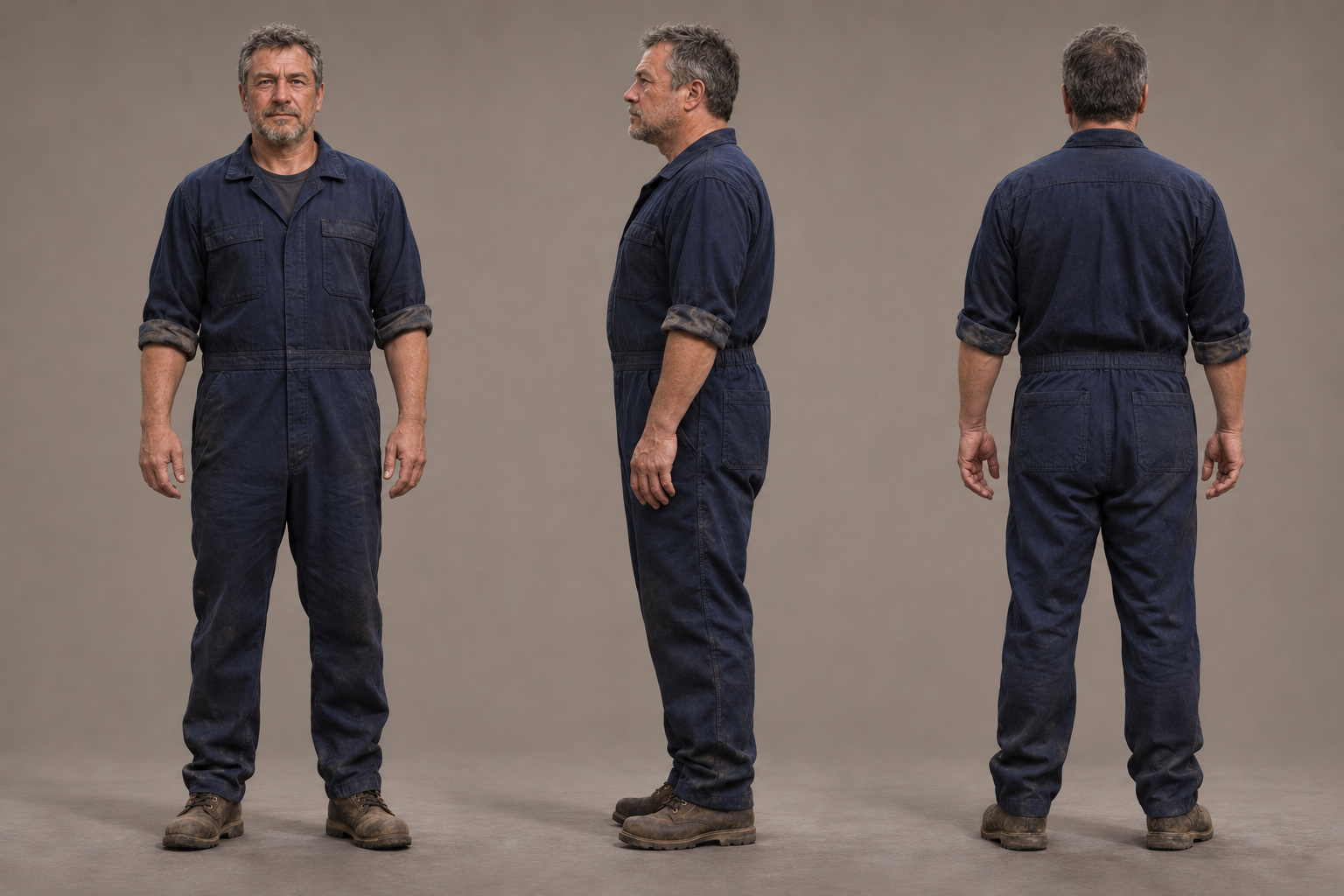 | Navy coveralls; hands over the helmet and withdraws empty hands |
| 4 · Red Motorcycle | 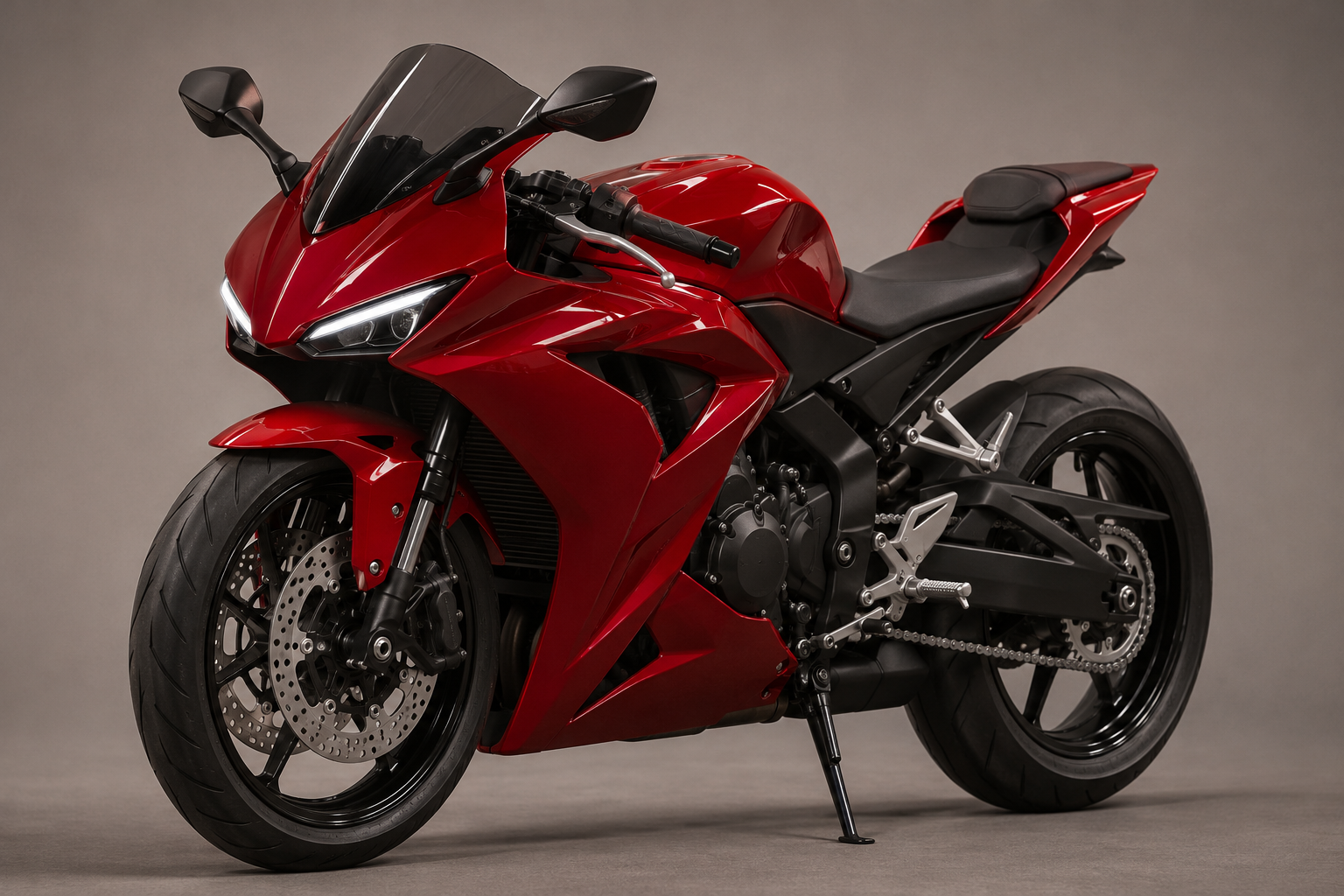 | Retains full fairing and split headlights |
| 5 · Blue Motorcycle | 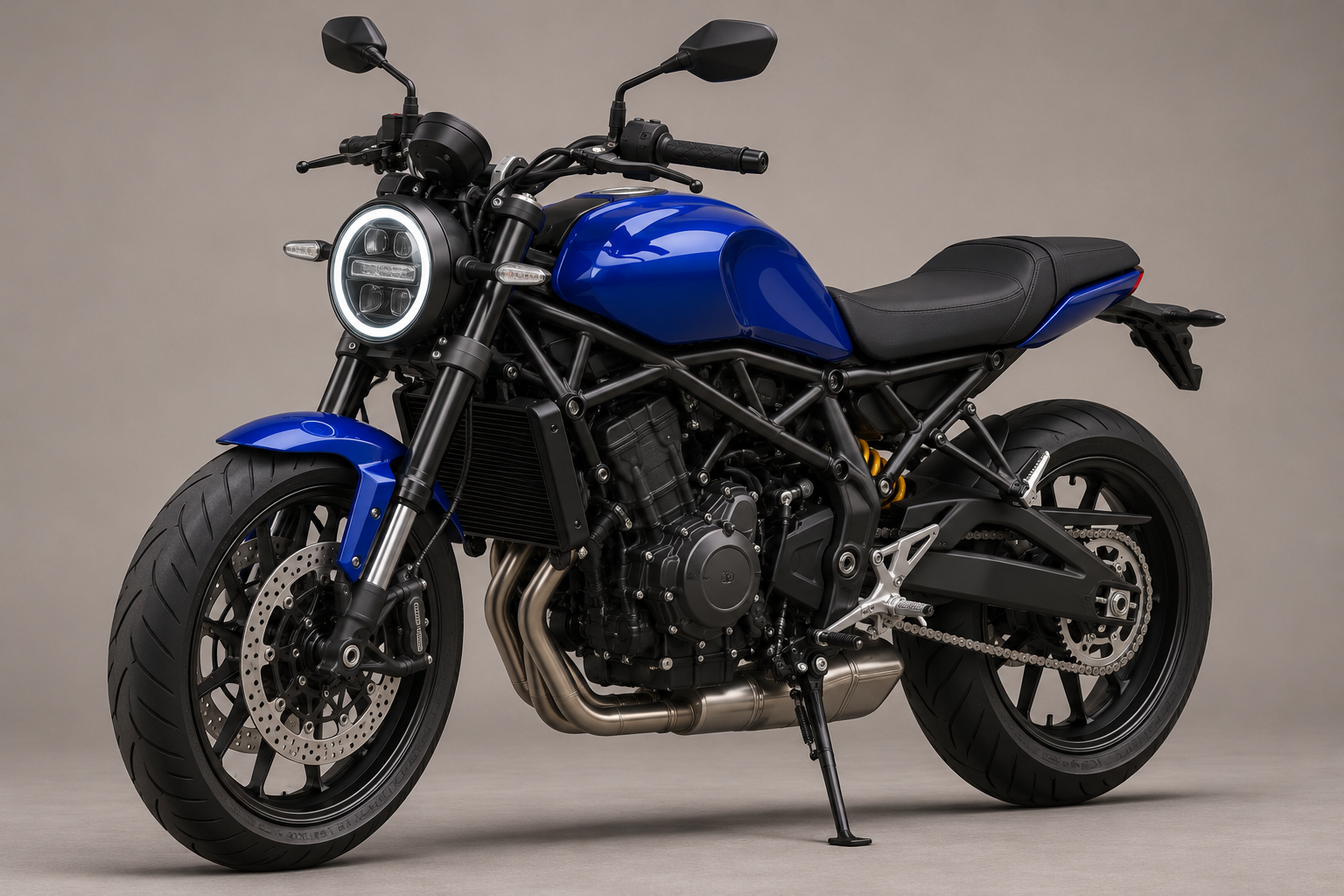 | Retains round headlight and exposed engine |
| 6 · Red-and-Black Helmet | 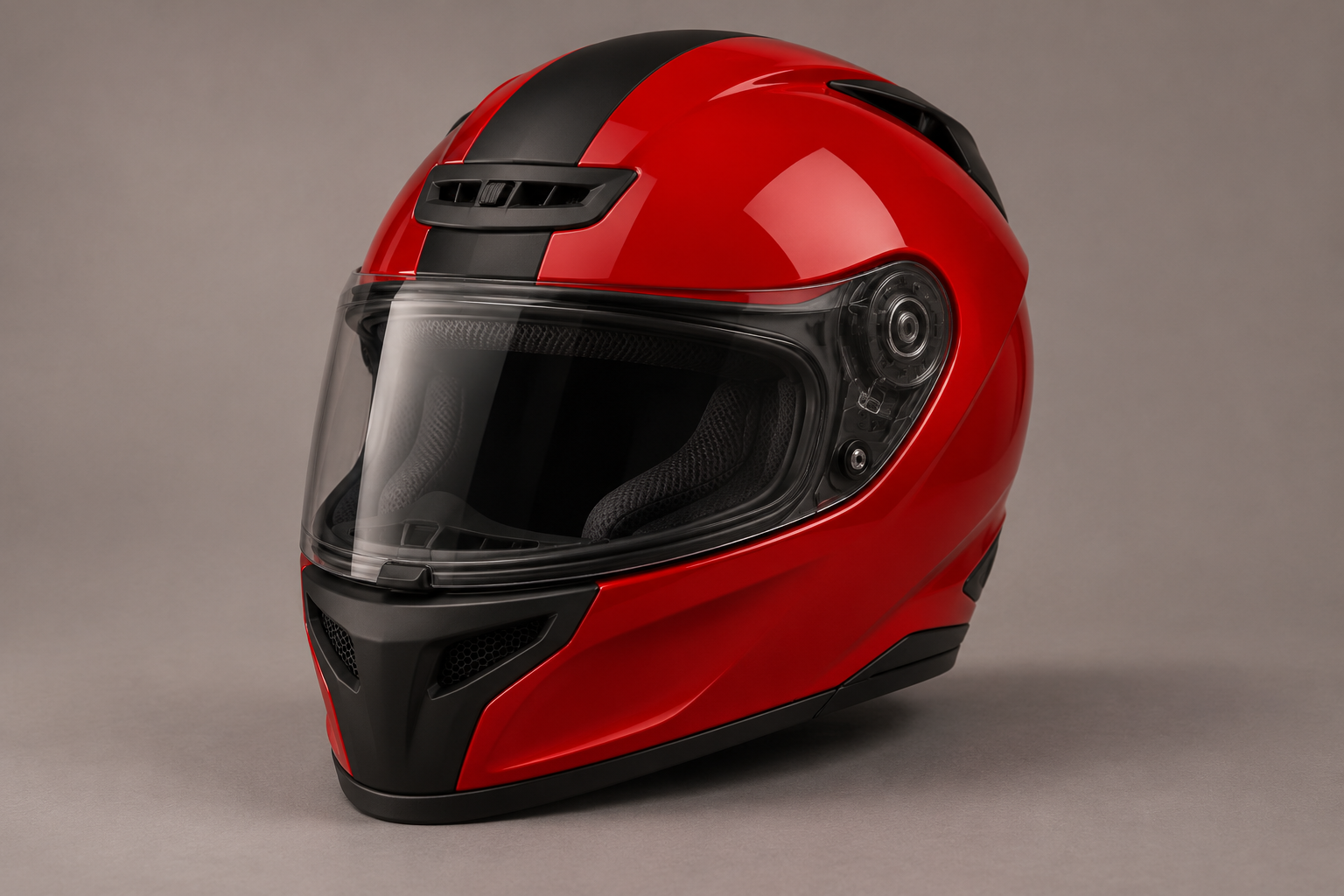 | Passed from the mechanic to the female racer |
| 7 · White Helmet | 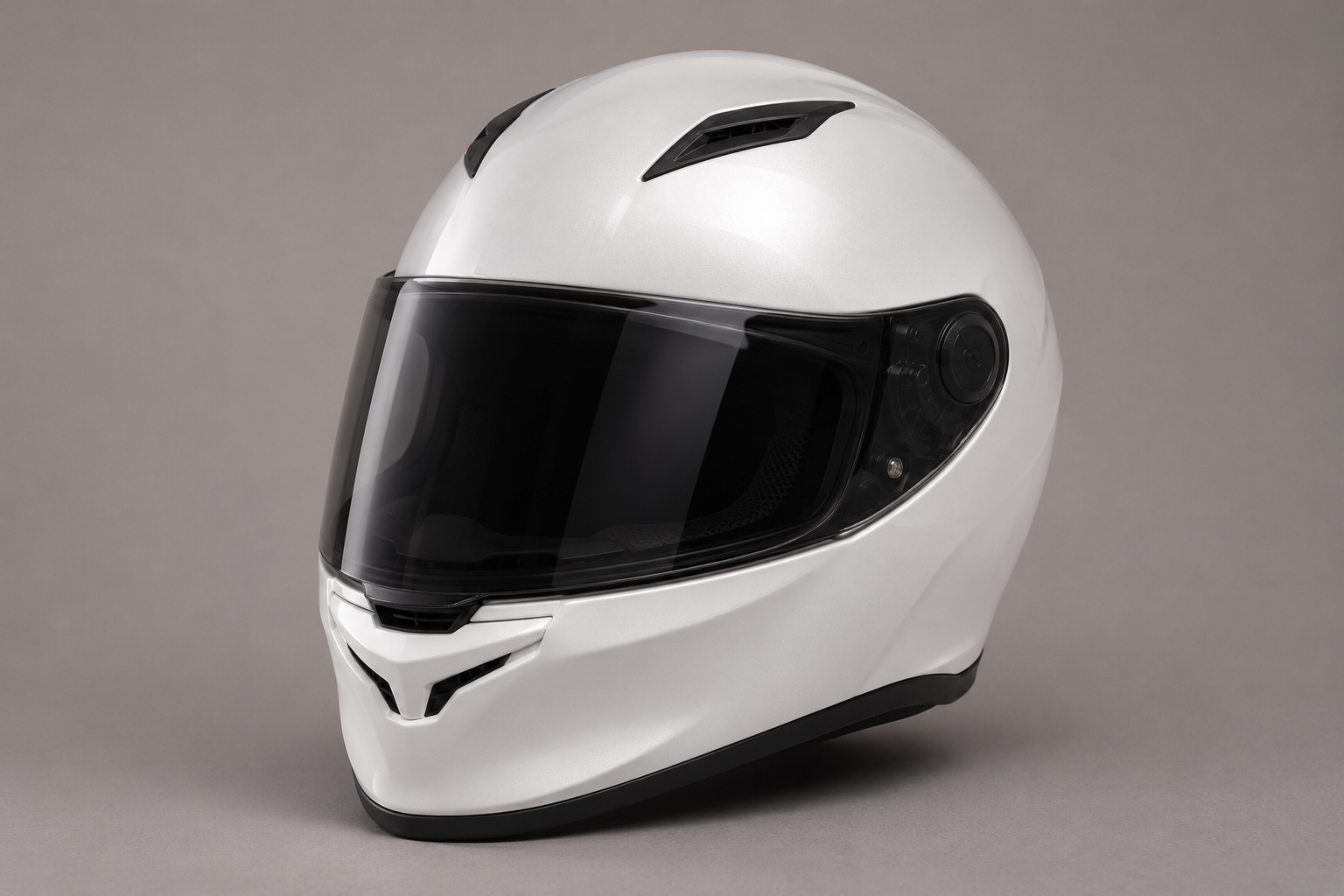 | Held by the male racer |
Shot Breakdown
| Time | Shot |
|---|---|
| 0–3s | Wide shot establishing the positions of the three people and two bikes |
| 3–7s | Medium shot showing the helmet handoff clearly |
| 7–10s | Return to the wide shot as both racers walk toward their respective bikes |
10s · 720p · Native audio · Submission to observed completion: ~124s
Characters and Objects Remain Mostly Consistent Across Cuts
This clip maintains overall consistency across multiple cuts. As the camera cuts from a wide shot to a medium shot and back to a wide shot, the faces, racing suits, and coveralls of all three characters match their references, and both the red faired sportbike and the blue round-headlight roadster retain their distinct designs. Each of the three character turnaround sheets maps cleanly to a single person without mistakenly spawning three duplicates from the three views on a single sheet.
Helmet ownership and the handoff progression also stay coherent: the mechanic starts out holding the red-and-black helmet, the female racer takes it from him after the cut to the medium shot while the mechanic releases it and pulls his hands back, and when the camera cuts back to the wide shot, the red-and-black helmet remains in the female racer's hands while the male racer holds the white helmet throughout. For multi-reference workflows, keeping character identities and prop ownership straight across cuts is genuinely helpful for downstream editing.
The finished video cuts at roughly 3 seconds and 6.8 seconds, executing the planned wide-to-medium-to-wide shot structure. The lighting matches the soft natural daylight described in the prompt, with restrained reflections on the floor and leather suits. That said, the character performances still feel slightly stiff, and the finger details during the helmet handoff warrant closer inspection. Based on what we observe here, this sample successfully preserves character and object mapping across all three shots. Only Flash was tested in this scenario, without a standard-version comparison.
English Prompt for the Multi-Reference Test (Condensed Version)
The version below preserves the reference mappings, three-shot structure, and core constraints from the original test while omitting repetitive phrasing.
Create a 10-second photorealistic live-action scene in three shots, with hard cuts at 3s and 7s. Exactly three adults, two parked motorcycles and two helmets.

References define appearance only; replace their studio lighting and backgrounds:
@Image 1: one Korean woman, black ponytail, red-and-black racing suit.
@Image 2: one European-American man, short brown hair, yellow-and-black racing suit.
@Image 3: one middle-aged European-American mechanic, salt-and-pepper hair and stubble, navy coveralls.
Each character reference is a three-view sheet of ONE person.
@Image 4: red faired sportbike, angular split headlights.
@Image 5: blue naked roadster, round headlight, exposed engine.
@Image 6: red-and-black helmet, passed from mechanic to woman.
@Image 7: white helmet, held by the male racer throughout.
Preserve faces, outfits, object designs and colors across cuts.

Setting: a working pit garage on an overcast afternoon. Soft neutral daylight enters from camera-right; worn concrete walls, rear workbench and cabinets, dry matte floor. Natural skin, subdued leather reflections, no glossy skin or amber wash. Keep lighting and environment consistent.

0-3s, steady eye-level wide: woman left beside the red bike, mechanic center holding the red-and-black helmet, male racer right beside the blue bike holding the white helmet. Show full bodies and both bikes. Mechanic begins offering his helmet to the woman.

3-7s, steady medium two-shot from the same side of the action axis: woman left, mechanic right, faces and hands visible. She takes the red-and-black helmet with both hands; he releases it and withdraws empty hands. Show clear contact and release without fused fingers or duplicated objects.

7-10s, return to the wide: woman holds her received helmet and steps toward the red bike; male racer keeps his white helmet and steps toward the blue bike. Mechanic stays between them, hands empty. Bikes remain on stands; nobody mounts or puts on a helmet.

Maintain identities, screen direction, object ownership, grounded movement and natural occlusion. Audio: continuous quiet garage ambience, footsteps and helmet handling. No dialogue, music, extra cuts, slow motion, duplicated people or objects, text, logos or watermarks.
Generation Speed
| Scenario | Model | Duration | Submission to Observed Completion |
|---|---|---|---|
| Motorcycle cornering and tracking | Flash | 8s | 82.658s |
| Motorcycle cornering and tracking | Seedance 2.5 | 8s | 200.842s |
| Continuous combat | Flash | 8s | 82.400s |
| Continuous combat | Seedance 2.5 | 8s | 197.657s |
| Character acting and English line | Flash | 8s | 87.419s |
| Two people handing over a key | Flash | 8s | 89.368s |
| Subtle motion from first frame | Flash | 8s | 83.066s |
| 7-image reference and 3-shot handoff | Flash | 10s | 124.013s |
For the first five 8-second Flash videos, the time from task submission to observed completion ranged from roughly 82 to 89 seconds; the two 8-second standard-version videos took about 201 seconds and 198 seconds, respectively. The 10-second multi-reference video took about 124 seconds; because it uses different input assets and a longer duration, it is logged separately here rather than directly compared against the 8-second clips for speed differences. If your daily workflow involves repeatedly tweaking prompts, running multiple generation passes, and comparing storyboard options, saving over a minute per generation noticeably speeds up early iteration and shot selection.
Note that while all tasks were submitted under the same account, the tests for the two versions were run across different time windows, and we did not run multiple repeat generations per scenario to average out the times. The recorded durations include network fluctuations, server-side queuing, and the observation latency from our script polling every five seconds. As a result, these numbers reflect the shorter actual wait times experienced with Flash during this test round, and should not be treated as a fixed, guaranteed speed multiplier.
When to Use Flash vs. the Standard Version
If your creative work centers on dynamic movement and action choreography, our test results suggest the standard Seedance 2.5 model remains the safer bet. Across both motion comparisons, the standard version delivered a more complete action progression, better physical hit reactions, and clearer spatial movement in depth, aligning more closely with what action shots demand.
If your current focus is rapid pre-visualization, locking down compositions, experimenting with prompt phrasing, or pushing through daily shot volume on a tighter budget, Flash's shorter wait times and lower unit price offer real practical value. It can still produce clips with solid visual texture, though during shot selection you will need to check framing crops, action transitions, and fine interaction details carefully against your storyboard requirements.
Overall, across the two dynamic motion tests in this round, Flash has not yet fully caught up to the standard Seedance 2.5 model, which still holds the edge in motion completeness and physical weight; Flash is positioned to cut wait times and lower API costs while maintaining usable quality, making high-frequency experimentation and shot generation easier during early production. As for character acting and dialogue, fine-grained interaction, spatial understanding, and multi-reference shot consistency, this round generated test samples for Flash only to demonstrate its practical performance and key areas to watch in those tasks, rather than ranking the two versions against each other.